Best Active MLB On-Base Streaks Entering 2026
A data-driven breakdown of the longest active reached base streaks across 8 seasons of MLB Statcast tracking.
Mookie Betts has reached base in 39 consecutive games against the Toronto Blue Jays. Not a hot month. Not a lucky stretch. Every game since May 2018, across two franchises and three ballparks. Shohei Ohtani and Yordan Alvarez each own 39-game streaks of their own, built under different filters but equally relentless. Nobody else in the dataset is close.
We scanned over 350,000 Statcast game logs covering 1,082 qualified batters from 2018 through 2025. Out of more than 121,000 streak findings, the 15 below represent the longest that survived every roster change, every pitching staff overhaul, and every ballpark shift still intact heading into the 2026 season. These are the players most likely to reach base under specific conditions, ranked by the data.
This is context, not prophecy. But when a pattern holds for 30, 35, or 39 games under a controlled filter, it stops looking like noise.
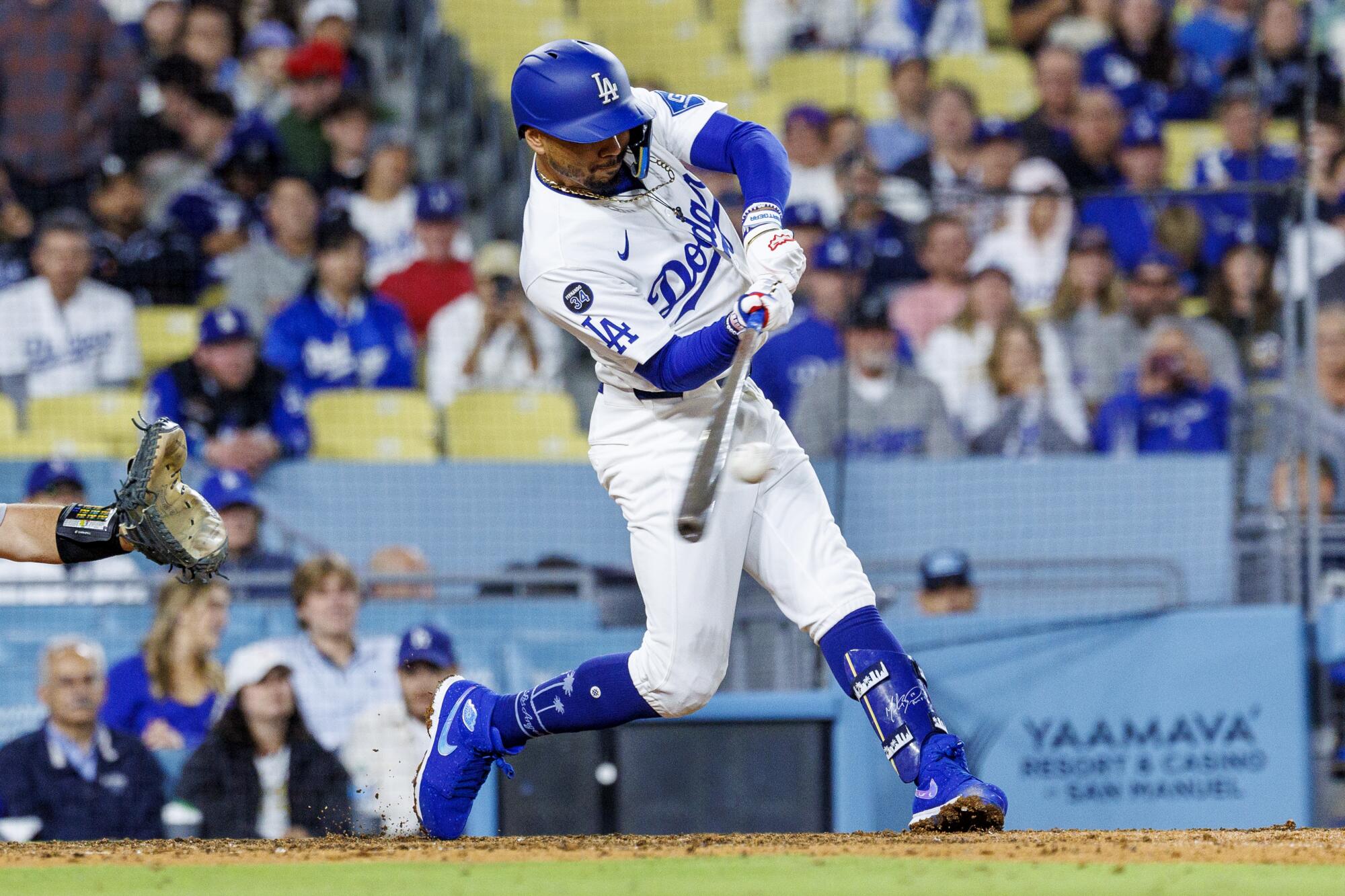
Top 5 Active MLB On-Base Streaks Right Now
Full Active Streak Rankings
Every MLB on-base streak entering 2026 that survived eight full seasons of filtering. Roster turnover, pitching staff changes, ballpark differences. None of it killed them.
| Rank | Player | Streak | Filter | Since | Status |
|---|---|---|---|---|---|
| 1 | Mookie Betts reached base vs Toronto | 39 | vs TOR (opponent) | May 2018 | ACTIVE |
| 2 | Shohei Ohtani reached base in September | 39 | September games (month) | Sep 2024 | ACTIVE |
| 3 | Yordan Alvarez reached base in August | 39 | August games (month) | Aug 2023 | ACTIVE |
| 4 | Vladimir Guerrero Jr. reached base in May | 37 | May games (month) | May 2024 | ACTIVE |
| 5 | Ian Happ reached base away vs Pittsburgh | 37 | Away games vs PIT | 2021 | ACTIVE |
| 6 | Jose Ramirez reached base in May | 35 | May games (month) | May 2024 | ACTIVE |
| 7 | Shohei Ohtani reached base home Mondays | 35 | Home Monday games | 2022 | ACTIVE |
| 8 | Christian Walker reached base vs Colorado | 34 | vs COL (opponent) | 2022 | ACTIVE |
| 9 | Bryce Harper reached base away Mondays | 32 | Away Monday games | 2021 | ACTIVE |
| 10 | Ketel Marte reached base on Fridays | 32 | Friday games (day) | Jul 2024 | ACTIVE |
| 11 | Fernando Tatis Jr. reached base home vs Arizona | 31 | Home games vs ARI | 2019 | PERFECT |
| 12 | Kyle Schwarber reached base in April | 31 | April games (month) | Apr 2024 | ACTIVE |
| 13 | Shohei Ohtani reached base vs Colorado | 31 | vs COL (opponent) | 2021 | ACTIVE |
| 14 | Ian Happ reached base September vs Pittsburgh | 30 | September games vs PIT | 2019 | ACTIVE |
| 15 | George Springer reached base Tuesdays in September | 30 | Tuesday September games | 2018 | PERFECT |
ACTIVE means the streak was intact at the end of the 2025 season and could continue in 2026. PERFECT means the player has never failed to reach base under that filter in the entire 2018-2025 dataset, meaning the streak spans every game in the sample.
What "Reached Base" Means and Why It Matters for Props
A batter reaches base when he records a hit, draws a walk, or gets hit by a pitch. It does not matter how he got there. What matters is that he did.
A player who goes 0-for-4 with no walks has not reached base. A player who goes 0-for-3 with one walk has. That distinction is everything. Elite plate discipline can sustain a reached base streak even when the bat goes cold, and that resilience is exactly what makes these streaks more durable than pure MLB hit or walk streaks by month or opponent.
The most common hitter prop at any sportsbook is "over/under 0.5 hits." Reached base is broader, but the overlap is massive. In the Mookie Betts reached base streak vs Blue Jays, Betts recorded at least one hit in 33 of 39 games (84.6%). The other 6 games he reached via walks or HBP. Even the narrower 0.5 hits prop would have cashed at an 85% rate in that matchup. When a prop is priced like a coin flip but the data says 85% under that exact filter, that is a gap worth knowing about.
Players sustaining long streaks are not scraping by with infield singles and walks. They tend to produce above-average total bases in those filtered games. The same conditions that enable reaching base also enable extra-base hits. That is where month-based on-base streak trends and opponent-specific patterns start to carry real weight for total bases and RBI props.
Understanding the Filter Types
- Opponent filter (e.g., "vs TOR"): Every game against that team, regardless of where or when. These point to an edge against an organization's pitching philosophy, not just one starter.
- Month filter (e.g., "September games"): Every game during that calendar month across multiple seasons. These often correlate with a hitter's tendency to peak at specific points in the year.
- Day filter (e.g., "Friday games"): Day-of-week patterns can align with pitching rotation slots. A batter who dominates a specific rotation position will surface here.
- Multi-variable combos (e.g., "away vs PIT" or "home Mondays"): Tighter filters, smaller samples, but the streaks that survive them are remarkably consistent.
What "Active Into 2026" Means
Every streak on this page was intact at the end of the 2025 season. The next time each player faces the same filtered situation in 2026, the streak is on the line. Betts plays Toronto and reaches base? Forty straight. He goes hitless with no walks? It ends at 39. This page will track it as the season unfolds.
How We Built This Streak Database
Every streak on this page was found the same way: scanning game-by-game batting data from MLB Statcast. No estimation. No projections. Raw numbers, processed at scale.
Data Pipeline
Pitch-level Statcast data for every MLB game from March 2018 through September 2025, aggregated to game-level batter statistics: hits, at-bats, walks, hit-by-pitches, strikeouts, home runs, RBI, total bases, and plate appearances. Source: Baseball Savant's Statcast API via the pybaseball library.
Qualification Criteria
Only batters with 50 or more career games made the cut. Out of 3,245 total batters in the raw dataset, 1,082 cleared the bar.
Streak Detection
For each qualified batter, the scanner checked game logs under 12 filter types: career-wide, day of week, month, opponent, home/away, and every two-variable and three-variable combination. Consecutive games where H + BB + HBP > 0 were counted backwards from the most recent game. If the pattern held through the end of 2025, it is classified as active entering 2026.
Reproducibility
Pull up any batter's game logs on Baseball Reference. Apply the same filter. You will arrive at the same number. The underlying Statcast data is publicly available. We do not fabricate, estimate, or round.