
Key Offseason Moves
The Dodgers went into the offseason with one glaring hole: the bullpen that nearly cost them a championship. They fixed it, and then some. On January 21, 2026, they landed Kyle Tucker on a four-year, $240 million contract that carries the largest average annual value in MLB history at $57.1 million per season. The deal includes opt-outs after years two and three, a $64 million signing bonus, and $30 million in deferred money. Tucker spent 2025 with the Cubs after being traded from Houston and slashed .266/.377/.464 with a 143 OPS+ across 136 games. The four-time All-Star owns a career 140 OPS+ and slots directly into right field, pushing Teoscar Hernandez over to left.
Before Tucker, the Dodgers addressed their closer problem head-on. On December 9, 2025, they signed Edwin Diaz to a three-year, $69 million deal, the largest average annual value ever given to a reliever at $23 million per season. General manager Brandon Gomes immediately named Diaz the team's closer. In 2025, Diaz posted a 1.63 ERA for the Mets with 28 saves in 31 opportunities. He brings 253 career saves, a 2.82 career ERA, and 839 strikeouts in 519.1 innings to a bullpen that desperately needed a stabilizing force. His addition moves Tanner Scott, who struggled badly in his first Dodgers season with a 4.74 ERA and 10 blown saves, into a matchup-based setup role where he can rediscover the form that made him elite in San Diego.
Context matters here. The Dodgers won back-to-back World Series titles in 2024 and 2025, becoming the first repeat champions since the 2000 Yankees. They are now chasing a three-peat, sitting at +250 on DraftKings heading into 2026. Last October, their bullpen was so unreliable that they converted rookie starter Roki Sasaki into a postseason closer and used Yoshinobu Yamamoto to nail down the final outs of Game 7. That desperation is why they paid record money for Diaz. The bullpen needed a real closer. Now they have one.
Dodgers 2026 Projected Starting Lineup
| Order | Pos | Player | Bats | 2025 Key Stat | Prop Angle |
|---|---|---|---|---|---|
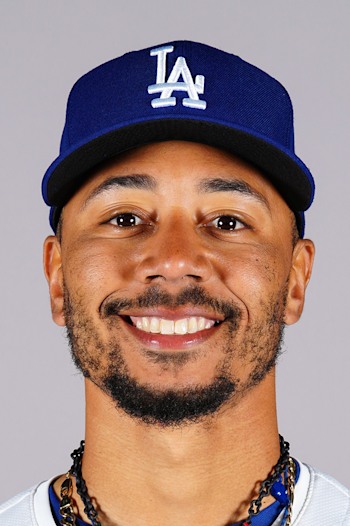
| 1 | SS | Mookie Betts | R | Career .290 hitter, elite OBP | High R+RBI totals batting leadoff in this lineup |
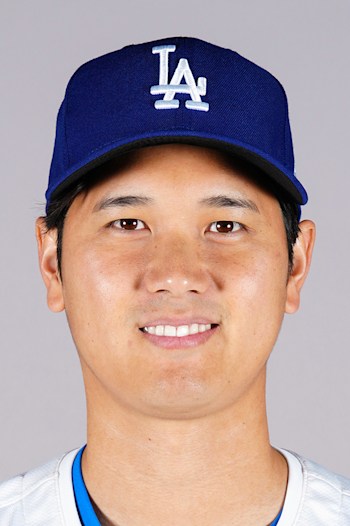
| 2 | DH | Shohei Ohtani | L | Two-way star, MVP-caliber production | Premium HR and total bases props |
| 3 | 1B | Freddie Freeman | L | Consistent .300+ threat, elite contact | Hits props are bread-and-butter |
| 4 | C | Will Smith | R | .272/.368/.459 career slash, plus power for a catcher | Undervalued RBI props hitting cleanup |
| 5 | RF | Kyle Tucker | L | .266/.377/.464, 22 HR, 25 SB in 2025 (Cubs) | Five-category contributor, SB props have value |
| 6 | LF | Teoscar Hernandez | R | Power bat, moved from RF to LF | HR props, streaky hitter means timing matters |
| 7 | 3B | Max Muncy | L | Power/walk profile, high OBP | Walks + patience inflate plate appearances |
| 8 | CF | Andy Pages | R | Young outfielder, showed flashes | Watch spring training — breakout candidate |
| 9 | 2B | Hyeseong Kim | L | KBO import, listed as 2B starter on ESPN depth chart | Developing track record — avoid early season |
This is one of the deepest lineups in modern MLB history. Ohtani, Betts, Freeman, Tucker, and Hernandez represent five legitimate middle-of-the-order bats stacked together. Tommy Edman, the switch-hitting versatile defender, and Enrique Hernandez will see regular playing time as well, giving Dave Roberts plenty of flexibility. Roberts has historically been willing to adjust his lineup based on matchups, so expect the batting order to shift throughout the season depending on whether they are facing a lefty or righty starter.
For prop bettors, the key insight is run environment. This lineup is going to score a lot of runs, and that inflates counting stats across the board. When you have Ohtani, Betts, and Freeman getting on base ahead of Tucker and Hernandez, the RBI opportunities pile up. When Tucker and Hernandez get on ahead of Smith and Muncy, the runs scored opportunities pile up. Runs scored and RBI props are worth targeting across this entire order, and the hitter props strategy guide breaks down how to maximize value in high-scoring lineups like this one.
Dodgers 2026 Projected Starting Rotation
| Slot | Pitcher | Throws | 2025 Role | K Prop Note |
|---|---|---|---|---|
| 1 | Yoshinobu Yamamoto | R | Ace, closed out WS Game 7 | Elite stuff, high K upside |
| 2 | Shohei Ohtani | L | Two-way (DH + SP) | When on the mound, one of MLB's best strikeout arms |
| 3 | Blake Snell | L | 5yr/$182M signing before 2025 | Historically elite K rate, inconsistent early in games |
| 4 | Tyler Glasnow | R | Rotation piece, has dealt with injuries | When healthy, 95+ mph fastball with wipeout slider |
| 5 | Roki Sasaki | R | Converted to closer for 2025 postseason, back to rotation in 2026 | Young Japanese phenom, electric stuff, workload may be managed |
This may be the most talented five-man rotation ever assembled. Yamamoto established himself as a true ace in his first MLB season and earned the ball in the biggest moment of the year, closing out Game 7 of the World Series. Ohtani on the mound is appointment television and one of the most dominant strikeout pitchers in baseball. Snell won back-to-back Cy Young awards and has one of the highest career strikeout rates among active starters. Glasnow, when healthy, features a 95+ mph fastball paired with a wipeout slider that generates swings and misses at an elite clip. Sasaki, the young Japanese phenom with a devastating splitter, returns to the rotation after his emergency closer conversion in October.
For strikeout prop bettors, this rotation is a goldmine. Yamamoto, Ohtani, Snell, and Glasnow all have elite whiff rates, and Sasaki's splitter is one of the nastiest pitches in baseball. The pitcher strikeout props strategy guide explains how to identify high-K matchups, and nearly every Dodgers starter qualifies. The concern is health. Glasnow and Snell both have injury histories, and the Dodgers will likely manage Sasaki's workload carefully in his second MLB season. Pitcher outs recorded props carry risk with this group because early exits and bullpen management are real possibilities. Strikeout props are the play.
Bullpen & Closer Situation
Edwin Diaz is the clear ninth-inning man. There is no committee, no matchup-based decision making, no ambiguity. When the Dodgers have a lead entering the ninth inning, Diaz will jog in from the bullpen to the sound of his iconic "Narco" entrance music. He has 253 career saves, posted a 1.63 ERA in 2025, and converted 28 of 31 save opportunities. The Dodgers finally have a dedicated closer for the first time since Kenley Jansen left after the 2021 season, and it took record money to get one. Diaz is worth every penny.
Tanner Scott moves into a matchup-based setup role, which is exactly where he thrived in San Diego before the Dodgers signed him to a four-year, $72 million deal. His first season in Los Angeles was a disaster: a 4.74 ERA, an MLB-leading 10 blown saves, and zero postseason innings because the team could not trust him. With Diaz now handling the ninth, Scott can return to facing specific hitters in the seventh and eighth innings rather than carrying the pressure of closing games. If he bounces back, the Dodgers will have an elite late-game tandem that makes leads feel safe for the first time in years.
The rest of the bullpen features Kirby Yates, Michael Kopech, Blake Treinen, Alex Vesia, and Evan Phillips, with Brusdar Graterol returning from shoulder surgery. For prop bettors, the improved bullpen has implications for team totals and NRFI props. If Diaz locks down the ninth and Scott stabilizes in the eighth, Dodgers game totals become more predictable. Leads that used to evaporate will now get protected. Dodgers team totals may actually go under more often than the market expects because late-inning runs against will decrease. The bullpen upgrade is a game-changer that extends beyond just the save opportunities.
Dodgers 2026 Prop Betting Angles
Kyle Tucker RBI props are underpriced early. Tucker batting fifth behind Ohtani, Betts, Freeman, and Smith means he will come to the plate with runners on base constantly. His career 140 OPS+ and elite plate discipline, with just a 15.4% career strikeout rate, mean he makes consistent contact in RBI situations. Projection systems have him around 100+ RBI as a floor if he stays healthy, and that number could climb even higher in this lineup. Early-season RBI props should be targeted before the market adjusts to the run production this order generates. Books will set his lines based on career norms, not the enhanced opportunity he now has in the five-hole for the highest-scoring team in baseball.
Ohtani strikeout props on pitching days are a two-for-one opportunity. When Ohtani takes the mound, his strikeout stuff is elite, featuring a splitter that generates whiffs at one of the highest rates in baseball. On pitching days, you get both his mound production and his bat in the lineup, making it a rare chance to target both his strikeout props and his hitting props in the same game. On his off days when he is exclusively DHing, total bases and home run props become the focus. Understanding when Ohtani is pitching versus hitting is the key to maximizing value on his props throughout the season.
This rotation makes UNDER team totals attractive for opponents. Facing Yamamoto, Ohtani, Snell, Glasnow, or Sasaki means opposing lineups are going to be suppressed. When the Dodgers are at home, opponent team totals will be set low, and they may still go under frequently. This is especially true in the first five innings when the starters are at their sharpest. The advanced stats for MLB props guide explains how to use expected stats and strikeout rates to identify suppressed-offense situations, and nearly every Dodgers home game qualifies when their top starters are on the mound.
Teoscar Hernandez is a boom-or-bust prop play. Moving to left field and batting sixth instead of higher in the order changes his profile slightly, but the underlying volatility remains. He is a streaky power hitter who can carry a lineup for two weeks and then disappear for ten days. When he is hot, he is a top-five home run prop play in baseball, capable of going deep in multiple consecutive games. When he is cold, he can go 0-for-4 with three strikeouts and look completely lost. The move is to target his HR props during hot streaks rather than playing his counting stat overs on a nightly basis. Track his recent results and pounce when he starts making hard contact.
First five innings lines favor the Dodgers heavily. With this rotation, the Dodgers should dominate F5 markets. Their starters will keep opponent scoring low through five innings, and their lineup will put up runs early against opposing starters who cannot match their depth. F5 run lines and F5 overs on Dodgers team totals represent a consistent angle throughout the season. Books will adjust full-game lines for the improved bullpen, but F5 lines are driven primarily by starting pitching matchups, and the Dodgers have a significant edge there in almost every game they play.