
The Cubs are the biggest favorite on the board today, and their lefty ace is the reason why. Imanaga's elite 24.6% whiff rate and pinpoint 4.6% walk rate meet a Washington lineup that struggles against left-handed pitching. Over 4.5 K's at -140 is the play.
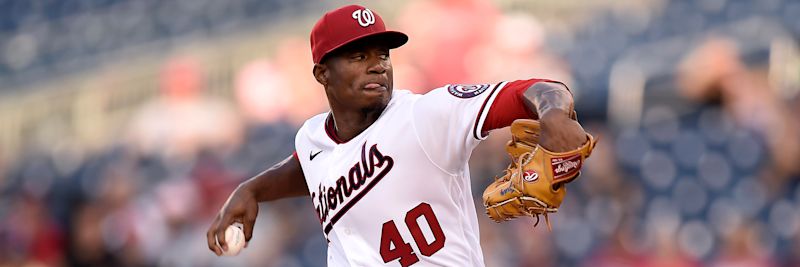
Let's get right to it. The Cubs are -259 moneyline favorites today, the biggest chalk on the entire MLB board. Washington is sitting at +209 on the other side, which tells you everything about how lopsided this pitching matchup looks on paper. And when you dig into the numbers, the paper doesn't lie.
Shota Imanaga was one of the steadiest arms in the National League in 2025, posting a 9-8 record with a 3.73 ERA and a sparkling 0.988 WHIP across a full season of starts. That sub-1.00 WHIP is remarkable for any starter, and it speaks to the defining characteristic of Imanaga's game: he simply does not put runners on base. His 4.6% walk rate was one of the lowest in baseball, meaning he consistently works ahead in counts and forces hitters to swing at his pitches rather than waiting for mistakes that never come.
On the other side, Jake Irvin stumbled through a 9-13 campaign with a 5.70 ERA and a bloated 1.428 WHIP. This is a game where the Cubs should score early and often, and when a team has a comfortable lead, its starting pitcher tends to attack the zone more aggressively. That aggression, from a pitcher who already generates a 24.6% whiff rate, translates directly to strikeouts. ESPN projects Imanaga for 5.6 strikeouts today, the second-highest projected K total on the slate, and we think even that might be conservative given the matchup.
Imanaga is not a flamethrower. He doesn't blow 98 mph fastballs past hitters or rack up gaudy 12-strikeout games on pure velocity alone. His game is built on deception, command, and an ability to get hitters chasing pitches they have no business swinging at. That 24.6% whiff rate tells you he's generating plenty of swings and misses, but the way he does it is what makes him particularly effective as a strikeout prop target.
A 24.6% whiff rate paired with a 4.6% walk rate creates the ideal strikeout profile. Imanaga gets ahead early because he doesn't walk anyone, then finishes at-bats with swings and misses because his secondary stuff is elite. When a pitcher walks under 5% of hitters, he gets more two-strike counts. More two-strike counts means more opportunities to put hitters away. It's a simple equation, and Imanaga executes it as well as anyone in the NL.
His spring training numbers reinforce that this is a pitcher who came into 2026 sharp and ready to miss bats. Imanaga struck out 18 hitters in 20 innings this spring, a rate that suggests his stuff is as crisp as ever heading into the regular season. Spring stats always come with caveats, but a pitcher who's generating nearly a strikeout per inning against a mix of major leaguers and top prospects is clearly in a good place mechanically.
| Stat | Value | Context |
|---|---|---|
| W-L | 9-8 | Full season starter for Cubs |
| ERA | 3.73 | Above-average run prevention |
| WHIP | 0.988 | Sub-1.00, elite baserunner control |
| K/9 | 7.28 | Steady strikeout rate |
| Whiff Rate | 24.6% | Strong swing-and-miss stuff |
| Walk Rate | 4.6% | Elite command, rarely issues free passes |
| Spring 2026 K | 18 K in 20 IP | Sharp heading into regular season |
The 7.28 K/9 might look modest compared to the elite strikeout artists in the game, but context matters here. Imanaga is a fly-ball pitcher whose approach is built around efficiency, not dominance. He doesn't need to strike out 10 hitters to be effective, but he consistently reaches the 5-6 strikeout range in his starts because of that walk rate. When you don't give free passes, you face more batters, and when you face more batters with a 24.6% whiff rate, the strikeouts accumulate naturally.
Washington's offense was one of the weakest units in the National League in 2025, and the early returns in 2026 suggest that hasn't changed dramatically. The Nationals are a young, developing team, and young lineups tend to do two things that play directly into a strikeout pitcher's hands: they chase pitches outside the zone, and they struggle to adjust to sequencing from experienced arms.
Washington's lineup has historically struggled against left-handed starters. Imanaga's deceptive delivery and elite command from the left side present exactly the kind of challenge that gives this lineup fits. When a team can't sit on fastballs because the pitcher barely walks anyone, they're forced to expand the zone. And when they expand the zone against a pitcher with a 24.6% whiff rate, strikeouts follow.
It's also worth noting the quality-of-at-bat problem. The Nationals don't have the kind of patient, disciplined hitters who can work deep counts and foul off tough pitches. Against a pitcher like Imanaga who thrives on efficiency, short at-bats mean he gets deeper into games. And deeper outings mean more strikeout opportunities. A typical six-inning start for Imanaga, where he faces 22-24 batters with his usual strikeout rate, projects to roughly 5-6 K's as a baseline. Against a lineup this weak against lefties, the ceiling is higher.
Compare this to the matchups Imanaga faced against elite lineups last season. The Dodgers, Braves, and Phillies all have patient, contact-oriented approaches that can neutralize pitchers like Imanaga by refusing to chase. Washington doesn't have that lineup discipline. They're going to swing, and when they swing against Imanaga's stuff, they're going to miss.
Here's the piece of the puzzle that doesn't show up directly in the strikeout prop but absolutely affects it. Jake Irvin's 5.70 ERA and 1.428 WHIP from 2025 paint the picture of a pitcher who gives up a lot of baserunners and a lot of runs. When the Cubs score early against Irvin, and the run expectancy models suggest they should, Imanaga gets to pitch with a lead.
| Pitcher | ERA | WHIP | W-L |
|---|---|---|---|
| Shota Imanaga (CHC) | 3.73 | 0.988 | 9-8 |
| Jake Irvin (WSH) | 5.70 | 1.428 | 9-13 |
Pitchers with a comfortable lead tend to attack the zone more aggressively. They're not nibbling corners or working around hitters. They're throwing strikes and daring guys to hit. For a pitcher with Imanaga's whiff rate, that aggression turns into more two-strike counts, which turns into more strikeouts. A 4-0 lead in the third inning is the best friend a strikeout prop can have.
The mismatch also affects how deep Imanaga goes. If the Cubs build a big early lead, there's no reason to pull Imanaga after five innings. He's efficient by nature, that 4.6% walk rate means he doesn't run up his pitch count with free passes, and a manager with a comfortable lead is going to let his ace work through six or seven innings to save the bullpen early in the season. More innings means more batters faced, which means more chances to rack up strikeouts. The ideal scenario for this prop is Imanaga cruising through six innings with 85-90 pitches, which his efficiency profile makes entirely realistic.
Imanaga is a fly-ball pitcher. That's typically a risk factor for run prevention, because fly balls can leave the yard. But Wrigley Field has the 7th-highest fences in all of baseball, and that matters enormously for a pitcher whose approach generates elevated contact.
Higher fences mean more fly balls stay in the park. Imanaga's home run risk, which is the primary vulnerability of his fly-ball approach, is mitigated by pitching in a venue where those towering fly balls die at the warning track instead of clearing the wall. His success is heavily tied to his HR/FB rate staying low, and Wrigley's dimensions help keep it there.
When a fly-ball pitcher keeps the ball in the park, hitters get frustrated. Frustrated hitters expand the zone. Expanded zones lead to more whiffs. It's a positive feedback loop that works in Imanaga's favor every time he takes the mound at home.
There's a psychological element here, too. When hitters know they're facing a pitcher who gives up fly balls, they try to elevate. Against a lefty with Imanaga's command, trying to lift the ball often means swinging under pitches. Swinging under pitches means pop-ups and, crucially, swing-and-miss on breaking balls down in the zone. Wrigley's dimensions don't just help Imanaga prevent runs. They create an environment where his stuff plays up because hitters are swinging with the wrong approach.
The early-season Wrigley weather also factors in. Late March in Chicago means heavier air, cooler temperatures, and a ballpark that plays even more pitcher-friendly than its dimensions suggest. The ball doesn't carry the same way it does in July and August. For a fly-ball pitcher trying to keep the ball in the yard, that's a meaningful edge.
We're not going to pretend this is a risk-free play. Here are the factors that could work against us:
We've weighed these risks against the matchup advantages and still see this as a clear positive-expectation play. The 4.5 line is set low enough that Imanaga's baseline projection already clears it, and the matchup-specific factors push the probability higher.
This is a matchup-driven play from top to bottom. You've got an ace with elite control and a strong whiff rate pitching at home against one of the weakest lineups in the National League. The Cubs are massive favorites, which means Imanaga should pitch with a lead and go deep into the game. Wrigley's high fences protect his fly-ball approach. His spring numbers show he's sharp. And the line is set at 4.5, not 6.5 or 7.5, giving us a comfortable margin even if Imanaga has a merely average outing.
ESPN projects Imanaga for 5.6 strikeouts today, the second-highest projection on the slate. His 7.28 K/9 over a six-inning outing projects to roughly 4.9 K's at baseline. Against a weak Nationals lineup that struggles vs LHP, with the scoreboard advantage of facing Jake Irvin on the other side, we're comfortable projecting 5+ K's. At -140, you need this to hit approximately 58% of the time to break even. We believe the true probability is closer to 65% given the specific matchup factors.
The -140 juice is real, and we're not going to sugarcoat it. You're laying 1.4 units to win 1 unit. But that's the price you pay for a high-probability strikeout prop on an ace in a premier matchup. The books know Imanaga should rack up K's today. They just don't know how well this specific matchup plays into his strengths. We do.