We dug into career batter-vs-pitcher data for every active matchup heading into the 2026 season and found 12 matchups so lopsided that they should change the way you think about daily props whenever these players face off. Some of these are division rivals who will meet 13+ times. Others are interleague matchups you will need to circle on the calendar. All of them are backed by real plate appearances, not three-at-bat sample sizes.
The Big Picture: Why BvP Data Matters for Props
Batter-vs-pitcher data is not some relic from the Moneyball era. It is the most direct, specific performance indicator available for daily props. When Aaron Judge walks to the plate against Chris Sale, the 17 strikeouts he has racked up in 27 career at-bats against the lefty are not abstract history. They represent a specific pitch mix, a specific timing issue, a specific visual matchup that repeats itself every time they face each other. If you are looking for a deeper dive into why individual matchup data matters, our advanced stats guide breaks down the methodology.
The beauty of BvP data for prop bettors is that sportsbooks do not adjust their lines for individual career matchups. A pitcher's strikeout prop is set based on his overall K rate and the opposing team's collective strikeout rate. It does not account for the fact that one specific hitter in that lineup has taken that pitcher deep 8 times, or that another hitter whiffs against that arm at twice his normal rate.
The Edge: When you spot a dominant BvP matchup (30+ plate appearances, extreme splits), you are working with information that is not baked into the line. That is the definition of an edge. Combine it with current form and you have a prop strategy that most casual bettors never even consider. For a full walkthrough of player props fundamentals, see our complete MLB props guide.
Part 1: Hitters Who Own Pitchers
These are the matchups where one hitter has absolutely tattooed a specific pitcher throughout his career. When these two names show up on the same pitching matchup card, prop bettors should be paying attention.
1. Rafael Devers vs Gerrit Cole
This is the crown jewel. Rafael Devers has turned Gerrit Cole into his personal batting practice machine for his entire career. Eight home runs in 40 at-bats means Devers goes deep against Cole once every five at-bats. For context, Aaron Judge, the most prolific home run hitter in baseball, hits a home run approximately once every 11 at-bats against all pitchers combined. Devers does it twice as often against one of the best pitchers on the planet.
The .350 batting average is impressive enough, but the 1.410 OPS tells the fuller story. That number would be the best single-season OPS in MLB history if sustained over 162 games. And it has held up over 46 plate appearances, which is not a tiny sample. Devers does not just get lucky against Cole. He sees the ball, he reads the spin, and he crushes it.
Now in San Francisco after his blockbuster trade from Boston, Devers will not see Cole as often as he did when they were division rivals. But when the Giants visit the Bronx for interleague play, the home run prop is a must-watch.
Why This Matchup Exists
- Cole's four-seam fastball averages 97+ mph and lives at the top of the zone. Devers is one of the best high-fastball hitters in baseball, with a career .340+ AVG on pitches in the upper third. Where Cole gets most hitters to chase and whiff, Devers sits on the pitch and drives it.
- Cole's slider breaks glove-side at 86-88 mph. Devers, as a right-handed hitter, sees that slider break toward him rather than away, giving him an extra beat to recognize the spin and drive it. Left-handed hitters see the slider run away from them, but for Devers, it drifts into his power zone.
- Devers has a compact, whip-fast swing that generates exceptional bat speed through the zone, allowing him to catch up to Cole's velocity consistently. His hands stay inside the ball, and his natural strength turns even contact on the inner third into extra-base hits.
Prop Play: Devers HR prop (Yes) any time he faces Cole. Also target total bases over, as 39 total bases in 40 AB means he averages nearly a total base per at-bat.
2. Jose Altuve vs Nathan Eovaldi
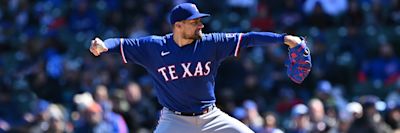
This one is a prop bettor's dream because of frequency. Altuve and the Astros are in the same division as Eovaldi and the Rangers. They will face each other at minimum 13 times in 2026, probably closer to 15-18 times. And every single time, Altuve walks to the plate with a career .381 average and 7 home runs in 42 at-bats against Eovaldi burning in his back pocket.
Seven dingers in 42 at-bats is a home run every 6 trips to the plate. Altuve only strikes out 5 times in 43 plate appearances against Eovaldi, a K rate under 12%, which is absurd against a pitcher who averaged 8.7 K/9 last season. Altuve simply does not miss when Eovaldi is on the mound. The pitch recognition is locked in.
Prop Play: This is a high-frequency gold mine. Mark every Astros-Rangers series on your calendar. Altuve hits over, total bases over, and HR Yes are all in play when Eovaldi starts.
3. Austin Riley vs Aaron Nola
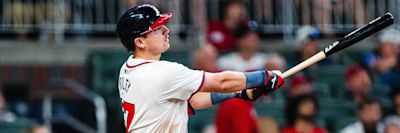
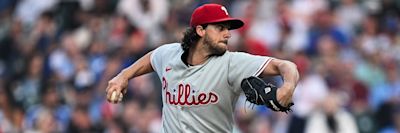
The NL East is where this matchup lives, and it lives there violently. Riley is hitting .386 against Nola over 60 plate appearances with 6 bombs and 11 RBIs. That is a 57-at-bat sample, which is substantial enough to take very seriously. With 22 hits in 57 AB, Riley is getting on base roughly 4 out of every 10 plate appearances, and when he connects, the ball does not stay in the park. Six of his 22 hits have left the yard.
What makes this matchup particularly juicy is the schedule. Braves and Phillies are NL East rivals. They play 13 games against each other in the regular season. Nola will start 3-4 of those games. Every single one is a circled date for prop bettors.
4. Aaron Judge vs Jose Berrios
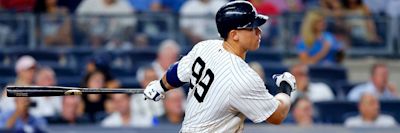
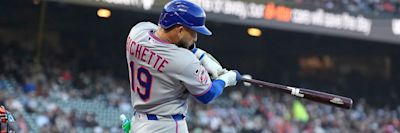
Judge versus Berrios is another AL East matchup that will show up on the schedule plenty. The big man is 14-for-38 (.368) with 4 home runs and 10 RBI. He only strikes out 7 times in 44 plate appearances, which for Judge is practically surgical contact. His normal career K rate is around 28%. Against Berrios? It drops to 16%. That means Judge is putting the ball in play far more often, and when Aaron Judge puts the ball in play, it tends to travel a very, very long way.
Want to run your own matchup analysis? Our Prop Lab has tools for every angle.
Open Prop LabPart 2: Pitchers Who Own Hitters
Now we flip the script. These are the matchups where elite hitters turn into league-minimum bench bats. The kind of splits that make you double-check the stats because they seem like an error.
5. Chris Sale vs Aaron Judge
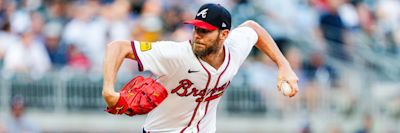
This is the single most shocking matchup in baseball right now. Aaron Judge, the man who hit 53 home runs last season, the man who crushed 62 in 2022, the most feared right-handed hitter on the planet, is essentially helpless against Chris Sale. Five hits in 27 at-bats. One lonely home run. And 17 strikeouts. That is a strikeout rate of 63%, more than double his already power-hitter-elevated career rate.
Sale's sweeping slider from the left side clearly creates a visual nightmare for Judge. The tall, lanky release point combined with that deceptive arm slot gives Judge a look he simply cannot solve. Over 33 plate appearances, this is no longer a quirk. It is a pattern.
Sale is now Atlanta's Opening Day starter in 2026 after inking a $27 million extension. The Braves and Yankees will meet in interleague play, and whenever that happens, Sale's K prop should jump to the top of your board.
Why This Matchup Exists
- Sale's sweeping slider from the left side creates an extreme visual challenge for right-handed hitters. Judge's 6'7" frame creates a large strike zone, and Sale's slider starts in the zone before diving below Judge's hands. The pitch looks hittable until it vanishes.
- Sale releases from a low three-quarters arm slot that Judge rarely sees from other pitchers. This unfamiliar release point disrupts Judge's timing because his brain has to recalibrate where the ball is coming from. Most right-handers throw from a conventional over-the-top slot. Sale is nearly sidearm.
- Judge's swing path is built to elevate. He generates power by getting under the ball and lifting it. Sale's fastball has elite ride (induced vertical break) and his slider has sharp downward break, meaning Judge's bat path passes through empty space consistently. The pitches are moving in the opposite direction from where Judge's barrel is traveling.
Prop Play: Sale strikeout over is the play. If Judge is in the lineup and Sale's K line is set at 7.5 or 8.5, the fact that Judge alone is likely to contribute 1-2 strikeouts to that total gives you a built-in edge. Also consider Judge hits under and Judge K prop Yes.
6. Max Fried vs Francisco Lindor
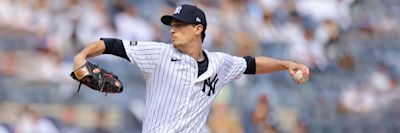
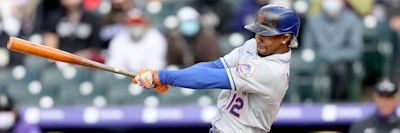
Francisco Lindor is one of the best shortstops in baseball. He hit 33 home runs last season. He carried the Mets to the postseason. But against Max Fried, he looks like a pitcher trying to hit. Four hits in 34 at-bats. A .118 batting average. Zero walks. Zero. Lindor, who normally has good plate discipline, has not drawn a single walk against Fried in 34 career plate appearances. That means Fried has never once lost the at-bat to Lindor.
And here is what makes this matchup electric for 2026: Fried is now a New York Yankee after signing his $218 million mega-deal. He was named the Yankees' Opening Day starter. Lindor is the heart of the New York Mets lineup. When the Subway Series rolls around, Fried versus Lindor will be one of the most watched matchups in baseball, and the data says Lindor is completely overmatched.
7. Gerrit Cole vs Bo Bichette
Another Subway Series landmine. Bichette signed a 3-year, $126 million deal with the Mets this offseason, and that means he is now stepping into Gerrit Cole's crosshairs for Yankee-Met matchups. The problem? Bichette is 7-for-43 against Cole with 11 strikeouts and zero walks. That is a .163 average with a .442 OPS over 43 plate appearances. The sample is massive. This is not noise. Cole has Bichette completely solved.
The 43 at-bats with zero walks is particularly damning. It means Bichette has never worked a free pass against Cole. He either makes weak contact or whiffs. Those are the only two outcomes. For Subway Series games where Cole starts, Bichette hits under and Cole K over are both strong prop angles.
The Complete BvP Cheat Sheet for 2026
Here is every extreme matchup we identified, sorted into two categories: hitter dominance and pitcher dominance. Bookmark this page. Every time one of these matchups appears on the day's schedule, you have a prop edge.
Hitter Dominance Matchups
| Hitter | Pitcher | AB | H | HR | AVG | OPS | Division? |
|---|---|---|---|---|---|---|---|
| Devers (SF) | Cole (NYY) | 40 | 14 | 8 | .350 | 1.410 | Interleague |
| Altuve (HOU) | Eovaldi (TEX) | 42 | 16 | 7 | .381 | 1.324 | AL West |
| Riley (ATL) | Nola (PHI) | 57 | 22 | 6 | .386 | 1.206 | NL East |
| Ramirez (CLE) | Cole (NYY) | 23 | 9 | 2 | .391 | 1.283 | Interleague |
| Schwarber (PHI) | Williams (WSH) | 45 | 12 | 6 | .267 | 1.100 | NL East |
| Guerrero Jr (TOR) | Cole (NYY) | 35 | 12 | 2 | .343 | 1.043 | AL East |
| Judge (NYY) | Berrios (TOR) | 38 | 14 | 4 | .368 | 1.195 | AL East |
Pitcher Dominance Matchups
| Pitcher | Hitter | AB | H | K | AVG | OPS | Division? |
|---|---|---|---|---|---|---|---|
| Sale (ATL) | Judge (NYY) | 27 | 5 | 17 | .185 | .667 | Interleague |
| Fried (NYY) | Lindor (NYM) | 34 | 4 | 7 | .118 | .324 | Subway Series |
| Cole (NYY) | Bichette (NYM) | 43 | 7 | 11 | .163 | .442 | Subway Series |
| Scherzer (TOR) | Freeman (LAD) | 53 | 11 | 15 | .208 | .770 | Interleague |
| Verlander (DET) | Santana (ARI) | 86 | 19 | 19 | .221 | .913 | Interleague |
How to Build This Into Your Daily Prop Workflow
Knowing the data is only half the battle. Here is a practical, step-by-step process for turning BvP matchups into prop plays every single day during the 2026 season.
Step 1: Check the starting pitchers. Every morning, sportsbooks and sites like ESPN post probable pitchers for that day's games. Cross-reference those names against the matchups on this page. Or better yet, use our Today's Active Matchups tool at the top of this page to do it instantly.
Step 2: Confirm the hitter is in the lineup. BvP data only matters if both players are on the field. Check lineup cards once they are posted, usually 2-3 hours before first pitch.
Step 3: Check current form. Career splits are powerful, but they are even more powerful when the hitter or pitcher is also performing well in the current season. A hot hitter with a dominant BvP matchup is the best possible prop setup.
Step 4: Target the right prop. For hitter-dominance matchups, focus on: hit props over, total bases over, home run Yes, and RBI over. For pitcher-dominance matchups, focus on: pitcher strikeout over, hitter hit props under, and hitter strikeout Yes. For a detailed breakdown of every prop type, check our complete props guide.
Step 5: Size your bet appropriately. BvP matchups are edges, not guarantees. Even Devers strikes out against Cole sometimes. One or two units per play, never chasing, always looking for the next matchup.
Daily BvP Prop Checklist
Click each item as you work through your pre-game process. All 6 must be checked before placing a BvP-based prop bet.
Run live scenarios in the Prop Lab with custom inputs and real-time data.
Open Prop LabSample Size Warning: BvP data is most reliable when built on 30+ plate appearances. Below that threshold, random variance can create misleading splits. Every matchup in this article meets or approaches that standard, but always check the plate appearance count before building a play around it.
The Subway Series Prop Bonanza
If there is one takeaway from this research, it is this: circle every Yankees-Mets game on your calendar. The Subway Series is absolutely loaded with extreme BvP matchups in 2026.
Max Fried (Yankees) owns Francisco Lindor (.118 AVG). Gerrit Cole (Yankees) owns Bo Bichette (.163 AVG). The Mets lineup has two of its key pieces walking into matchup nightmares whenever these pitchers take the mound. On the flip side, when the Mets send their pitchers out, they will be facing Aaron Judge, who historically crushes Blue Jays pitching that has followed Berrios around the league.
The Subway Series has always been about bragging rights. In 2026, it is also about prop edges.
Final Thoughts
Most prop bettors are swimming in the same pool: looking at season averages, recent form, maybe lefty/righty splits. That is all useful information. But BvP data adds a layer of specificity that almost nobody else is using. When Rafael Devers has 8 career home runs against Gerrit Cole, that is not a fluke. That is a hitter who has a specific pitcher figured out at a deep, almost unconscious level. And when sportsbooks post Devers' home run prop at the same price they would against any other pitcher, you are getting a bargain.
The matchups in this article are not theoretical. They are not projections. They are what actually happened when these two players faced each other, verified through career statistics. Baseball is a game of matchups. The more specific your data, the sharper your edge. Use it.