
The Red Sox rookie has franchise-debut-record talent and a devastating arsenal. But an 85-pitch limit physically prevents him from logging enough innings to reach 7 K's. This is a ceiling play, not a talent play. Here's the math.


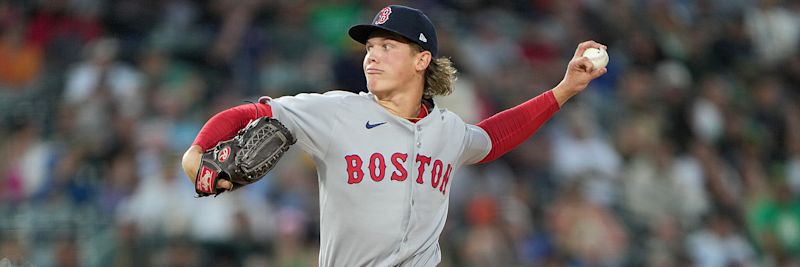
Let's get one thing straight right up front: Connelly Early can flat-out pitch. The 23-year-old left-hander made one of the most electric MLB debuts in recent Red Sox history when he struck out 11 batters in his first career start on September 10, 2025, tying the franchise record for strikeouts in a debut. He followed that up by making a playoff start at Yankee Stadium. As a rookie. The kid has ice in his veins and a stuff profile that screams future ace.
So why are we betting the under on his strikeouts today?
Because talent and opportunity are two completely different things. Early has the arm to punch out 10 hitters in any given start. What he doesn't have today is the leash. The Red Sox have set an 85-pitch count limit for Early's 2026 season debut, per ESPN's reporting. That number is the entire thesis. It doesn't matter how electric your stuff is if the team pulls you after the fourth or fifth inning. The under 6.5 at -155 is a play on logistics, not on ability.
This is the paradox that creates value in the market: bettors see the flashy debut, the spring numbers, the K potential, and they push the line toward the over. But the math simply doesn't support 7+ strikeouts when the pitch count is capped this aggressively.
Before we bury the over, let's give Early his flowers. What he did in his 2025 debut wasn't a fluke or a product of facing a weak lineup. Eleven strikeouts in your first career start is historically rare. It tied the Red Sox franchise record and announced Early as one of baseball's most exciting young arms.
His brief 2025 MLB stint produced a 2.33 ERA. Then the Red Sox trusted him with a playoff start at Yankee Stadium, one of the most hostile environments in baseball. For a 22-year-old to walk into that stadium and compete tells you everything about his makeup and composure. This isn't some soft-tossing finesse guy who might crumble under pressure. Early attacks hitters with conviction.
The talent is what makes this line 6.5 instead of 4.5. Sportsbooks know Early can miss bats at an elite rate. That's why the line is relatively high for a rookie on a pitch count. But the books are also juicing the under to -155, which tells you they believe the structural constraints make 7+ strikeouts unlikely. We agree with the books' pricing here, and that's a rare thing to say.
His spring training performance reinforced the debut wasn't a mirage. Across 17 innings this spring, Early posted a 1.59 ERA with a 0.941 WHIP, striking out 16 batters while allowing just 11 hits and 5 walks. Those are dominant numbers. The Red Sox were so impressed they handed him the third spot in the rotation on Opening Day at 23 years old. That's a massive vote of confidence from a contending team.
But here's the thing about spring numbers: they tell you the stuff is working. They don't tell you the pitcher will get six or seven innings of rope in his first regular season start of the year. And for a strikeout prop, innings matter more than talent.
This is the core of the play, so let's walk through the arithmetic carefully.
An 85-pitch limit in a major league game typically translates to 4 to 5 innings of work. The exact number depends on pitch efficiency, obviously. A pitcher who throws first-pitch strikes and works quickly might stretch to 5 full innings. A pitcher who runs deep counts, walks a couple of batters, or gets into traffic will come out after 4.
Conservative scenario (16-17 pitches per inning): 85 pitches = 5.0 innings, roughly 20-21 batters faced
Efficient scenario (14-15 pitches per inning): 85 pitches = 5.2-5.5 innings, roughly 22-23 batters faced
Struggling scenario (18+ pitches per inning): 85 pitches = 4.0-4.2 innings, roughly 17-18 batters faced
Now layer in the strikeout math. Early's spring K rate was roughly 16 strikeouts in 17 innings, which works out to about 8.5 K/9. That's elite. But a K/9 rate only matters in the context of how many innings you actually throw.
| Scenario | Innings | Batters Faced | Projected K's (at ~25% K rate) |
|---|---|---|---|
| Conservative (17 P/IP) | 5.0 | ~21 | 5.3 |
| Efficient (15 P/IP) | 5.2 | ~22 | 5.5 |
| Best Case (14 P/IP) | 5.5 | ~23 | 5.8 |
| Struggling (18+ P/IP) | 4.0 | ~17 | 4.3 |
Even in the best-case scenario where Early is ruthlessly efficient, his projected strikeout total tops out at approximately 5.8. To reach 7 strikeouts, he would need to either significantly exceed his spring K rate against major league hitters, or somehow stretch past the 85-pitch limit his team has publicly set. Neither is likely in a season debut where the Red Sox are managing their prized young arm for October.
Strikeouts are expensive pitches. The average strikeout takes roughly 4.5-5.0 pitches to complete because you need to get to two strikes and then get the whiff or the called third strike. Compare that to a groundball out, which might take 1-3 pitches. If Early racks up K's at a high rate, he's actually burning through his pitch count faster, which means he'll come out sooner, which further limits his total K volume.
It's a self-defeating cycle. The better Early is at striking hitters out, the faster he reaches 85 pitches, and the sooner the Red Sox pull him. There is no realistic pathway to 7+ strikeouts with this constraint.
Great American Ball Park is one of the most hitter-friendly environments in Major League Baseball. The compact dimensions, particularly the short right-field line and generous power alleys, consistently produce some of the highest run-scoring totals in the sport. Today's total is set at 8.5, reflecting the expectation of offense.
So how does a hitter's park help a strikeout under? Two ways.
First, hitters at GABP tend to be more aggressive. When you know the ball carries and the park plays small, you swing. You don't take borderline pitches hoping for walks. Aggressive swings lead to more balls in play, and balls in play are not strikeouts. The Reds' lineup will likely be hacking early in counts against a young lefty they've never seen before, which means more 1-2 pitch at-bats ending in contact rather than 5-6 pitch at-bats ending in whiffs.
Second, if runs score, the Red Sox have even more reason to manage Early's workload carefully. A high-scoring environment means the game can get out of hand quickly, and the last thing Boston wants is to leave their 23-year-old rookie out there getting shelled at 80 pitches just to chase one more inning. If Cincinnati puts up a crooked number early, Early's day could end at 70 pitches in the fourth inning.
The hitter-friendly environment at GABP creates a scenario where Early is most likely to exit early (pun intended). Either he's efficient and gets pulled at 85 pitches after 5 innings, or he gives up traffic and gets pulled even sooner. Both outcomes point toward the same conclusion: not enough runway for 7 strikeouts.
Early's spring training was genuinely impressive. A 1.59 ERA, 0.941 WHIP, and 16 strikeouts across 17 innings of work would catch anyone's eye. He earned the third rotation spot not through pedigree or prospect ranking alone but through performance. The Red Sox saw what they needed to see and made the call.
But let's be honest about what spring training is and what it isn't.
Spring training lineups are filled with roster fringe players, minor leaguers fighting for bench spots, and stars who are working on timing rather than trying to win. The competitive intensity is fundamentally different from a regular season game. Pitchers routinely see inflated strikeout numbers in March because the quality of at-bats they face is lower than what they'll see in April.
Early's performance across different contexts. The debut was electric, but each sample is extremely small.
Early's 16 K in 17 IP this spring works out to approximately 8.5 K/9, which is strong but not otherworldly. Importantly, it's roughly in line with what you'd expect from a pitcher with his stuff profile. He's not going to suddenly become a 12 K/9 pitcher against big league lineups. If anything, his K rate could dip slightly as he faces full-strength regular season rosters for the first time with a real game plan against him.
The spring numbers confirm the arm talent is real. They don't change the pitch count math. Sixteen strikeouts in 17 innings is elite, but it happened over multiple outings totaling 17 innings, not in a single 5-inning, 85-pitch window. Context is everything.
No prop is a certainty, even at -155. Here are the scenarios where this bet loses:
We've weighed these scenarios and still feel confident. The 85-pitch limit is the dominant factor, and the Red Sox have no incentive to blow through it on Opening Weekend for a team with October aspirations.
This is one of the cleaner under plays you'll find in early-season baseball. The market is pricing Connelly Early's strikeout prop based on his talent level, which is legitimate. The kid has a filthy arm, a franchise-debut record to prove it, and a spring that reinforced everything we saw in September.
But talent is only one variable. The other is opportunity. And with an 85-pitch limit firmly in place for this start, Early is looking at roughly 4 to 5 innings of work. At his spring K rate, that projects to approximately 5 to 6 strikeouts. To clear 6.5, he would need to significantly outperform his established rate in a park that encourages contact, against a lineup he's never faced in the regular season, in a game where the Red Sox have every incentive to protect his arm.
ESPN projects a 72% win probability for Boston today with an expected value of $29.65 on the spread. But the game outcome isn't what we're betting on. We're betting on the structural constraint of a pitch count. The Red Sox are managing Connelly Early for 2026 and beyond, not for one Saturday afternoon in Cincinnati. That management directly caps his K ceiling. The under 6.5 at -155 is the play.
We don't love laying -155 juice. It's not the kind of plus-money spot we prefer. But the confidence level here is high precisely because this isn't a projection bet or a matchup bet. This is a logistics bet. The team has told us the constraint. We just have to listen.