The first-inning market is its own little game inside the game. It does not care who wins, how many runs cross the plate, or which bullpen blows up in the seventh. It cares about one thing: does anybody score before the second inning begins. No Runs First Inning, the NRFI, is a bet that the opening frame stays scoreless on both sides, and its opposite, the YRFI, is a bet that at least one run lands. For July 2 at Globe Life Field, the case for the NRFI is not about strikeouts or stuff. It is about two starters who have been quietly locking down the first inning and two offenses that have been slow to start.
Framber Valdez takes the ball for the Detroit Tigers and Nathan Eovaldi answers for the Texas Rangers. Neither is the ace he was at his peak, but both share the trait that matters most for a first-inning bet: they get through the opening frame clean far more often than not, and lately they have been doing it every time out. Valdez has opened with a scoreless first in four consecutive starts. Eovaldi has done it in five straight. Between them, that is nine straight clean first innings walking into this game, and Eovaldi's control is the reason his streak holds up.
Why The First Inning, And Why These Two Arms
First-inning runs come from two ingredients: baserunners and a mistake pitch. Take away the free baserunners and the whole inning tends to stay quiet, because a lineup that has to string together three clean hits to score in the opening frame usually does not. That is exactly why Eovaldi is such a natural NRFI arm. He has walked just 23 hitters across 100.1 innings, a 2.06 walk-per-nine rate that is among the best of any starter in baseball. When he is not handing out the leadoff walk, the top of the Detroit order has to earn every base, and through the first inning that is a tall order.
Valdez comes at it from the other direction. He is a groundball starter, the kind who induces early contact and lets his infield turn it into outs. He is not walking his way into trouble either, and while his 4.05 ERA says he is hittable over a full outing, the first inning has been his safe harbor. He has kept the opening frame scoreless in 12 of his 17 starts this season, a 70.6 percent clean rate, and the four he has strung together most recently were against live lineups, not soft ones. A groundball first inning is a quiet first inning, and quiet is all NRFI needs.
The First-Inning Splits, Both Halves Of The Frame
An NRFI is really two separate mini-bets stacked together. The top of the first is the Detroit offense against Eovaldi. The bottom of the first is the Texas offense against Valdez. Both halves have to stay scoreless. So the honest way to read this play is to look at each side of the inning on its own, and the numbers hold up on both.
Start with the pitchers. Valdez has been clean in the opening frame 70.6 percent of the time, Eovaldi 62.5 percent. Now the offenses. The Tigers have been held scoreless in the first inning in 59 of their 86 games, a 68.6 percent rate, and the Rangers in 61 of 87, a 70.1 percent rate. Neither of these lineups is a first-inning wrecking crew that forces you to fade the market. Both sit right around the league norm of scoring in the first inning roughly three times in ten. Put the steady pitcher rates next to the middling offense rates and the opening frame profiles as a coin flip that leans toward quiet, which is what recent form has delivered.
Nathan Eovaldi: The Control That Powers The NRFI
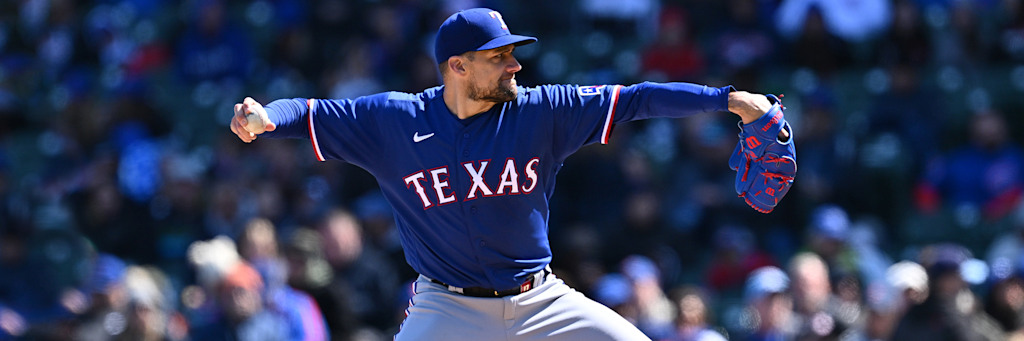
Eovaldi is the anchor of this bet. His full-game line is good rather than spotless, a 3.95 ERA with 101 strikeouts across 100.1 innings, but the specific skill that drives a first-inning bet is his walk rate, and there it is elite. Just 23 walks all season works out to 2.06 per nine, which means the leadoff man rarely reaches for free. He is not perfect in the opening frame, with a scoreless first in 10 of his 16 starts, but the six blemishes came earlier in the year. His recent form is a clean five in a row, and a strike-thrower with a five-start streak of scoreless firsts is exactly the profile the NRFI wants on the mound.
His strikeout stuff matters here too, in a supporting way. A pitcher who can reach for a punchout when he needs one is a pitcher who can strand a leadoff single without a run scoring, and Eovaldi still misses bats at better than a strikeout per inning. He does not have to be dominant across six innings for this bet. He has to navigate nine outs, three of them, without letting a run cross, and the control plus the swing-and-miss give him two different ways to do it.
Framber Valdez: Ground Balls And A Quiet Opening Frame
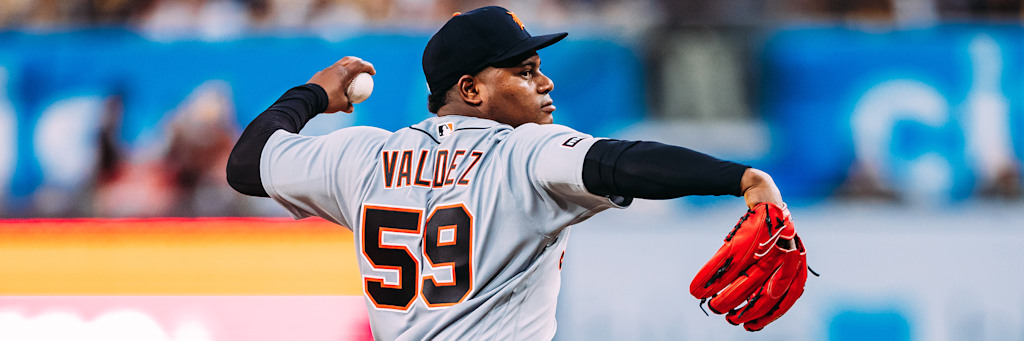
Valdez is the higher-variance half of this bet, but the first inning has been his best inning. His 4.05 ERA and 1.34 WHIP say the damage against him tends to pile up later, when the lineup turns over and the pitch count climbs. In the opening frame, before hitters have seen him and while his sinker is at its sharpest, he has been reliable: scoreless in 12 of 17 starts, and clean in four straight coming in. The groundball profile is the reason. Early contact off a heavy sinker becomes a routine grounder, and routine grounders do not score runs.
There is a strikeout angle in the same game worth flagging, because it reinforces the read on Valdez rather than fighting it. Our model also lands on Valdez under 5.5 strikeouts as a strong lean, priced around -142. His 7.24 strikeout-per-nine rate on roughly five and two-thirds innings a start points to about four and a half punchouts, and he has finished under 5.5 in 12 of his 17 outings. That is a pitch-to-contact starter, and a pitch-to-contact starter who works quick early is precisely the kind of arm that keeps the first inning off the board. The two reads point the same way.
The Matchup At A Glance
| Factor | Detail | Why It Matters |
|---|---|---|
| The pitchers | Framber Valdez (DET) vs Nathan Eovaldi (TEX) | Clean first innings in 12 of 17 and 10 of 16 starts, both streaking |
| The play | No Runs First Inning, -137 | Break-even is 57.8 percent, the honest bar this bet has to clear |
| FanDuel alternative | Under 0.5 first-inning runs, -148 | The same bet by a different name, break-even 59.7 percent |
| Recent form | Valdez 4 straight, Eovaldi 5 straight clean firsts | Nine consecutive scoreless opening frames between them |
| The offenses | Tigers scoreless in 1st 68.6%, Rangers 70.1% | Two middling early offenses, neither a first-inning threat |
| The edge under the hood | Eovaldi 2.06 walks per nine | Fewer free baserunners is the single biggest NRFI driver |
What The Price Is Actually Asking
Here is where the honesty has to live. NRFI at -137 is not a giveaway. That price implies a 57.8 percent break-even, and the FanDuel Under 0.5 at -148 asks for 59.7 percent. Each individual component in this game clears those bars: Valdez at 70.6 percent, Eovaldi at 62.5 percent, both offenses just under 70 percent scoreless. The catch is that an NRFI requires both halves of the inning to stay quiet at the same time, and when you stack two roughly two-in-three events, the combined probability tightens toward a coin flip rather than a lock. That is why this is a one-unit play and not a hammer.
The reason to still back it is the tie-breaker that the season averages miss: current form and control. A pitcher's first-inning results are streaky, and both of these arms are in the good half of that streak right now, with nine clean firsts in a row between them. Layer on Eovaldi's tiny walk rate, which suppresses exactly the free baserunners that manufacture cheap first-inning runs, and the recent signal points a notch past the raw season math. This is a lean on form and command, priced at a number that respects both starters. It is a play, not a proclamation.
The Honest Counterpoint
Every NRFI has one enemy, and it is the leadoff extra-base hit. All it takes is a first-pitch double and a productive ground ball, or a walk and a gap shot, and the frame is on the board before either pitcher settles in. Eovaldi is the more likely source of that script, because for all his control he has still surrendered a first-inning run in six of sixteen starts, and a mistake to the top of a Detroit order that can drive the ball is the clean way this loses. Valdez, for his part, carries a 3.20 walk rate that is higher than Eovaldi's, so a leadoff walk followed by a double is not off the table on his side either.
The other honest note is the price relative to the base rate. If you strip out the recent streaks and treat both halves of the inning as independent season averages, the combined NRFI sits close to the 57.8 percent line the market is charging, which means the edge here is thin and rests on the form read holding. That is a fair reason to keep the stake at one unit, take the -137 over the -148 where you can, and treat this as a lean built on two starters who have been locking down the opening frame rather than a mispriced number screaming to be hammered.
How To Bet It
- The play: Tigers at Rangers No Runs First Inning at -137, one unit. Prefer the -137 to the FanDuel Under 0.5 at -148 for the cheaper number.
- Why NRFI: Valdez and Eovaldi are riding four- and five-start clean first-inning streaks, and Eovaldi's 2.06 walk rate strangles the free baserunners that create early runs.
- The offenses: the Tigers are held scoreless in the first 68.6 percent of the time and the Rangers 70.1 percent, neither a first-inning threat.
- The price: -137 is a 57.8 percent break-even, so this is a lean, not a lock.
- The risk: a leadoff extra-base hit that scores, most likely off Eovaldi, who has allowed a first-inning run in six of sixteen starts.
- The stake: one unit, because the edge rests on recent form holding rather than a fat mispricing.
Final Verdict
The best first-inning bets are not about who has the nastiest slider. They are about who avoids the free baserunner and who has been quiet in the opening frame lately, and this matchup checks both boxes. Valdez pounds the ground with his sinker and has opened clean in four straight. Eovaldi barely walks anybody and has opened clean in five straight. Two middling early offenses sit across from them, each scoreless in the first about seven times in ten. The -137 price is fair rather than generous, so the stake stays a single unit, and the leadoff extra-base hit off Eovaldi is the genuine way it loses. But the form, the control, and the offense profiles all point the same direction. No Runs First Inning is the play at Globe Life Field on July 2. That is the pick.
FAQ
The play is No Runs First Inning between Detroit and Texas at -137, with a FanDuel alternative of Under 0.5 first-inning runs at -148. Framber Valdez starts for the Tigers and Nathan Eovaldi for the Rangers at Globe Life Field. Valdez has been clean in the first inning in 12 of 17 starts and Eovaldi in 10 of 16, and both bring active clean first-inning streaks, Valdez four straight and Eovaldi five.
Because a first-inning bet rewards control and recent form more than raw dominance. Eovaldi walks just 2.06 per nine, which removes the free baserunners that turn into early runs, and he has opened scoreless in five straight. Valdez is a groundball starter clean in four straight opening frames. Both the Tigers and Rangers are also held scoreless in the first inning in roughly seven of ten games.
The price and the leadoff extra-base hit. NRFI at -137 needs to hit 57.8 percent to profit, and the FanDuel Under 0.5 at -148 needs 59.7 percent. Eovaldi has still allowed a first-inning run in six of sixteen starts, so a first-pitch double that scores against the top of the Detroit order is the clean way this loses. That is why the stake is a single unit.