Eight innings, two strikeouts. Sit with that line for a second, because it is the strangest good start of the season and it is the reason this page exists. On June 28 in Atlanta, Robbie Ray faced a Braves lineup for eight shutout innings and punched out exactly two hitters. Five days earlier he had gone eight scoreless against the Athletics with six. A pitcher who once led the American League in strikeouts is suddenly recording 24 outs a night with his defense, and the strikeout market is pricing him like the old model never shipped out.
The season numbers tell the story slowly, and the recent ones tell it fast. Across 19 appearances, 18 of them starts, Ray has 90 strikeouts in 106.2 innings, a 7.59 per-nine rate that is respectable and nothing more. That works out to 4.74 strikeouts per outing against a line of 5.5, and the Under has landed in 11 of his 19 trips to the mound. Then the recent form: his last four starts produced strikeout counts of 6, 2, 4, and 4 across 27 innings, a 5.33 per-nine clip, while he pitched deeper into games than at any point all year. The innings went up. The whiffs went down. That combination has a name, and the name is pitch-to-contact.
Our model ran the full July 19 slate, 14 contracts across the strikeout and pitcher outs markets, and exactly one cleared as playable: Ray Under 5.5 at -132, where the model prices his over probability at 31 percent against a market implying 46. A fifteen-point argument between the model and the board is loud on any morning. It is the whole board today.
Graded, July 19 final: The read missed. Robbie Ray struck out 6 Mariners across 4 innings in a 6-3 Giants loss at T-Mobile Park, clearing the 5.5 line by half a strikeout in his shortest start of the month. The month of pitch-to-contact starts was real, but Seattle’s ninth-ranked strikeout rate was the loud counterpoint in this piece and it decided the night. The day’s card went 1-2: Cardinals Team Total Under 4.5 lost on a seven-run night, Nationals moneyline won 5-2, and Giants-Mariners Under 7.5 lost at nine runs. Results confirmed from the official box scores.
The Strikeout Artist Who Stopped Making Strikeouts
Every strikeout prop is a bet on two things, the rate and the innings, and Ray has spent 2026 running them in opposite directions. Early in the year he looked like the pitcher his reputation promises. He struck out seven Mets on April 2, seven Phillies on April 7, seven Nationals on April 19, seven Pirates on May 8. Five times in his first eight outings he cleared this exact line. Since the middle of May the profile has bent. He struck out two Dodgers on May 13. One Diamondback on May 18, the night he was charged with nine earned runs. Three White Sox on May 24. Three Nationals on June 10. The 8-strikeout night against Atlanta on June 16 now reads as the last loud echo of the old version, because everything after it has been quiet: 6, 2, 4, 4.
Here is the part that makes the under interesting rather than obvious. Ray is not fading, he is converting. The 3.38 ERA is genuinely good, the 8-6 record is honest, and the two eight-inning starts in late June were the deepest he has gone in years. A pitcher with a 4.39 walks-per-nine rate does not survive deep outings while striking nobody out unless he is getting fast, soft contact, and that is exactly what the box scores describe. The market sees a healthy veteran going deep and assumes the strikeouts travel with him. The game log says they stayed behind.
Robbie Ray: Good Pitcher, Vanishing Whiffs
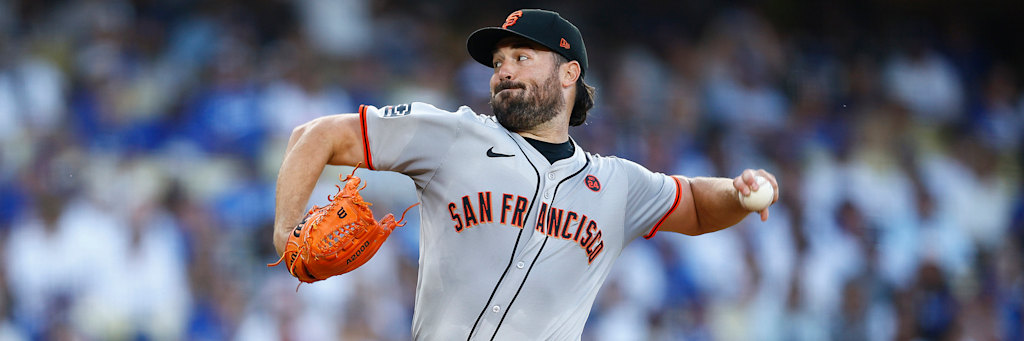
The model's math on this one is worth showing rather than summarizing. Ray's over probability comes out at 31 percent on the projection engine, and even after blending toward the market's own 46 percent implied number, the final figure lands at 39 percent, which prices the Under with a 7.7 percent expected value edge at -132. That was the largest edge on the board by a wide margin, more than four percentage points clear of the market after blending, and it is why a Sunday slate of 16 games produced exactly one playable contract instead of three or four. The model is not saying Ray is bad. It is saying the market is charging strikeout-artist prices for a pitcher who has become something else.
The something else is worth respecting on its own terms. Since June 23, Ray has thrown 27 innings across four starts with a 1.33 ERA in that stretch, allowing four earned runs total, and the Giants have needed every bit of it at 42-56. But the strikeout market does not pay for run prevention. It pays for whiffs, and 16 strikeouts in 27 innings is the arithmetic of a man throwing strikes early, living on his defense, and handing the total exactly nothing. Even his walk rate, a 4.39 per-nine figure that has dogged him all season, works for the under here: traffic means longer innings, higher pitch counts, and earlier exits on the days the contact does not cooperate.
The Honest Counterpoint, Stated Plainly
Seattle is the wrong lineup to be cute against. The Mariners strike out in 23.10 percent of their plate appearances, the ninth-highest rate in baseball and comfortably above the 22.14 percent league average. They hit .227 as a team with a .684 OPS, which is why they sit at 49-50 despite real pitching, but a low-average, high-whiff lineup is precisely the kind that hands a starter six strikeouts without his best stuff. Ray does not need to rediscover April to clear this line against these hitters. He needs one swing-and-miss inning.
And the cushion is thin. His 11-of-19 under record is 57.9 percent. The -132 price needs 56.9. One point of margin on the season-long record is no margin at all, which is why we keep saying the projection is the bet rather than the history. The model's case rests on the last month being the real Ray, the 5.33 per-nine version, and on the eight-inning, two-strikeout night in Atlanta being signal instead of noise. We think it is signal, because the innings and the whiffs moved in opposite directions at the same time, and that is a pitching plan, not a slump. But if the old Ray shows up at T-Mobile Park against a top-ten whiff lineup, this page will wear it.
The Full July 19 Board: One Play, Thirteen Passes
We publish the whole board on days like this because a one-play morning is only trustworthy if you can see what got rejected. Fourteen contracts were evaluated, eight strikeout markets and six pitcher outs markets, across four late games. Here is every one of them.
| Contract | Line & Best Price | Model Over% | Market Over% | Verdict |
|---|---|---|---|---|
| Robbie Ray (SF) at Mariners, strikeouts | Under 5.5, -132 | 31.2% | 46.3% | Strong. The featured read. |
| Eduardo Rodriguez (ARI) vs Cardinals, strikeouts | Under 3.5, +122 | 47.7% | 57.5% | Pass. Real lean, edge short of playable. |
| Jacob Lopez (ATH) vs Nationals, strikeouts | Under 3.5, +118 | 49.1% | 56.7% | Pass. Same shape, thinner. |
| Casey Mize (DET) at Angels, strikeouts | Over 5.5, -136 | 57.6% | 54.3% | Pass. Model agrees, price eats the edge. |
| Foster Griffin (WSH) at Athletics, strikeouts | Over 5.5, +114 | 46.2% | 44.1% | Pass. Coin flip either way. |
| Andre Pallante (STL) at Diamondbacks, strikeouts | Over 3.5, +122 | 44.2% | 42.5% | Pass. No edge. |
| Logan Gilbert (SEA) vs Giants, strikeouts | Under 6.5, -111 | 48.0% | 50.4% | Pass. Board priced it fair. |
| Ryan Johnson (LAA) vs Tigers, strikeouts | Under 4.5, -108 | 49.2% | 51.0% | Pass. No edge. |
| Ryan Johnson (LAA), pitcher outs | Over 15.5, +128 | 48.7% | 40.9% | Pass. Raw edge, killed by the blend. |
| Foster Griffin (WSH), pitcher outs | Under 17.5, +110 | 49.0% | 55.6% | Pass. Negative after blend. |
| Eduardo Rodriguez (ARI), pitcher outs | Over 17.5, -138 | 64.3% | 54.2% | Pass. Model loves it, price too steep. |
| Robbie Ray (SF), pitcher outs | Over 17.5, -114 | 52.5% | 49.6% | Pass. Negative EV. |
| Casey Mize (DET), pitcher outs | Over 16.5, -128 | 55.2% | 52.0% | Pass. Negative EV. |
| Logan Gilbert (SEA), pitcher outs | Over 17.5, -188 | 65.4% | 60.6% | Pass. Right idea, unbettable price. |
Two of the rejections deserve a sentence instead of a table cell. Eduardo Rodriguez Under 3.5 strikeouts at plus money was the closest miss on the board: the Cardinals strike out in just 20.35 percent of their plate appearances, fourth least in baseball, and Rodriguez is a 6.24 per-nine arm, so the shape is right and only the edge threshold kept it off the card. And the raw model gave Rodriguez a 64 percent chance to clear 17.5 outs, a real vote of confidence in his length, but at -138 with a heavy market blend the contract graded negative and we do not bend the threshold for a pitcher we happen to like. He owns a 2.29 ERA and a 1.17 WHIP across 19 starts, which matters plenty later on this page.
The Day's Card: Three Team Plays
The model board above is our props analysis. The day's card is its own thing, three team markets, and the numbers on it are the numbers, exactly as bet.
Cardinals Team Total Under 4.5 (-138), 1.5 units. This is an Eduardo Rodriguez bet, and everything the props board just said about him applies. A 2.29 ERA and a 1.17 WHIP across 19 starts is elite run prevention over a real sample, and he gets a St. Louis lineup that hits .242 with a .707 OPS and put up three runs in this same building last night in a 5-3 loss. The honest number cutting the other way: the Cardinals average 4.51 runs a game on the season, which sits above this line, so the bet is that Rodriguez at home in Chase Field is a different environment from the season average. At 51-46 they are no pushover, which is exactly why the total is 4.5 and not 3.5.
Nationals moneyline (-143), 2 units. The pitching gap in this game is a canyon. Foster Griffin has quietly put together one of the better lefty seasons in the league, a 2.77 ERA with a 1.02 WHIP and 8.89 strikeouts per nine across 19 starts, and he draws Jacob Lopez, who carries a 6.83 ERA and a 1.79 WHIP into this one. The honest counterpoint is fresh: the Athletics beat these same Nationals 15-1 last night in this same park, and a 42-56 team does not score fifteen by accident. Laying -143 the day after a fifteen-run beating takes a stomach. The card takes Griffin against Lopez anyway, because one bad bullpen night does not move a starting pitching mismatch this wide.
Giants at Mariners Under 7.5 (-120), 2.5 units. The biggest play on the card sits in the same game as the featured strikeout read, and the two point the same direction: quiet bats, fast outs. Logan Gilbert is the best arm on today's slate, a 3.32 ERA with a 0.99 WHIP and just 1.89 walks per nine across 19 starts, opposite a Ray who has allowed four earned runs over his last 27 innings. The lineups cooperate too. Seattle hits .227 as a team, San Francisco whiffs at only a 20.74 percent rate that plays for contact but scores 4.13 runs a game, and last night these clubs played to a 4-3 final in this park, seven runs that would have snuck under this number. The honest risk is that last night is also the warning: seven is close to eight, and one bullpen inning decides a 7.5 total.
Where We Are Passing: First Inning And Every Outs Market
No first-inning run contract cleared the July 19 board. Not one NRFI, not one YRFI, and we are documenting that rather than reverse-engineering a first-inning story from two good starting pitchers. The temptation is obvious today of all days, because Gilbert against Ray at T-Mobile Park looks like an NRFI written by a screenwriter. But looks are not a price, the model never graded a first-inning contract positive, and a play the model never priced is decoration, not analysis.
The pitcher outs markets got a full hearing and failed it. Six contracts, six passes, every one negative after the market blend, with the two most interesting rejections explained above. Some days the board hands you three plays and some days it hands you one, and publishing the one honestly matters more than inventing the other two.
How To Approach It
- The featured read: Robbie Ray Under 5.5 strikeouts at -132, Giants at Mariners, 4:10 PM ET at T-Mobile Park.
- The case: 4.74 strikeouts per outing, Under 5.5 in 11 of 19, and 16 strikeouts across his last 27 innings while pitching deeper than ever.
- The break-even: -132 needs 56.9 percent. His season under rate is 57.9. The cushion is the projection, not the record.
- The risk: Seattle's 23.10 percent strikeout rate is ninth in baseball. One whiff-heavy inning gets Ray to six.
- The near miss worth knowing: Eduardo Rodriguez Under 3.5 strikeouts at +122 against the fourth-lowest whiff lineup in baseball. It fell just short of the playable threshold.
- The day's card: Cardinals Team Total Under 4.5 (-138) 1.5u, Nationals ML (-143) 2u, Giants Mariners Under 7.5 (-120) 2.5u.
- Sizing: one playable model contract out of fourteen is a quiet board. Bet it like one.
Final Verdict
The bet is simple even though the pitcher is complicated. Robbie Ray in 2026 is a good starting pitcher having a genuinely good July, and the strikeout market is the one place where that does not help him. He has cleared 5.5 strikeouts once since June 16. His last month is 16 strikeouts in 27 innings with a 1.33 ERA, the cleanest picture of a pitch-to-contact conversion you will find in a current game log, and it happened while the line on his name stayed at 5.5 like nothing changed. Seattle's whiff rate is the real argument against, and it is why this read is priced at -132 instead of -160, but a lineup hitting .227 has to produce six strikeouts against a man who has stopped hunting them. The model says 31 percent. The market says 46. When a fifteen-point disagreement is the only one the board produced all morning, you write about it plainly, size it sanely, and let the season keep score. One play, thirteen passes, three team plays on the day's card, and no pretending the board is louder than it is.
FAQ
The read is Robbie Ray Under 5.5 strikeouts at -132 when the San Francisco Giants visit the Seattle Mariners, first pitch 4:10 PM ET at T-Mobile Park. Ray averages 4.74 strikeouts per outing across 19 appearances this season, the Under 5.5 has landed in 11 of those 19, and his last four starts produced just 16 strikeouts in 27 innings. It was the only contract that cleared our July 19 model board out of 14 evaluated.
Because the current version of Ray is a different pitcher from the one the line is priced for. His 2026 strikeout rate sits at 7.59 per nine innings, and the trend is going the wrong way for an over: across his last four starts he punched out 6, 2, 4, and 4 hitters at a 5.33 per-nine clip while pitching deeper into games than he has all season, including two eight-inning starts. Deep innings with few whiffs is the profile of a pitcher trading strikeouts for outs, and the model prices his over probability at 31 percent against a market implying 46.
Two things. Seattle strikes out in 23.10 percent of its plate appearances, ninth most in baseball and above the 22.14 percent league average, so this is a whiff-prone lineup that can inflate a strikeout total. And Ray's own season record of 11 unders in 19 outings is 57.9 percent, which clears the 56.9 percent break-even at -132 by barely a point. The record alone does not carry this price. The projection does, and projections can be wrong.
No. The July 19 board evaluated 14 contracts, eight strikeout markets and six pitcher outs markets, and only the Ray Under cleared as playable. Every outs contract graded negative after the market blend, and no first-inning run contract cleared the board at all, so there is no NRFI or YRFI lean today and we are not manufacturing one.