Most No Runs First Inning bets are a hunt for weakness, a soft early lineup or a park that swallows fly balls. This one is a bet on excellence. Zack Wheeler and Tarik Skubal share a mound on Sunday afternoon at Comerica Park, a 2.28 ERA against a 3.06, a 0.91 WHIP against a 0.95, two of the stingiest strike-throwers in the sport closing out the first half of the season head to head. When the market prices the first inning of a game like this, it is really asking one question: do you trust two aces to do the thing they have each done better than almost anyone all year, which is start clean?
The numbers say yes, loudly, on one half and with a caveat on the other. Wheeler has been the best first-inning pitcher in this game and one of the best in baseball, a 1.29 ERA in the frame with a .143 average against and 19 strikeouts across his 14 opening innings. He has opened scoreless in 12 of 14 starts, and nobody has scored a first-inning run off him since May 29, eight straight clean firsts. Skubal's opening frame is stranger. He has struck out 17 hitters in 12 first innings and has not walked a single one, yet his first-inning ERA sits at 4.50 because five of the six runs he has allowed in the frame left the park. That is the entire shape of this bet: one immaculate half, one dominant-but-homer-dented half, and a price that respects both.
Why This NRFI Is An Arms Case, Not A Lineup Case
A No Runs First Inning is two stacked mini-bets. The top of the first is the Phillies offense against Skubal. The bottom of the first is the Tigers offense against Wheeler. Usually the analysis hunts for the dormant lineup, and it needs to be said plainly: there is no dormant lineup here. Philadelphia has hit .247 with a .797 OPS and 20 home runs in the first inning this season, 56 early runs across 96 games. Detroit has been even better at making early contact, a .278 first-inning average with a .822 OPS and 17 homers in the frame. Both offenses score a first-inning run in roughly three of every ten games. If this bet rested on the bats staying cold, it would be a pass.
It rests instead on the two arms, and they are a different class than the starters these lineups usually feast on. Wheeler at 9-1 with a 2.28 ERA and Skubal at 5-4 with a 3.06 have combined for a strikeout rate above ten per nine apiece, 10.14 for Wheeler and 10.70 for Skubal, while walking almost nobody, 2.07 and a microscopic 1.27 walks per nine. First-inning runs are built on baserunners, and these two allow fewer of them than nearly any pairing the schedule can produce. Two sub-1.00 WHIP starters in the same game is the single most NRFI-friendly structural fact there is, and it is the reason the books have priced this frame steeply everywhere.
The Two Halves Of The Frame
Start with the bottom half, the anchor. Detroit's .278 first-inning average is genuinely dangerous against ordinary pitching, but Wheeler in the first inning has not been ordinary pitching, he has barely been hittable at all. Opponents own a .437 OPS against him in the frame, he has allowed 7 hits and 3 walks across 14 opening innings, and only one ball has left the park on him early all season. His two first-inning runs came on May 1 and May 29, one apiece, and since that second one he has rattled off eight consecutive scoreless firsts. An arm that strikes out 19 hitters in 14 first innings while holding a .143 average is doing to good lineups exactly what he needs to do to this one.
The top half is where the bet earns its sweat. Skubal's first-inning line is a paradox: a 4.50 ERA in the frame sitting on top of the best command numbers imaginable, 17 strikeouts and zero walks across 12 opening innings with a .200 average against. The damage has been almost entirely one swing at a time, 5 home runs accounting for the bulk of his 6 first-inning runs, and he has been dented in the frame in three of his last five starts, single runs on June 19, June 24, and June 30 before opening clean on July 7. Against a Phillies lineup with 20 first-inning homers, the shape of the risk is obvious. The counterargument is the same one that has applied to every homer-inflated first-inning ERA all season: a pitcher who walks nobody and misses bats at that rate is not structurally leaky, he has been solo-shot unlucky, and that profile regresses toward quiet innings rather than repeating loud ones.
Zack Wheeler: The First-Inning Anchor
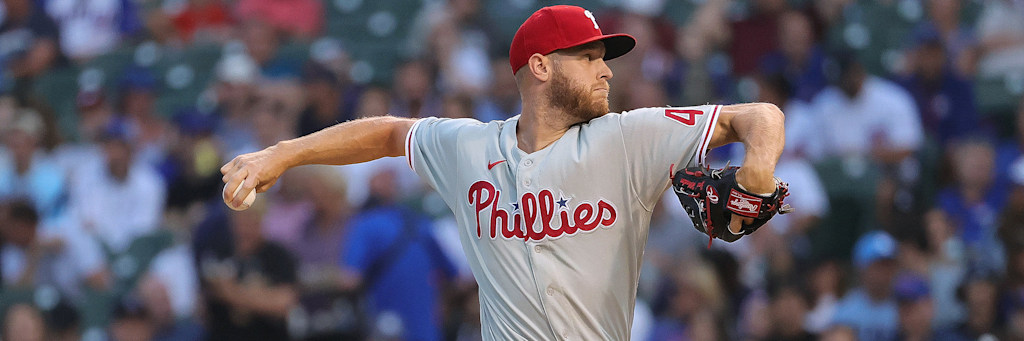
Wheeler's season reads like the work of a pitcher at the absolute peak of his powers, 9-1 with a 2.28 ERA across 14 starts, 98 strikeouts in 87 innings, and a 0.91 WHIP that says nobody reaches base against him in any inning. The first inning has been the sharpest version of all of it. He has faced 14 opening frames and allowed a run in exactly two, holding hitters to a .143 average and a .437 OPS with 19 strikeouts against 3 walks. His last first-inning run scored on May 29, and in the eight starts since he has opened scoreless every single time, carving through the Padres, Blue Jays, Marlins, Mets, Pirates, and Reds to start his outings.
That form is the anchor of this bet, and it is pointed at the right half of the matchup. Detroit's early-inning offense is legitimate, a .278 average in the frame, but it is built on contact, and contact is exactly what Wheeler's opening frame refuses to give. He is coming off a 14-strikeout demolition of Cincinnati on July 7, his arm is as live as it has been all season, and a first inning that has produced two runs in three and a half months is as close to a bankable half-inning as this market offers. If the bottom of the first stays scoreless, and everything Wheeler has done since April says it should, the bet comes down to one Skubal frame.
Tarik Skubal: Dominant Frame, Loud Variance
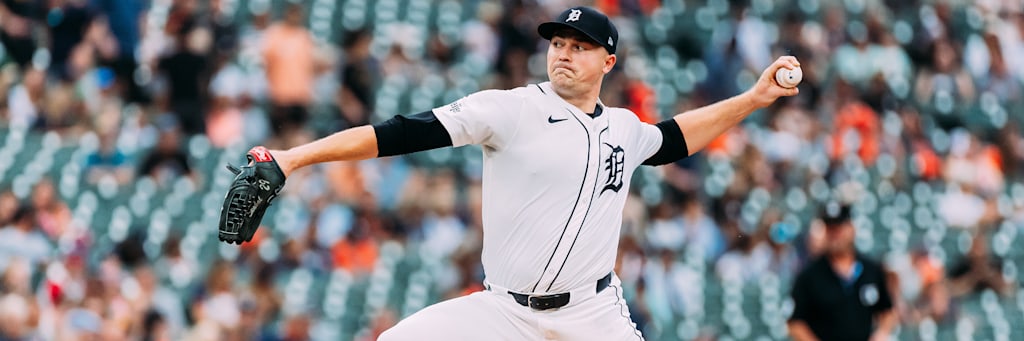
Skubal is the half of this bet that has to be argued rather than assumed, and the argument is worth making carefully. The raw first-inning ERA of 4.50 looks like a red flag, but the inputs underneath it belong to a dominant pitcher. Across 12 opening frames he has struck out 17 hitters and walked zero, not a low number, literally none, while holding opponents to a .200 average. His 1.27 walks-per-nine rate for the season is among the very best in baseball, and a 10.70 strikeouts-per-nine rate says the swing-and-miss is fully intact. What has hurt him early is one specific thing: five first-inning home runs, solo damage that accounts for nearly all six of his first-inning runs.
That is a variance profile, not a leak. A pitcher who issues no free passes and misses bats at an elite rate does not give lineups rallies, he gives them exactly one path to an early run, the home run, and that path has been hit at a rate his underlying contact quality is unlikely to sustain. The honest counterweight is that the lineup taking those swings on Sunday is built for it. Philadelphia's 20 first-inning home runs are among the most in baseball, and the top of the Phillies order gives Skubal no soft landing. He has allowed a first-inning run in three of his last five starts, one run each time, every one of them the kind of solo blow this exact bet has to survive. This half of the frame is a coin weighted in his favor, not a lock, and the stake is sized for it.
The Matchup At A Glance
| Factor | Detail | Why It Matters |
|---|---|---|
| The pitchers | Zack Wheeler (PHI) vs Tarik Skubal (DET) | ERAs of 2.28 and 3.06 with WHIPs of 0.91 and 0.95, two front-line arms |
| The play | First-inning Under 0.5 runs, -155 on DraftKings | Break-even is about 60.8 percent, a steep bar only an ace duel justifies |
| Equivalent market | No Runs First Inning (NRFI) | Same bet by a different name, priced off the same frame |
| Wheeler's frame | 1.29 first-inning ERA, .143 average against, 8 straight clean firsts | The most trustworthy single half-inning on the board today |
| Skubal's frame | 17 K, 0 BB in 12 first innings, but 5 first-inning homers | Elite command with one-swing variance, the honest risk |
| The bats | PHI .797 first-inning OPS, 20 HR; DET .822 OPS, .278 avg | Two strong early offenses, which is why the arms have to carry it |
What The Price Is Actually Asking
Here is where the honesty has to live, because -155 is not a gentle number. The DraftKings first-inning Under 0.5 at -155 implies a 60.8 percent break-even, the steepest price this page has laid on a first-inning play all season, and steep prices demand a reason. The reason is that the market agrees with the read everywhere you look: this same NRFI has been bet up past -190 at other books through the morning, which makes -155 the best available number on a frame the entire market believes in. Getting the low price on a consensus lean is not edge by itself, but paying less than everyone else for the same belief is exactly how a steep market stays playable.
The structural case clears the bar honestly. Wheeler's half has produced a first-inning run twice in fourteen tries, a 14 percent rate that makes the bottom half about as safe as this market gets. Skubal's half is the coin that decides the bet, and his zero-walk, 17-strikeout frame profile suggests his true scoreless-first rate runs meaningfully better than the 7-of-12 raw record, because solo-homer damage is the noisiest component of any first-inning line. Stack a near-automatic half on a favorable coin and the combined probability lands above the 60.8 percent the price demands, with a thin cushion rather than a wide one. Thin cushion, one unit. That sizing discipline is the whole difference between betting an ace duel and overpaying for one.
The Honest Counterpoint
Every first-inning bet has a way it loses, and this one has two. The first is the obvious one: Philadelphia's early power against Skubal's early homers. The Phillies have hit 20 first-inning home runs this season, Skubal has allowed 5 in 12 frames, and those two facts are pointed directly at each other in the top of the first. One elevated fastball to the wrong hitter and the bet is dead before Wheeler throws a pitch. The second is quieter but just as real: Detroit's .278 first-inning average is the best early contact rate Wheeler has faced in weeks, and even an eight-start scoreless streak is a streak, not a law. Both lineups here score a first-inning run in roughly 31 percent of their games, which is precisely why the market did not price this frame at -120.
And that is the last caution: the price itself. At -155 there is no room for a casual miss, and anyone who cannot get better than -170 is buying the market's opinion at retail. The play is built on a specific belief, that Wheeler's frame is near-automatic and that Skubal's homer-driven 4.50 first-inning ERA overstates his true early risk given 17 strikeouts and zero walks. If that belief is right, the number clears with a modest cushion. If it is wrong, the miss costs more than half again the stake. One unit, no chase past -170, and no pretending a steep consensus price is a secret.
How To Bet It
- The play: Phillies at Tigers No Runs First Inning, one unit, taken as the first-inning Under 0.5 runs at -155 on DraftKings.
- Why NRFI: Wheeler's 1.29 first-inning ERA, .143 average against, and eight straight clean firsts anchor the bottom half; Skubal's 17-strikeout, zero-walk frame carries the top.
- The matchup: two sub-1.00 WHIP aces at Comerica Park, the most NRFI-friendly pitching structure a slate can offer.
- The price: -155 needs about 60.8 percent, and the same market sits past -190 elsewhere, so -155 is the value side of a steep consensus. Do not chase past -170.
- The risk: Philadelphia's 20 first-inning homers against Skubal's 5 allowed, plus Detroit's .278 early average testing Wheeler's streak.
- The stake: one unit, because the cushion over the break-even is thin even when the read is right.
The Props Board: Five Strikeout Reads, Analysis Only
Beyond the tracked NRFI, our July 12 model board flags five strikeout reads across the slate. These are analysis, not tracked picks, and the prices below are the FanDuel board numbers the model was reading this morning, cross-checked against each pitcher's real season rate.
The board's strongest reads are MacKenzie Gore over 4.5 strikeouts at +108 for the Texas Rangers against Houston, a 9.89 strikeouts-per-nine arm averaging 5.8 per start with recent totals of 10, 6, 5, 7 and 7, plus money on a number his season rate clears comfortably, and Taj Bradley over 6.5 at -108 for the Minnesota Twins against the Angels, a 10.54 per-nine strikeout rate averaging 6.6 a start with 11 and 10 in two of his last three. Cade Cavalli over 5.5 at even money is the volatile one, a 10.20 per-nine arm whose last five read 5, 1, 7, 13 and 3, real ceiling wrapped in real variance. Dustin May over 4.5 at -132 leans on a 5.0 per-start average sitting above a low line, and Joey Cantillo under 4.5 at +130 is the plus-money contrarian read, a matchup signal against his 5.05 season average. The board also surfaced two numbers we are documenting as passes: Tyler Phillips over 3.5, a swingman artifact from a pitcher with 24 appearances but only 8 starts, and Cristian Javier under 3.5, a 12-inning return sample too thin to price. All five featured reads are model signals for context, not additions to the tracked card.
Final Verdict
Strip the noise away and this bet is one sentence long: the two best pitchers on Sunday's slate each own the first inning, and the market is charging accordingly. Wheeler brings the single most trustworthy opening frame in baseball, a 1.29 first-inning ERA, a .143 average against, and eight straight scoreless firsts carried by a 14-strikeout gem his last time out. Skubal brings the strangest good frame in the sport, 17 strikeouts and not one walk in 12 first innings, with a homer-driven 4.50 ERA that reads as variance on an elite command profile rather than a genuine leak. The bats on both sides are the honest reason for caution, two top-tier early offenses with 37 combined first-inning home runs, and the -155 price leaves a thin cushion that demands the read be right. One unit respects all of it. No Runs First Inning is the play at Comerica Park on July 12. That is the pick.
FAQ
The play is No Runs First Inning between the Philadelphia Phillies and Detroit Tigers at Comerica Park, taken as the first-inning Under 0.5 runs at -155 on DraftKings, one unit. Zack Wheeler starts for the Phillies and Tarik Skubal for the Tigers. Wheeler has held the first inning to a 1.29 ERA and a .143 average against with 19 strikeouts in 14 opening frames, opening scoreless in 12 of 14 starts including his last eight in a row. Skubal has struck out 17 hitters without a single walk across his 12 first innings, and his six first-inning runs allowed have come almost entirely on solo home runs.
Because his first inning has been close to untouchable. Wheeler carries a 2.28 ERA and a 0.91 WHIP over 14 starts, and in the opening frame specifically he owns a 1.29 ERA with a .143 average against, a .437 OPS against, and 19 strikeouts in 14 innings. He has opened scoreless in 12 of 14 starts and has not allowed a first-inning run since May 29, a streak of eight straight clean firsts entering July 12.
The bats and the price. Both offenses have been strong early: Philadelphia hits .247 with a .797 OPS and 20 home runs in the first inning, and Detroit hits .278 with a .822 OPS in the frame. Tarik Skubal has allowed 5 first-inning home runs, so one Phillies swing in the top of the first is the loud way it loses. At -155 the bet needs about a 60.8 percent break-even, a steep bar that only a matchup between two front-line arms justifies.