A fifteen-game Monday is the kind of slate where the temptation is to fire on everything. The model does the opposite. It ran a full grid of strikeout contracts across the June 22 board and surfaced exactly two that cleared their break-even with enough room to track, and a full slate of first-inning markets that did not clear at all. We are honest about what that means. Pitcher props are a thin edge, and the 8,300-contract backtest behind this model showed the market prices these numbers tightly at the closing consensus. You do not get rich on strikeout props. You grind a small, repeatable advantage by only touching the numbers where the projection clears the price, and by staying off everything else. Today that is a two-unit card across two legs, both on the over, but built on two completely different pitcher profiles.
Before either of these went on the card, the season line was checked against the live 2026 stat record, both probables were confirmed on the June 22 grid, and each opposing lineup's strikeout tendency was pulled to see whether the matchup helped or hurt the lean. What follows is the full reasoning, pitcher by pitcher, with the projection logic, the price, the break-even, and the recent-form note that pushed each number onto the card. We also walk the rest of the day's strikeout landscape and the first-inning picture, even though neither produced a third play, because the passes are part of the product.
The Card At A Glance
| Pitcher | Team | Prop | Odds | Units | Season K/Start | Line |
|---|---|---|---|---|---|---|
| Dylan Cease | TOR vs HOU | Over 6.5 K | -138 | 1.0 | 8.46 | 6.5 |
| Andre Pallante | STL vs ARI | Over 3.5 K | -122 | 1.0 | 4.43 | 3.5 |
Season Strikeouts Per Start Versus The Line
One of the most useful snapshots of a strikeout prop is the gap between a pitcher's per start average and the number the book posted. The chart below plots each pitcher's 2026 strikeouts per start against the line. For the Cease over, a bar towering above the line with elite swing-and-miss form is the case. For the Pallante over, a bar sitting comfortably above the line, built on volume rather than dominance, is the case, because a starter who keeps working into the sixth gives himself the at-bats to clear a low number.
1. Dylan Cease Over 6.5 Strikeouts (TOR vs HOU), -138, 1 Unit

This is the anchor, and it is the loudest strikeout profile on the entire board. Dylan Cease leads the American League with 110 strikeouts and has been the best version of himself since joining the Blue Jays rotation, a 2.71 ERA across 13 starts paired with a 13.6 strikeouts per nine innings rate that ranks in the top tier of the sport. His whiff rate sits in the 99th percentile of MLB, the kind of bat-missing engine that turns a six-inning start into eight or nine punchouts almost by default. The per start math is the cleanest argument here: 110 strikeouts in 13 starts is an average of 8.46 per outing, nearly two full strikeouts above the 6.5 line. You do not need a creative model to like an over when the season pace already laps the number.
His recent log is even louder than the season rate. Cease's last five starts produced 7, 11, 8, 9 and 10 strikeouts, every single one of them clearing the line, two of them by three or more. Across the whole season he has reached seven or more strikeouts in 10 of his 13 starts, a 77 percent clip against a line set at exactly that threshold. The matchup is the honest counterweight and we will not hide it. Houston does not run a high strikeout offense against right-handed pitching, and a contact-oriented lineup is the one thing that can shave a punchout or two off a dominant arm. But Cease's stuff travels regardless of the opponent, and the projection has him near eight strikeouts even after accounting for the Astros' contact profile. At minus 138 the over breaks even at 58 percent, and a pitcher clearing this line in better than three of every four starts grades past that with room to spare. This is the lean we trust most today.
2. Andre Pallante Over 3.5 Strikeouts (STL vs ARI), -122, 1 Unit
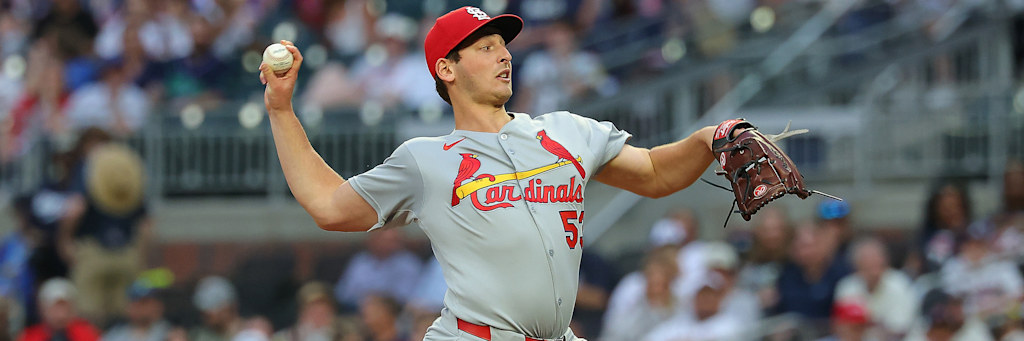
If Cease is the over that the stuff dictates, Pallante is the over that the innings dictate. Andre Pallante has been the Cardinals' steadiest source of length in 2026, working at least five innings in all but one of his 14 starts behind an 8-4 record and a 3.76 ERA. He is not a strikeout artist, and we say that plainly. His 18.8 percent strikeout rate and 22.8 percent whiff rate are both modest, below the league average for a starter. But the line is set to match the modesty, and that is the entire point. A 3.5 strikeout number is low enough that durable length, not dominance, is what clears it, and length is exactly what Pallante provides. His 62 strikeouts in 14 starts work out to 4.43 per outing, nearly a full punchout above the line.
His per start record backs the over the way it needs to. Pallante has reached four or more strikeouts in 8 of his 14 starts, and his last five outings produced 6, 5, 5, 3 and 3, an average of 4.4 that sits right on his season pace. The two three-strikeout starts are the live risk and we flag them honestly, but both came in shorter outings, and a healthy six or seven inning Pallante start, which is his norm, almost always gets him to four. The matchup is favorable enough. Arizona carries a 20.3 percent team strikeout rate, a hair below the league average, so this is not a free-swinging lineup that hands out strikeouts, but Pallante does not need help from the opponent when the line is this low and his innings are this reliable. At minus 122 the over breaks even at 55 percent, and a durable starter averaging 4.43 strikeouts per outing against a roughly average contact lineup grades past that. This is the volume over the model is built to find.
The Price And Break-Even Table
Both legs are overs but sit at different prices and rest on different engines, which is the point. The Cease over is the steeper price because the market knows it is taking on the AL strikeout leader. The Pallante over is the shorter, softer number, priced for a modest arm whose volume the book has slightly underrated. The table below shows each price, the break-even win rate it demands, and where the pitcher's per start record stands relative to the line.
| Pick | Odds | Implied Break-Even | Per Start vs Line |
|---|---|---|---|
| Cease Over 6.5 K | -138 | 58.0% | 8.46 average, nearly two K over the line |
| Pallante Over 3.5 K | -122 | 55.0% | 4.43 average, nearly a full K over the line |
The Rest Of The Strikeout Landscape
A fifteen-game board produced a handful of numbers the model liked but did not love enough to track, and naming them is part of staying honest. Kodai Senga drew an over 4.5 lean against the Cubs that landed just inside the tracking threshold but did not carry the cushion of the two carded plays, the projection edge thinner than it looked. Gerrit Cole's under 5.5 against Detroit surfaced as a modest under lean, but a pitcher of his pedigree on a low line is exactly the kind of number where the projection edge sits inside the noise. Gavin Williams over 6.5 and Brady Singer under 4.5 both registered as plus-money leans without the margin to play full units. None of those reached the bar, so none made the card. The discipline that posts two legs on a fifteen-game day is the same discipline that finds the two that actually beat their price.
The First-Inning And Batter Markets: A Full Pass And Why
Here is the part most pick services skip. The model ran the first-inning NRFI and YRFI markets on the June 22 slate and graded them as negative expected value across the board. Not one cleared. That means zero first-inning plays today, and we want you to know exactly why, because the passes are as much a part of the product as the bets.
It played out the same way on every game. The no-run-first-inning numbers on the popular favorites were shaded toward heavy minus prices that demanded a no-run probability in the mid-seventies just to break even, while the model's first-inning scoreless estimates sat below those thresholds. On the other side, the yes-run prices on the higher-total games did not pay enough to cover the model's run probability either. When the book asks you to lay more certainty than the projection supports on both sides of the same market, there is no play, only a pass. The same logic applies to the batter prop board today. Hits, total bases and home run numbers across the slate are priced efficiently enough that the model found nothing in the batter markets worth tracking, which is why this card is pitcher strikeout props only.
This is the brand. We will publish a passing slate when the numbers say pass, and we will tell you the math behind it. Two tracked strikeout overs with real, per start support beat a fistful of first-inning coin flips and shaded batter numbers priced against you every time.
How To Bet The Card
- Anchor: Dylan Cease over 6.5 strikeouts at minus 138 is the lean we trust most, the AL strikeout leader averaging 8.46 punchouts per start with five straight clears.
- Best soft number: Andre Pallante over 3.5 strikeouts at minus 122, a durable innings-eater averaging 4.43 per start on a line his length keeps clearing.
- Stake: both legs carry a full unit because the per start separation from the line is clean on each. Total exposure is two units.
- Shop the lines: do not chase Cease past minus 155, and grab Pallante anywhere down to minus 135 before the edge thins.
- First-inning and batter props: no plays. Every NRFI and YRFI number graded negative, and the batter board priced efficiently.
Final Verdict
June 22 is a two-leg strikeout card built on the same idea every time: find the gap between the per start record and the line, then make sure the price leaves room. Cease clears his over because his stuff is the best on the board, nearly two strikeouts of cushion against a line his last five starts all beat. Pallante clears his over because his innings are reliable enough to push a modest rate past a low number, four or more punchouts in eight of fourteen starts. Two overs, two units, and a clean and deliberate pass on every first-inning and batter market. Pitcher props are a thin edge and we will never pretend otherwise. The way you win with them is small stakes, honest prices, and the patience to pass the rest. That is the card.
FAQ
The tracked card is Dylan Cease over 6.5 strikeouts at minus 138 and Andre Pallante over 3.5 strikeouts at minus 122, both from the FanDuel board. The Cease over is the lean we trust most because he leads the American League in strikeouts and averages 8.46 punchouts per start, nearly two above the line.
Cease leads the American League with 110 strikeouts across 13 starts and carries a 13.6 strikeouts per nine innings rate with a 99th percentile whiff rate. He averages 8.46 strikeouts per start, has cleared seven in 10 of 13 outings, and his last five starts produced 7, 11, 8, 9 and 10, so the over 6.5 at minus 138 sits well below his pace.
Pallante has worked at least five innings in all but one of his 14 starts and averages 4.43 strikeouts per outing, nearly a full punchout above the 3.5 line. His strikeout rate is modest, but the low line rewards his durable length, and he has reached four or more strikeouts in 8 of 14 starts against a roughly average Arizona contact lineup.
No. The model graded every first-inning market on the June 22 slate as negative expected value. The no-run prices on the favorites demanded more certainty than the projections supported, and the yes-run prices did not pay enough, so every first-inning number was a pass. The batter prop board also priced efficiently, leaving a strikeout-only card.