A fifteen-game Tuesday is the kind of slate where the temptation is to fire on everything. The model does the opposite. It ran a full grid of strikeout contracts across the June 23 board and surfaced exactly two that cleared their break-even with enough room to track, one strong lean it had to throw back, and a full slate of first-inning markets that did not clear at all. We are honest about what that means. Pitcher props are a thin edge, and the 8,300-contract backtest behind this model showed the market prices these numbers tightly at the closing consensus. You do not get rich on strikeout props. You grind a small, repeatable advantage by only touching the numbers where the projection clears the price, and by staying off everything else, including the strong leans that fall apart the moment you check the player behind them.
Before either of these went on the card, the season line was checked against the live 2026 game log, both probables were confirmed on the June 23 grid, and each opposing lineup's strikeout tendency was pulled to see whether the matchup helped or hurt the lean. What follows is the full reasoning, pitcher by pitcher, with the projection logic, the price, the break-even, and the recent-form note that pushed each number onto the card. We also walk the strong lean we dropped and the first-inning picture, even though neither produced a third play, because the passes and the drops are part of the product.
The Card At A Glance
| Pitcher | Team | Prop | Odds | Units | Season K/Start | Line |
|---|---|---|---|---|---|---|
| Robbie Ray | SF vs ATH | Under 6.5 K | -162 | 1.0 | 4.93 | 6.5 |
| Nick Lodolo | CIN vs MIL | Under 4.5 K | -168 | 0.5 | 4.00 | 4.5 |
Season Strikeouts Per Start Versus The Line
One of the most useful snapshots of a strikeout prop is the gap between a pitcher's per start average and the number the book posted. The chart below plots each pitcher's 2026 strikeouts per start against the line. For both unders, a bar sitting comfortably below the line is the case, because a starter who averages well under his number, whether through short innings or a modest whiff rate, gives himself a real cushion to stay below it on any given night.
1. Robbie Ray Under 6.5 Strikeouts (SF vs ATH), -162, 1 Unit
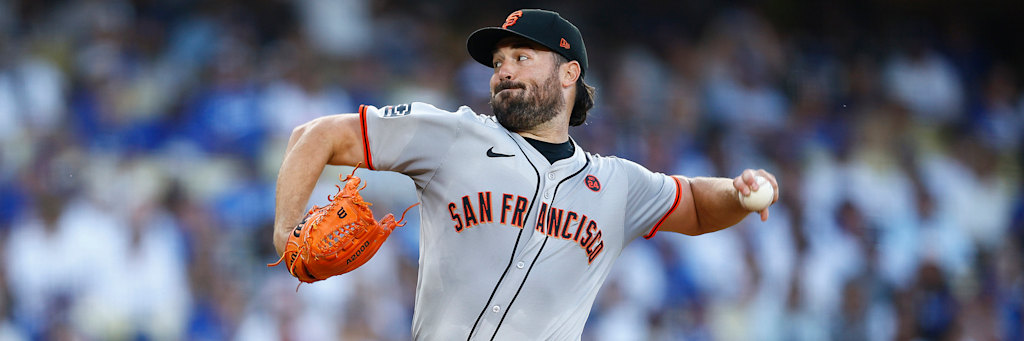
This is the anchor, and it is the cleanest read on the board because the surface profile and the betting reality point in opposite directions. Robbie Ray still misses bats at an elite clip, a 10.51 strikeouts per nine rate that looks every bit the part of a frontline lefty, and a casual bettor sees that number and assumes the over on a 6.5 line. The game log says the opposite. Ray has cleared 6.5 strikeouts in only two of his fifteen starts this season, because the Giants have been managing his innings hard and a high whiff rate cannot stack punchouts you never get to throw. His 74 strikeouts in 15 starts work out to 4.93 per outing, more than a strikeout and a half below the line, and that average already bakes in the few games where the volume showed up.
His recent log is even more pointed than the season rate. Ray's last seven starts produced 2, 1, 3, 6, 4, 3 and 8 strikeouts, and only the most recent of those, the 8 at Atlanta on June 16, cleared 6.5. The five starts before that all landed at six or below, four of them at four or fewer, because the Giants kept pulling him in the fifth and sixth inning. A starter who keeps ending his night at 4.0 to 5.2 innings simply does not have the batters faced to reach seven strikeouts on a normal night. The matchup is the honest counterweight and we will not bury it. The Athletics swing well against left-handed pitching and Oracle Park had wind blowing out this morning, a scoring environment that can keep Ray in the zone and on the attack. But Ray has carved this same Oakland lineup at a 28 percent strikeout clip with a 33 percent whiff rate, so the strikeouts themselves are not the worry, the innings are. At minus 162 the under breaks even at about 62 percent, and a pitcher clearing this line in only two of fifteen starts grades past that comfortably. This is the lean we trust most today.
2. Nick Lodolo Under 4.5 Strikeouts (CIN vs MIL), -168, 0.5 Unit
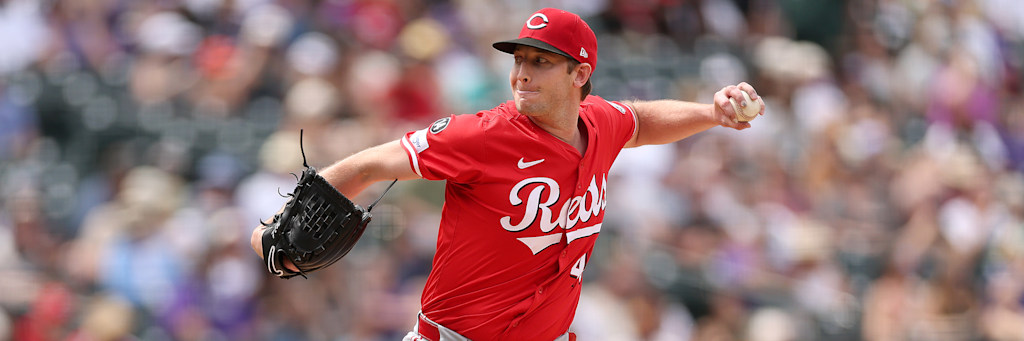
If Ray is the under that the innings dictate, Lodolo is the under that the rate dictates. Nick Lodolo missed a chunk of the early season with a blister on his pitching hand, and the version that has come back is not the strikeout artist his name suggests. Across eight starts since his return he has posted a modest 6.16 strikeouts per nine, a number well below the league rate for a starter, and his 32 strikeouts work out to exactly four per outing. He is pitching to contact, working at least five innings in most of his starts, but the swing-and-miss that would push him past a 4.5 line simply has not been there since he came off the injured list.
His per start record backs the under the way it needs to. Lodolo has landed under 4.5 strikeouts in five of his eight starts, with totals of 2, 6, 3, 7, 4, 3, 5 and 2, and his two most recent outings produced 5 and 2. The two seven and six strikeout games are the live risk and we flag them honestly, but both came earlier in his return when the stuff was sharper, and the recent trend is back toward the threes and fours. The matchup helps rather than hurts. Milwaukee strikes out only 22.0 percent of the time against left-handed pitching, a roughly average rate for a disciplined lineup that puts the ball in play, so this is not a free-swinging offense that hands a struggling lefty cheap punchouts. At minus 168 the under breaks even at about 63 percent, and a pitcher averaging four strikeouts per start against a contact-oriented lineup grades past that, which is why this is a tracked play. We hold it to a half unit because the price is steep and the eight-start sample is smaller than we like, exactly the discipline a thin-edge market demands.
The Price And Break-Even Table
Both legs are unders priced as short favorites, which is the market telling you it already respects these numbers. The Ray under is the slightly softer price on the deeper sample. The Lodolo under is the steeper number on the smaller sample, which is exactly why it carries the lighter stake. The table below shows each price, the break-even win rate it demands, and where the pitcher's per start record stands relative to the line.
| Pick | Odds | Implied Break-Even | Per Start vs Line |
|---|---|---|---|
| Ray Under 6.5 K | -162 | 61.8% | 4.93 average, over the line in only 2 of 15 |
| Lodolo Under 4.5 K | -168 | 62.7% | 4.00 average, under the line in 5 of 8 |
The Strong Lean We Dropped: Luinder Avila
Here is where the honesty mandate earns its keep. The model's loudest strong signal of the day was not on the card. It flagged Luinder Avila over 3.5 strikeouts at minus 172 for the Royals against the Rays as a strong play, and on the surface the projection liked the spot. We threw it back, and we want you to see why, because a dropped strong lean is as much a part of this product as a tracked one. Avila is not an established starter. He spent most of 2026 in the Kansas City bullpen and was pushed into the rotation by a wave of injuries, his starting sample is tiny, and his outings are short. He was knocked out after recording just two outs against Houston on June 12, an eight-run disaster, and his other recent starts produced three strikeouts on June 6 and five on June 17, his season best. A minus 172 over asks you to lay heavy juice on a converted reliever who might not reach four innings if the game gets away from him early.
The Rest Of The Strikeout Landscape
Beyond the two tracked unders and the dropped Avila lean, a fifteen-game board produced a handful of numbers the model liked but did not love enough to track, and naming them is part of staying honest. Kodai Senga drew an over 4.5 lean against the Cubs that landed just inside the tracking threshold but did not carry the cushion of the two carded plays, the projection edge thinner than it looked. Carlos Rodon's under 5.5 against Detroit and Sonny Gray's under 4.5 in Colorado both surfaced as modest under leans, but both sat inside the noise of a thin-edge market and neither cleared the bar. None of those reached the threshold, so none made the card. The discipline that posts two legs on a fifteen-game day is the same discipline that finds the two that actually beat their price.
The First-Inning And Batter Markets: A Full Pass And Why
Here is the part most pick services skip. The model ran the first-inning NRFI and YRFI markets on the June 23 slate and graded them as negative expected value across the board. Not one cleared. That means zero first-inning plays today, and we want you to know exactly why, because the passes are as much a part of the product as the bets.
It played out the same way on every game. The no-run-first-inning numbers on the popular favorites were shaded toward heavy minus prices that demanded a no-run probability in the mid-seventies just to break even, while the model's first-inning scoreless estimates sat below those thresholds. On the other side, the yes-run prices on the higher-total games, including the wind-aided spot at Oracle, did not pay enough to cover the model's run probability either. When the book asks you to lay more certainty than the projection supports on both sides of the same market, there is no play, only a pass. The same logic applies to the batter prop board today. Hits, total bases and home run numbers across the slate are priced efficiently enough that the model found nothing in the batter markets worth tracking, which is why this card is pitcher strikeout unders only.
This is the brand. We will publish a passing slate when the numbers say pass, we will drop a strong lean when the pitcher behind it does not hold up, and we will tell you the math behind both. Two tracked strikeout unders with real, per start support beat a fistful of first-inning coin flips and a juicy swingman over priced against you every time.
How To Bet The Card
- Anchor: Robbie Ray under 6.5 strikeouts at minus 162 is the lean we trust most, a Giants lefty over the line in only two of fifteen starts whose innings keep ending in the fifth.
- Second tracked play: Nick Lodolo under 4.5 strikeouts at minus 168, a modest-rate lefty back from a blister averaging four punchouts a start against a contact Milwaukee lineup, held to a half unit on the smaller sample.
- Dropped lean: Luinder Avila over 3.5 strikeouts is a pass. The minus 172 price on a converted reliever pressed into the rotation is a swingman artifact, not an edge.
- Stake: Ray carries a full unit, Lodolo a half unit. Total exposure is 1.5 units.
- Shop the lines: do not chase Ray past minus 185, and grab Lodolo anywhere down to minus 185 before the edge thins.
- First-inning and batter props: no plays. Every NRFI and YRFI number graded negative, and the batter board priced efficiently.
Final Verdict
June 23 is a 1.5-unit strikeout card built on the same idea every time: find the gap between the per start record and the line, then make sure the price leaves room, and make sure the pitcher behind the number actually holds up. Ray clears his under because his innings have shrunk into the fifth and his last seven starts cleared the line just once, more than a strikeout and a half of cushion against a number the market still respects. Lodolo clears his under because his rate is genuinely modest since his return and a disciplined Milwaukee lineup will not lift him over a low line. Two unders, 1.5 units, a dropped strong lean we explained in full, and a clean and deliberate pass on every first-inning and batter market. Pitcher props are a thin edge and we will never pretend otherwise. The way you win with them is small stakes, honest prices, the patience to pass the rest, and the discipline to throw back the leans that do not survive a look at the player. That is the card.
FAQ
The tracked card is Robbie Ray under 6.5 strikeouts at minus 162 and Nick Lodolo under 4.5 strikeouts at minus 168, both from the FanDuel board. The Ray under is the lean we trust most because the Giants lefty has cleared 6.5 strikeouts in only two of his fifteen starts and his innings keep ending in the fifth.
Ray carries an elite 10.51 strikeouts per nine rate but has cleared 6.5 strikeouts in only two of fifteen starts because the Giants keep pulling him in the fifth and sixth inning. His last seven starts produced 2, 1, 3, 6, 4, 3 and 8, only one over the line, and his 4.93 strikeouts per start sit well below the number even though his whiff rate is excellent.
Lodolo has a modest 6.16 strikeouts per nine across eight starts since returning from a blister, averaging exactly four strikeouts per outing. He has landed under 4.5 strikeouts in five of eight starts, and a Milwaukee lineup that whiffs only 22.0 percent of the time against left-handed pitching will not force the punchouts he would need to clear the line.
The model flagged Avila over 3.5 strikeouts as a strong lean, but Avila is a converted reliever pushed into the Royals rotation by injuries, with a tiny starting sample, short outings, and a 0.2 inning blowup on June 12. Laying minus 172 on an unsettled swingman is a projection artifact, not an edge, so we dropped it.
No. The model graded every first-inning market on the June 23 slate as negative expected value. The no-run prices on the favorites demanded more certainty than the projections supported, and the yes-run prices, even at the wind-aided Oracle spot, did not pay enough, so every first-inning number was a pass. The batter prop board also priced efficiently, leaving a strikeout-under-only card.