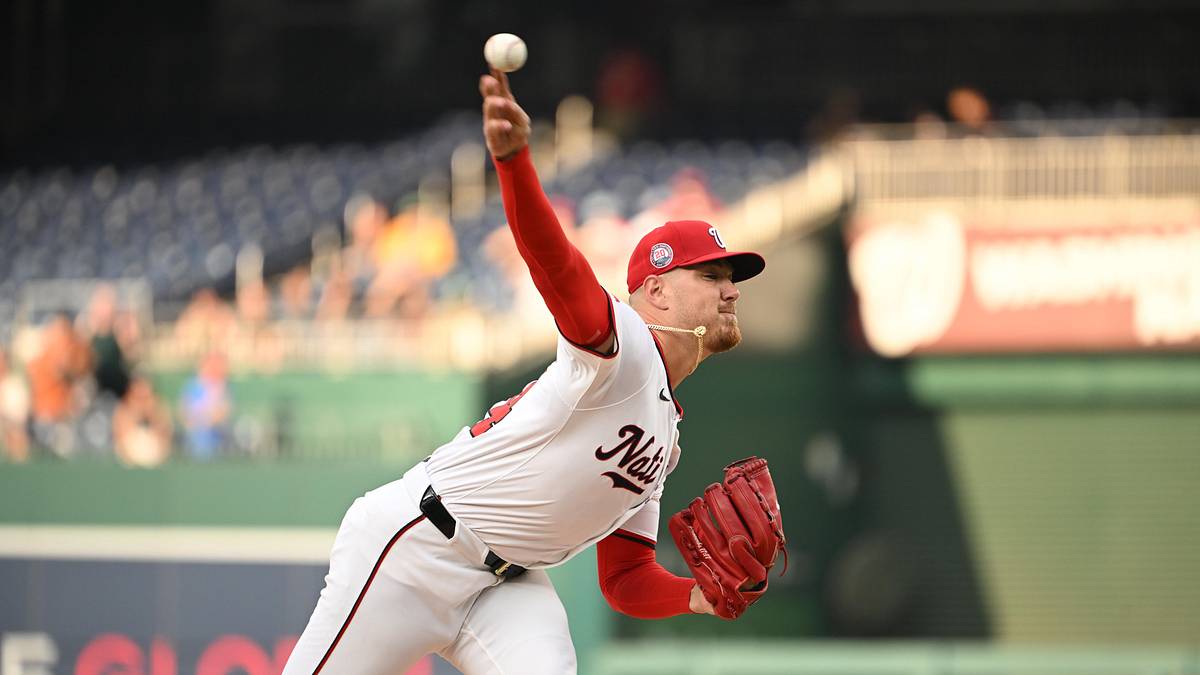
On the twenty first of May, Cade Cavalli walked off the mound at Citi Field having struck out nine New York Mets across seven innings, the single cleanest start of his comeback season and the kind of night that explains why his strikeout rate sits near the top of the Nationals rotation. He has mixed that ceiling with a couple of short, frustrating trips since, which is the honest shape of a young arm rebuilding innings after Tommy John surgery rather than a pitcher who hums at the same pitch count every fifth day. On Saturday he travels to Tampa to face a Rays lineup that puts the ball in play more than almost anyone, and the board set his strikeout total at 4.5. The over is the tracked play, and his own rate is what carries it.
Here is the spine of the whole page. Cavalli misses bats at a 9.76 strikeout per nine rate, he has piled up 81 strikeouts in just 74.2 innings, and his per start average lands near 5.4 punchouts. The number at 4.5 sits a half strikeout below that average, which is the small repeatable gap the screen is built to find. This is a lean rather than a lock, the Rays are a tougher strikeout matchup than the price suggests, and the unit rides on Cavalli's stuff rather than a soft opponent.
This card graded 1-2 for -1.09 units. Cavalli over 4.5 lost: he was pulled after 2.2 innings with just 1 strikeout (6 hits, 3 walks, 2 earned runs), nowhere near the line, in a 4-3 Nationals win. Cantillo under 4.5 lost: the Guardians lefty flipped his profile with a career-high-tying 8 innings and 9 strikeouts in an 8-1 win. The Brewers at Braves NRFI won (+0.50u): Kyle Harrison was perfect through four and the first inning went scoreless on both sides. Net day: minus 1.09 units.
The Cavalli Strikeout Profile Sits Above This Number
Start with the season ledger. Across 15 starts and 74.2 innings, Cavalli sits at a 3.98 ERA with a 1.39 WHIP, and he has struck out 81 hitters against 25 walks. Run the math and that is a 9.76 strikeout rate per nine innings paired with a 3.24 strikeout to walk ratio, the blend of swing and miss stuff and improving command that lets a starter rack up punchouts even when his innings are still being managed. An arm at 9.76 K/9 handed a 4.5 line is being asked to clear a number he beats in a typical five inning outing, not stretch for one.
The volume math is the cleaner way to see it. Eighty one strikeouts spread across 15 starts is 5.4 per outing, which is nearly a full strikeout north of the 4.5 line. A pitcher does not have to find his ceiling for this over to cash. He simply has to be himself across five innings. The walk rate at 3.01 per nine is the one watch item, because walks lift pitch counts and shorten starts, but a 3.24 strikeout to walk ratio says he misses far more bats than he gives away free passes.
Cade Cavalli Strikeouts, Last Six Starts vs 4.5 Line
Six starts, five clear overs headed by a nine and an eight, and a single under from a short five inning, four run outing against Arizona. The ceiling is genuinely high, and the lone miss came on a rough day rather than a deep start where the bats stopped chasing.
Look closely at that game log and the case sharpens. Cavalli has gone 8, 9, 7, 6, 2, and 5 strikeouts over his last six trips. Five of the six cleared 4.5, and four of them cleared it by a comfortable margin. The lone miss, a two strikeout afternoon against the Diamondbacks on June 7, came in a five inning, four earned run start where he simply did not have his best stuff, not a complete blowup that ended early. Across his full season he has reached five or more strikeouts in the majority of his outings, which is the floor a 4.5 over needs.
The Rays Are the Honest Counterweight on This Card
A strikeout over plays cleanest against a free swinging opponent, and here is where intellectual honesty matters. The Rays are not that opponent. Tampa Bay has struck out 520 times in 2,745 plate appearances, which works out to an 18.9 percent strikeout rate, one of the lowest marks in the majors. This is a contact heavy lineup hitting .256 with a .714 OPS, the kind of group that fouls off two strike pitches and grinds at bats rather than chasing for the punchout. That is the single best argument for the under, and it is why this is a lean rather than a smash.
So why does the over still earn the stake. Because the line already bakes in the soft matchup. A pitcher running a 9.76 K/9 against an 18.9 percent strikeout lineup still projects, on a simple blend of his rate and their contact tendency over a five inning workload, to land right around five strikeouts. The market set the number at 4.5 precisely because Tampa Bay is hard to whiff, which means the easy edge is already priced out. What is left is a half strikeout of daylight between Cavalli's true talent and the line, and his elite rate is the side of that gap we trust.
Why the Over: Rate Carries a Tough Matchup
Blending Cavalli's strikeout rate with the low Rays strikeout tendency over a five inning workload points to roughly five strikeouts, a half punchout north of the 4.5 line even after the contact heavy matchup is accounted for.
The Other Side of This Game: Ian Seymour
Tampa Bay counters with Ian Seymour, and his strikeout number is a watch without rising to a play. Seymour is a lefty working through his own early season volume questions, and the Nationals lineup he faces is a middling strikeout opponent rather than a soft one. When a young arm is still building toward full starter workloads, his innings cap his strikeout volume even on nights the stuff plays, which is why the strikeout lean in this game sits squarely on the Washington side. We are not staking Seymour in either direction.
The contrast is the point of the page. Cavalli at 4.5 strikeouts carries the higher rate and the steadier volume, while Seymour brings the workload questions of a pitcher still stretching out. When the rate and the recent ceiling lean the same direction even against a tough lineup, that is the read to follow, and it is why the unit goes on the Nationals right hander.
| Pitcher | K Line | 2026 K/9 | WHIP | Recent Form | Read |
|---|---|---|---|---|---|
| Cade Cavalli | 4.5 | 9.76 | 1.39 | 9, 8 and 7 K among last six starts | Over 4.5, 1u (-108) |
| Ian Seymour | watch | building workload | early season | Middling K matchup vs Nationals | No bet, watch only |
The Half Unit Lean: Joey Cantillo Under 4.5
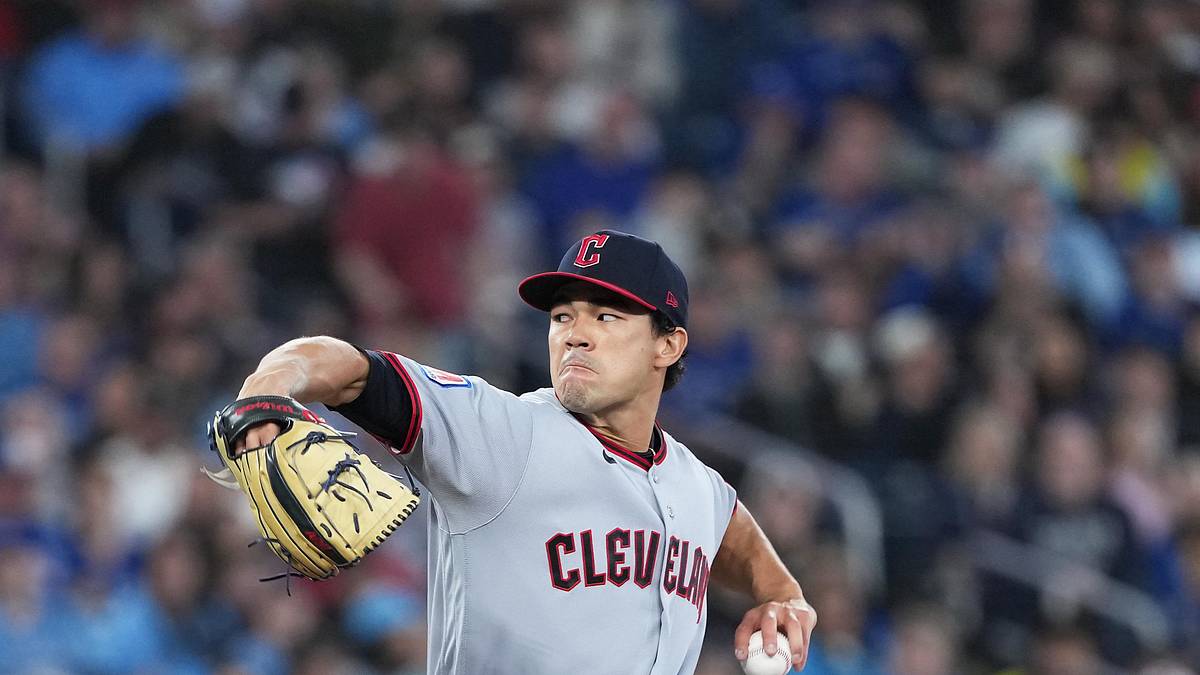
The board surfaced one secondary lean worth a smaller stake, and it lives in the Guardians at Astros night cap. Joey Cantillo draws a 4.5 strikeout line of his own, and the under is the lean at half a unit. The case is built on workload, not stuff. Cantillo misses bats at a respectable 8.38 strikeout per nine, but he walks 4.50 hitters per nine, and that wildness keeps shrinking his starts. His recent log includes a two inning, one strikeout outing and a four inning, four strikeout trip, the short hooks a high walk arm invites. A pitcher who keeps exiting in the fifth simply does not get enough batters to reliably clear five punchouts, and the Astros at a 21.7 percent strikeout rate are a fair but not generous matchup.
The honesty here is that Cantillo has touched 6 and 7 strikeouts in two of his last several starts, so the under is far from a sure thing. It is a half unit because the under leans on his short outings and walk driven pitch counts rather than a dominant matchup, and a single deep, efficient start blows the read up. That is exactly why it gets half the stake of the Cavalli over and not a full one.
The First-Inning Read That Travels With This Game
One analysis only note before the risk box, sized as an observation rather than a play. On the first inning side, the Nationals at Rays game does not hand a clean edge either way. Cavalli can run into trouble against the top of a Tampa Bay order that makes contact and works counts, while Seymour can post a quiet opening frame just as easily as he gives one up. The model graded every first inning number on the Saturday slate as a pass, this game included, so the no run first inning versus yes run first inning market here is context rather than a wager. There is no priced edge worth chasing on either side, and forcing a bet onto a coin flip is how a clean card bleeds units. We leave NRFI and YRFI as analysis and keep the tracked plays on the strikeout board.
The pitcher outs market is the other place Cavalli shows up, with his recorded outs line living near 15.5 on the board. He has reached the sixth and seventh inning in his ceiling outings, which keeps an outs over alive, but his shorter, walk inflated starts pull the floor down enough that we are not staking it. For readers who like the volume angle, a starter still building innings is exactly the profile where an outs over carries real bust risk on the wrong night. Today we keep the strikeout play clean and leave the outs number as a watch only.
The honest risk note. Strikeout props sit close to break even once the vig is in, and our multi thousand contract backtest showed the market prices most of the observable edge out of these lines. This over earns a full unit because Cavalli's own rate clears the number, not because the matchup is soft. In fact the Rays are a tough strikeout opponent, which is the standing counterweight to the play. Cavalli has reached five or more strikeouts in the majority of his starts, so this is a lean rather than a lock, and the floor is real. He has been capped at two strikeouts twice this season on his short, rough outings, and a quick hook against a contact lineup that lifts his pitch count is always the live risk. Size it as one unit, respect the floor, and lean on his 9.76 K/9 as the reason it tilts over.
How This Pick Was Built
Every number on this page came from verified box scores and the live market, not from memory. Cavalli's season line, his strikeout rate, his walk total, and his last six game logs were pulled from official 2026 data, and the Rays team strikeout rate was checked against their full season hitting splits. The strikeout prices reflect the live DraftKings and FanDuel board for the Saturday slate, with the Cavalli over at minus 108 and the Cantillo under near even money. The screen that surfaces these plays is the props v3 build, which blends a Statcast informed projection with the market implied number so the line itself stays an anchor instead of an afterthought.
Boiled down, the case is clean. Cade Cavalli misses bats at a near double digit rate per nine, he averages 5.4 strikeouts per start against a 4.5 line, and his recent ceiling games show the volume the over needs. The matchup is honestly tough, the price is fair, and the floor is real, which is the disciplined version of backing a strikeout edge rather than chasing a soft opponent. One unit on the Cavalli over and a half unit on the Cantillo under, eyes open about the short outing risk on both.
Frequently Asked Questions
Cavalli is set at 4.5 strikeouts, with the over priced near minus 108 and the under near minus 122 on DraftKings and FanDuel. He carries a 9.76 strikeout rate per nine on the season and has struck out 81 hitters across 15 starts, including a nine strikeout outing against the Mets in May.
Because the line already accounts for it. The Rays strike out only 18.9 percent of the time, and the market set the number at a soft 4.5 because of that. Cavalli runs a 9.76 K/9 and averages 5.4 strikeouts per start, so even with the contact heavy matchup priced in, the projection lands around five strikeouts, a half punchout over the line. The edge is his rate, not a free swinging opponent.
Cantillo under 4.5 strikeouts at half a unit. He walks 4.50 hitters per nine, which keeps shrinking his starts with short hooks, and his recent log includes two inning and four inning outings that cap strikeout volume. It is a half unit because he has also touched six and seven strikeouts recently, so the under leans on his workload risk rather than a dominant matchup.
His recorded outs line sits near 15.5, and he has reached the sixth and seventh inning in his ceiling outings. We are not formally staking the outs over because his shorter, walk inflated starts drag the floor down, but it is a reasonable watch for readers who like the volume angle on his efficient nights.