The first-inning market strips a baseball game down to three outs a side. It does not care who wins, which bullpen melts, or what the ninth inning looks like. It asks one question: does anybody score before the second inning starts. No Runs First Inning, the NRFI, is the bet that the opening frame stays quiet on both sides, and for July 5 at T-Mobile Park the case starts with a Seattle starter whose first inning has quietly been his best inning all season, pointed at the most run-shy early offense on the board.
Trey Yesavage takes the ball for the Toronto Blue Jays and Emerson Hancock answers for the Seattle Mariners. Hancock has opened with a scoreless first in 13 of his 16 starts, a 1.69 ERA in the frame, and the hitters who have faced him in the first are batting .164 with a .571 OPS. Yesavage, the Toronto rookie with a .185 average against on the season, has been clean in 8 of his 12 first innings, including his most recent start on June 29. Layer in the two offenses and the shape sharpens: Toronto has scored a first-inning run in just 21 of 89 games, 23.6 percent, the quietest early profile in this matchup, while Seattle sits at 32.2 percent with real early power. The books see the same pitching-forward shape we do, with the game total on our card hanging at Under 7.5 -120.
Why The First Inning, And Why These Two Arms
First-inning runs are built from two ingredients, free baserunners and one mistake pitch, and Hancock starves the first ingredient better than almost anyone in this game. His 2.18 walks per nine ranks among the stingiest rates for regular starters, and in the first inning specifically he has walked three batters all season against 13 strikeouts. That is why his opening frame has been so clean: a leadoff hitter who cannot walk has to hit his way on, and first-inning hitters are batting .164 against him. The detail that stands out in his ledger is how the three first-inning runs he has allowed actually scored. All three came on home runs, one swing each time, never a strung-together rally. Nobody has built an inning against him in the first all year.
Yesavage is the younger, wilder half of the equation, and the profile is honest about it. The Toronto rookie carries a 3.34 ERA with 8.15 strikeouts per nine and an excellent .185 average against, but he walks 4.01 per nine, and that number is the fault line under his half of the bet. The saving grace is that hitters simply do not square him up. His first-inning line reads .186 against with a .614 OPS, he has punched out 11 of the first-inning hitters he has faced, and he has opened clean in 8 of 12 starts, including three of his last four. When he misses, he misses off the plate, not over it, which keeps the crooked first inning off the table more often than his walk rate suggests.
The First-Inning Splits, Both Halves Of The Frame
An NRFI is two stacked mini-bets. The top of the first is the Toronto offense against Hancock. The bottom of the first is the Seattle offense against Yesavage. Both halves have to stay quiet, and they are not equally likely to. The top half is the strength of this play. Toronto has crossed the plate in the first inning in only 21 of 89 games, 23.6 percent, with just 34 first-inning runs and 9 first-inning home runs all season. A patient but light-hitting early lineup runs into a starter who does not walk anyone and has been scoreless in the frame in 13 of 16 tries. That half profiles heavily toward zero.
The bottom half is where the work is. Seattle has scored a first-inning run in 32.2 percent of its games, 43 first-inning runs total, and its .736 first-inning OPS is carried by 17 first-inning home runs, the one-swing kind of damage that no pitching profile fully removes. The counterweights are real, though. The Mariners hit just .222 in the frame, their offense strikes out at a 23.2 percent clip, the highest of the two lineups, and Yesavage's swing-and-miss stuff is precisely the wrong matchup for a lineup that needs contact to start a rally. The Seattle first inning is a power threat, not a rally threat, and Yesavage allows a .186 average in the frame with just one first-inning homer surrendered all season.
Emerson Hancock: The First Is His Best Inning
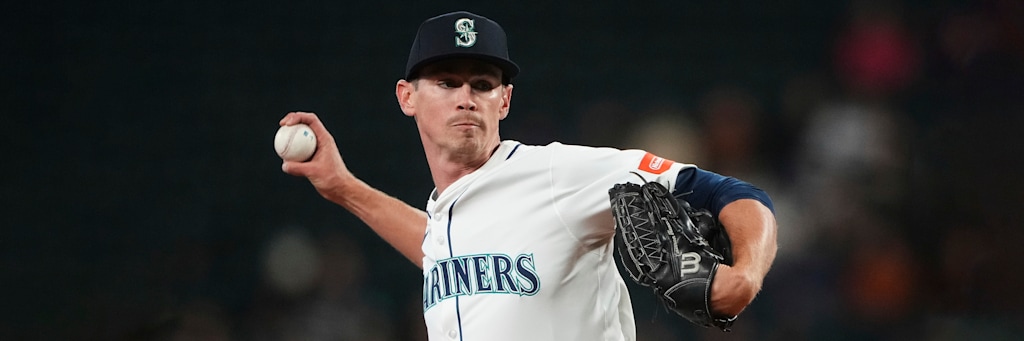
Hancock is the anchor of this bet. The season line is quietly strong, a 3.47 ERA with a 1.05 WHIP and 87 strikeouts over 90.2 innings, but the first-inning cut is where the NRFI case lives: a 1.69 ERA in the frame, a .164 average against, a .571 OPS, 13 strikeouts, and 3 walks. He has opened scoreless in 13 of 16 starts, including each of his last two and six of his last seven. He attacks the zone from the first pitch, and because he refuses to hand out the leadoff walk, the only way anyone has scored on him early this season is the solo homer.
The strikeout angle in his profile doubles as first-inning insurance. Our model board actually flags Hancock over 4.5 strikeouts at -104 as its strongest read in this game, and there is no tension between that signal and the NRFI. A starter who is missing bats is a starter who is not allowing baserunners, and 13 of Hancock's 87 punchouts have come in the opening frame. Whiffs and clean first innings are the same skill wearing two different prices. If Hancock is carving through the top of the Toronto order the way his splits say he has all year, both halves of his night point the same direction: strikeouts up, runs down.
Trey Yesavage: Wild Enough To Sweat, Nasty Enough To Trust
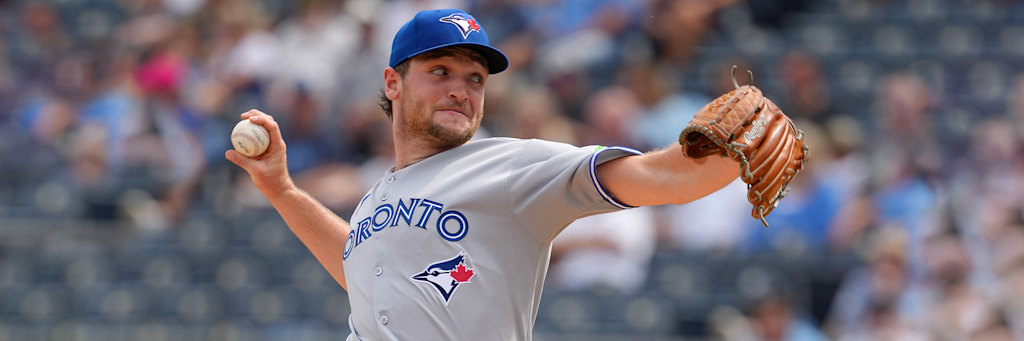
Yesavage is the half of this bet that keeps the stake at one unit, and it is worth being precise about why. It is not the stuff. Hitters are batting .185 against him on the season and .186 in the first inning, where he has struck out 11 and allowed exactly one home run. It is the walks, 4.01 per nine overall and five in the first inning across his 12 starts. A first-inning walk is the seed of every YRFI, and against a Seattle lineup with 17 first-inning homers, a free baserunner turns one swing into two runs instead of one.
The reason to trust him anyway is the shape of his misses and the shape of the lineup he faces. Seattle's offense strikes out at a 23.2 percent rate, the highest of the two teams, and hits .222 in the opening frame. A team that struggles to make contact cannot cash in a walk without a hit behind it, and Yesavage's four first-inning runs allowed this year have come in just 4 of 12 starts, never more than one crack in a frame. He has opened clean in three of his last four, and his 1.10 WHIP says the traffic, when it comes, is scattered. The bet does not need six innings of a rookie. It needs three outs before the mistake pitch, and most nights this season he has delivered exactly that.
The Matchup At A Glance
| Factor | Detail | Why It Matters |
|---|---|---|
| The pitchers | Trey Yesavage (TOR) vs Emerson Hancock (SEA) | Clean first innings in 8 of 12 and 13 of 16 starts |
| The play | First-inning Under 0.5 runs, -124 on DraftKings | Break-even is 55.4 percent, the honest bar this bet has to clear |
| Equivalent market | No Runs First Inning (NRFI) | Same bet by a different name, priced off the same frame |
| Hancock's first inning | 1.69 ERA, .164 average against, 3 BB in 16 firsts | No walks means no free rallies, only the solo homer has scored on him early |
| The offenses | Toronto scores in the 1st in 23.6% of games, Seattle 32.2% | Toronto is the quietest early offense in the matchup, Seattle is the threat |
| The risk under the hood | Yesavage 4.01 walks per nine, Seattle 17 first-inning HR | A leadoff walk plus one Mariners swing is how it loses |
What The Price Is Actually Asking
Here is where the honesty has to live. The DraftKings first-inning Under 0.5 at -124 implies a 55.4 percent break-even, and that is a demanding number for this market. Run the raw rates and they do not clear it on their own: multiplying the two starters' clean-first rates lands around 54 percent, and multiplying the two offenses' scoreless rates lands closer to 52. Priced purely on season-long frequencies, this number is close to fair, and pretending otherwise would be selling you something.
The case for paying it anyway is that season-long frequencies flatten out exactly the matchup details that matter tonight. Toronto's 23.6 percent early scoring rate was compiled against the league, not against a starter with a 1.69 first-inning ERA who does not issue the leadoff walk, and the Blue Jays' 9 first-inning home runs all season say they lack the one weapon that beats Hancock early. On the other half, Seattle's early damage is homer-driven from a .222-average frame, and Yesavage has allowed one first-inning home run in 12 starts while holding first-inning hitters to a .186 average. Both directional adjustments push the true number up from the raw blend, not down. We land this a touch above the break-even rather than comfortably past it, which is exactly why it is one unit at the house NRFI stake and not a hammer.
The Honest Counterpoint
Every NRFI has one enemy, and this one wears teal. Seattle has hit 17 first-inning home runs, scores in the opening frame in nearly a third of its games, and gets Yesavage's 4.01 walks per nine to work against. The losing script writes itself: a four-pitch walk to the leadoff man, a fastball that catches too much plate, and the bet is dead before the second batter of the bottom half settles in. Hancock's ledger carries the same one-swing asterisk, since all three of his first-inning runs came on homers, and Toronto's early offense, quiet as it is, still runs a .258 average in the frame. Quiet is not silent.
The other honest note is the price. At -124 you are paying a premium for a market the books have sharpened all season, and the raw season rates alone do not clear the bar without the matchup adjustments described above. If you cannot get -124 or better, the edge thins toward nothing and passing is the right play. This is a lean built on two specific first-inning profiles fitting two specific lineup shapes, tracked at one unit, not a mispriced number the market missed by a mile.
How To Bet It
- The play: Blue Jays at Mariners No Runs First Inning, one unit, taken as the first-inning Under 0.5 runs at -124 on DraftKings.
- Why NRFI: Hancock has a 1.69 first-inning ERA with 13 of 16 clean firsts, Yesavage a .186 first-inning average against with 8 of 12 clean.
- The offenses: Toronto scores in the first in just 23.6 percent of games with 9 first-inning homers all year; Seattle at 32.2 percent is the half to respect.
- The price: -124 is a 55.4 percent break-even, a demanding bar the matchup reads clear only narrowly. Do not lay worse than -124.
- The risk: a leadoff walk from Yesavage followed by one Seattle swing, the way 17 first-inning Mariners homers say it can end.
- The stake: one unit at the house NRFI stake, because the edge is a matchup lean above a nearly fair price, not a market mistake.
The Props Board: Five Strikeout Reads, Analysis Only
Beyond the tracked NRFI, our July 5 model board flags five strikeout plays across the slate. These are analysis, not tracked picks, and the prices below are the board numbers the model was reading this morning.
The board's strongest reads are Luinder Avila over 4.5 strikeouts at +136 against the Phillies and Emerson Hancock over 4.5 at -104 in this very game, with three leans behind them: Ranger Suarez under 6.5 at -148 at the Angels, Gage Jump over 5.5 at +102 against the Marlins, and Tanner Gordon over 3.5 at +102 against the Giants at Coors Field. The Hancock signal is the one worth an extra beat, because a model that likes a starter's strikeouts and a card that likes his scoreless first inning are telling the same story from two windows. Whiffs suppress baserunners, baserunners create first-inning runs, and Hancock generating swing-and-miss against the top of the Toronto order is the exact mechanism by which the NRFI cashes. The two markets are not in conflict. They are the same read priced twice.
Final Verdict
The best first-inning bets are not about six innings of dominance. They are about three clean outs a side, and this game stacks the right profiles on both halves. Hancock brings the best first-inning resume on today's slate, a 1.69 ERA in the frame with a .164 average against and three walks all season, pointed at a Toronto lineup that scores early in fewer than a quarter of its games and has hit nine first-inning homers all year. Yesavage brings swing-and-miss stuff and a .186 first-inning average against to face a Seattle lineup that whiffs at 23.2 percent and hits .222 in the frame. The -124 price is a demanding one, and the raw season rates alone sit close to fair, so the edge here is the matchup fit rather than a market blunder. One unit, the house NRFI stake. No Runs First Inning is the play at T-Mobile Park on July 5. That is the pick.
FAQ
The play is No Runs First Inning between Toronto and Seattle at T-Mobile Park, taken as the first-inning Under 0.5 runs at -124 on DraftKings, one unit. Trey Yesavage starts for the Blue Jays and Emerson Hancock for the Mariners. Hancock has thrown a scoreless first in 13 of 16 starts with a 1.69 first-inning ERA, Yesavage has been clean in 8 of 12, and the Toronto offense has scored a first-inning run in only 23.6 percent of its games.
Because the first has been his best inning. Across 16 starts he owns a 1.69 first-inning ERA, a .164 average against, and a .571 OPS in the frame with 13 strikeouts against 3 walks. His 2.18 walks per nine starves the free baserunners that build early rallies, and every first-inning run he has allowed this season came on a home run rather than a strung-together inning.
The price and the bottom half of the frame. At -124 the bet needs 55.4 percent to break even, and raw season rates alone sit close to that bar. Seattle has scored a first-inning run in 32.2 percent of its games with 17 first-inning home runs, and Yesavage walks 4.01 per nine, so a leadoff walk followed by one swing is the clean way this loses. That is why the stake is a single unit.