Strikeout props that draw a crowd tend to be the power arms, the ones with a wipeout slider and a line in the sevens. Michael Wacha lives in a different neighborhood. He is a 34-year-old changeup artist whose swing-and-miss rate is nothing to write home about, a right-hander who has survived a long career by moving the ball around the zone and letting hitters get themselves out. Nobody circles his name looking for strikeouts. The reason he headlines the July 4 board is the shape of his season, not the shape of his stuff.
Wacha has made 17 starts for the Royals and thrown 108.2 innings, which works out to 6.4 innings a night. That is a starter who finishes the sixth and often the seventh, and innings are the raw material of a strikeout over. He has punched out 84 hitters, an average of 4.94 per start, and FanDuel set his line at 4.5 with the over priced at -111. When a workhorse averages just under five strikeouts and the book asks for five, the volume alone gets you most of the way there. This is a bet on innings, and the innings are the argument.
Why Volume Beats Velocity On A Low Line
Strikeout totals are a function of two things, the rate a pitcher misses bats and the number of hitters he faces. Wacha loses the first battle and wins the second. His strikeout rate sits around 19 percent, well below the arms that headline most prop cards, but he faces more hitters than they do because he stays in games. Six and a third innings at roughly four batters an inning is about 25 hitters, and 19 percent of 25 is just under five. The math lands right on the line before any matchup read, which is why the over does not need a dominant night. It needs a normal one.
His empirical log backs the arithmetic. Wacha has reached five or more strikeouts in 12 of his 17 starts this season, a 70.6 percent clip, and his ceiling is real when the game slows down. He fanned eight against the Red Sox on May 20, seven twice against the White Sox, and six against both the Yankees and the Tigers. Those are not accidents. They are what happens when a pitch-to-contact starter draws a lineup that works counts and lets him rack up two-strike opportunities across seven innings.
Michael Wacha: Deep Starts, Sharp Control, A Reachable Five
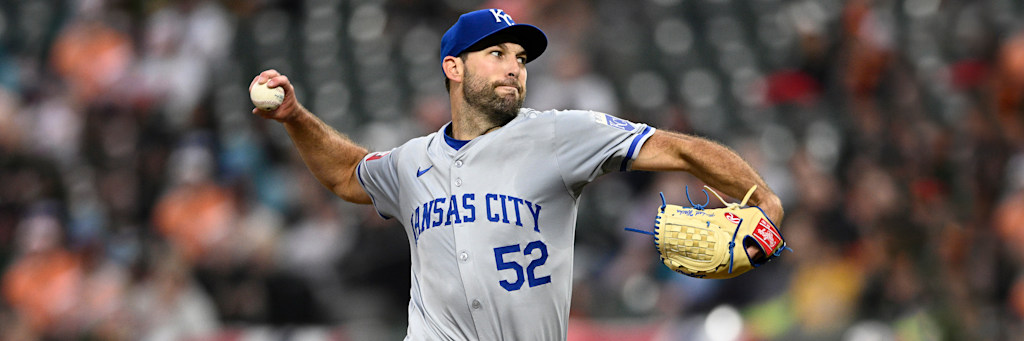
Wacha has been one of the quieter successes in the Kansas City rotation. A 3.31 ERA and a 1.14 WHIP across 108.2 innings mark him as a genuine mid-rotation anchor, and the reason he holds up without missing bats is his command. He has walked only 30 hitters all season, keeps his pitch counts efficient, and earns the trust to work into the seventh. That trust is the engine of this bet. A pitcher who bats up in the eighth inning gets more chances to collect a fifth strikeout than one who is gone by the fifth.
That gap between his reputation and his volume is where the market set the line. Because the strikeout rate reads modest, FanDuel felt safe at 4.5, but 4.5 is a number Wacha's innings load clears more often than not. He fanned eight in Boston, seven in his most recent look at the White Sox on June 27, and has topped five in the majority of his starts. The strikeouts arrive in the back half of his outings, and against a Phillies order that grinds at-bats, the deep counts that produce them are on the menu.
The Matchup At A Glance
| Factor | Detail | Why It Matters |
|---|---|---|
| The pitcher | Michael Wacha, Royals | A 19 percent strikeout rate but a 4.94 per-start average that clears a 4.5 line |
| The line | Over 4.5 strikeouts, -111 FanDuel | Break-even is 52.6 percent, and his over rate this season is 70.6 percent |
| Game log | 8, 5, 5, 2, 2, 3, 5, 7 in recent starts | A June contact dip, but the over hit in five of the last eight and 12 of 17 overall |
| The opponent | Philadelphia Phillies, 23.5 percent team strikeout rate | Above the league mark, a tailwind for the over rather than a headwind |
| The opposing arm | Jesus Luzardo, Phillies | A quality lefty at 6-4, 3.88 keeps the game close and Wacha in a rhythm |
What The Price Is Actually Asking
At -111, the over puts the break-even at 52.6 percent. Wacha needs to reach five strikeouts a little better than half the time, and his season says he does it far more often than that. His raw over rate is 70.6 percent, his per-start average of 4.94 sits a whisker under the line, and a straight rate projection built on 6.4 innings and a 19 percent strikeout share lands near five punchouts on a normal night. The distance between the 52.6 percent the price charges and the roughly 65 to 70 percent his profile supports is a wide, honest edge, and it comes from volume rather than from any claim that Wacha has suddenly found a swing-and-miss gear.
The Honest Counterpoint
No strikeout over on a contact pitcher is a lock, and this one has a clear way of losing. Wacha went through a stretch in June where the punchouts vanished. He struck out two against the Twins on June 5, two more against the Rangers on June 11, and three against the Nationals on June 16, all outings where he pitched to weak early contact and simply never generated deep counts. When his changeup is drawing soft grounders on the first or second pitch, the strikeouts do not come, and he can throw six efficient innings while landing at three or four. That is the under, and it is a live script.
The Phillies are the wrinkle that cuts both ways. As a team they strike out at a 23.5 percent clip, a bit above the league average, which nudges the matchup toward the over. The counter is that Philadelphia hits .237 and features disciplined bats that can shorten Wacha's outing if they run his pitch count early. A four-strikeout night through five innings with the bullpen warming is exactly how this loses. The edge is a volume-based lean on a favorable line, not a verdict that Wacha is about to carve anybody up, which is why the stake is a single unit.
How To Bet It
- The play: Michael Wacha over 4.5 strikeouts at -111 on FanDuel, one unit. A low line on a starter averaging 4.94 strikeouts per outing.
- Why over: He averages 6.4 innings, has cleared 4.5 in 12 of 17 starts, and a rate projection lands near five punchouts on a normal night.
- The price: -111 is a 52.6 percent break-even, and his 70.6 percent over rate blows past it.
- The risk: a short, soft-contact night like his June dip, when he fanned two, two, and three against the Twins, Rangers, and Nationals.
- The stake: one unit, because the edge is a volume lean rather than a bet on dominant stuff.
Final Verdict
Good strikeout overs are not always the biggest arms. Sometimes they are the innings-eaters the market underprices because the reputation says contact pitcher and the line gets shaded a touch too low. Wacha is that case on July 4. He misses few bats, but 4.5 is a number his 4.94 average already clears, his workload of 6.4 innings a night keeps producing fifth and sixth strikeouts, and his raw over rate of 70.6 percent buries the 52.6 percent break-even the price asks. The June contact stretch is the genuine risk and the reason this stays one unit, but the structure is sound. A low line on a deep-going arm at a fair price is the over this market leaves on the table. That is the play.
FAQ
The play is Michael Wacha over 4.5 strikeouts at -111 on FanDuel for one unit against the Phillies at Kauffman Stadium. Wacha averages 4.94 strikeouts per start across his 17 outings in 2026 and has cleared 4.5 in 12 of them, a 70.6 percent rate that sits well above the 52.6 percent break-even the price demands.
Because he pitches deep. Wacha averages 6.4 innings a start, and volume is what carries a 4.5 line. At roughly four batters an inning and a 19 percent whiff share, six-plus innings points to about five strikeouts on an ordinary night. His ceiling starts of eight, seven, and six show the number is comfortably in range when the counts run long.
The short, efficient start. Wacha fanned only two against the Twins on June 5 and two against the Rangers on June 11, both soft-contact nights that finished under. If the Phillies put the ball in play early and Wacha exits around five innings, the under cashes. That is why the stake is a single unit.