Four Innings A Start: The One Strikeout Read That Survived The Filter
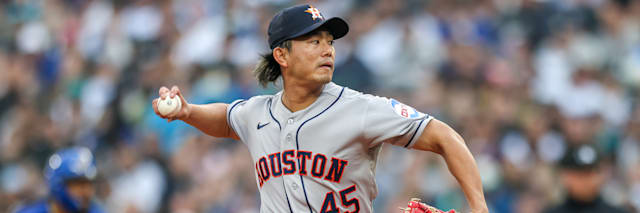
On July 1 in Houston, Tatsuya Imai recorded four outs. One and a third innings, two strikeouts, and a walk to the dugout before the crowd had settled. That was not the anomaly. Across 13 starts in 2026 he has averaged exactly 4.00 innings per outing, the shortest leash of any starter on tonight's fifteen-game slate, and he has finished under 5.5 strikeouts nine times. The model likes the Under. So does his game log, which is more than three of the other flagged plays can say.
Graded, July 21 final · LOSS: The read missed. Tatsuya Imai struck out 8 Marlins across 6.0 innings on 96 pitches in Houston, clearing the 5.5 line by two and a half strikeouts and matching his season high for length. The piece named the risk in its own words, “he can beat this line in six innings, he just rarely gets six innings,” and July 21 was the night he got the six. The 10.90 strikeouts per nine was the loud counterpoint here and it decided it. At -156 the notional cost of a one-unit ticket is -1.56u; this read was published as analysis only and carries no tracked units, so the season record is unchanged. Result confirmed from the official MLB box score, game 824165 (Marlins at Astros, Final).
The Filter Did Most Of The Work Today
The model ran 43 contracts across the July 21 slate and flagged seven as playable, four at the strong tier and three as leans. Then the filter went to work, and the filter is the story.
Our rule here is old and dull and it saves money. Before any strikeout projection reaches this page, it gets checked against the pitcher's own start log. If the model implies a rate the man has never actually produced as a starter, the read dies. Relief-eligible starters are the worst offenders, because a projection engine that sees a strikeout rate without seeing a workload will happily price a swingman like a workhorse. Three of the seven flagged plays failed that check today. One of them was the model's loudest number of the morning.
Chase Burns And The Two Starts That Moved A Model
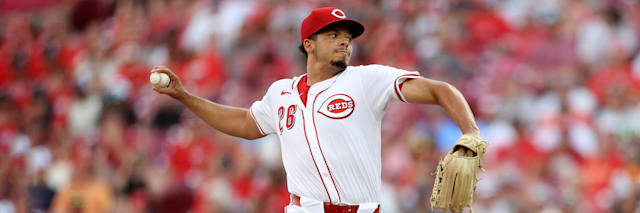
Burns had the biggest flagged number on the board, an Under 6.5 at plus money. He is also the reason the filter exists.
His record argues the other way, loudly. Burns has struck out 118 hitters in 102.2 innings across 18 starts, a 10.34 mark per nine, behind a 2.54 ERA and a 1.11 WHIP. He has cleared 6.5 strikeouts in 13 of those 18 starts. That is a 72.2 percent over rate on the exact number the board wants faded, and the Under at plus money still needs to land 45.5 percent of the time to break even. His own season says 27.8 percent.
What the model is almost certainly reading is the last two turns: five innings and two strikeouts against Philadelphia on July 8, six innings and four strikeouts against Milwaukee on July 2. Two quiet starts after a ten-strikeout night against Pittsburgh on June 27. Maybe something is genuinely wrong. He is also a two-pitch power arm, a 97.8 mph four-seamer at 57.1 percent usage and a 90.5 mph slider at 37.2 percent, walking into T-Mobile Park against a Seattle lineup that strikes out in 23.0 percent of its plate appearances, ninth most in baseball. A two-start dip does not outvote eighteen. Cut.
The Two Swingman Cuts
Reynaldo Lopez is the textbook case. He has appeared in 22 games and started 9 of them, which means the bulk of his season line was built in relief where nobody asks him to turn a lineup over three times. As a starter he has averaged 4.41 innings and 3.89 strikeouts. The line is 4.5. A projection that prices him to clear it more than half the time is pricing a version of him that has thrown 61.2 innings all year across two entirely different jobs. He has actually cleared 4.5 in 4 of 9 starts. Cut.
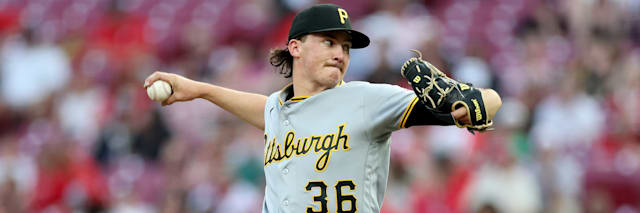
Chandler is subtler and worse. Nothing about his usage screams swingman, 18 starts in 19 appearances, but the projection lands at a rate his season has never touched. He averages 4.33 strikeouts per start and has beaten 4.5 in only 7 of 18 outings, including a stretch this month of six strikeouts, zero, and six. The 98.5 mph four-seamer he throws 47.9 percent of the time is the hardest pitch any starter will throw tonight, and the Yankees strike out in 24.0 percent of their plate appearances, fifth most in the sport. That is the honest argument for the Over, and it is a real one. It is not worth 28 percentage points of daylight between a model and a game log. Cut.
Imai Is The Read Because The Innings Are The Read
Strip a strikeout prop down and it is two questions stacked on each other. How often does he miss a bat, and how many bats does he get to face. Imai answers the first question emphatically and the second one dismally, and the second one is where the line lives.
His rate is legitimate: 63 strikeouts in 52.0 innings, 10.90 per nine, built on a 44.8 percent slider at 86.7 mph paired almost evenly with a 94.8 mph four-seamer at 43.3 percent. When he is right, this is a genuine strikeout arm. He punched out 11 in one outing and 10 against Detroit on June 25.
Then look at the workload. Thirteen starts, 52.0 innings, an even 4.00 per turn. He has walked 33 hitters in those 52 innings and carries a 1.50 WHIP behind a 6.06 ERA, and the combination is a pitcher who runs his count up and leaves early. On July 1 against Minnesota he got four outs. On July 7 against Washington he got eleven. Those are not blowup outliers buried in a good season. That is the season. Nine of his 13 starts have finished under 5.5 strikeouts, a 69.2 percent rate against a price that needs 60.9 percent.
Miami is a cooperative opponent for this angle without being a gift. The Marlins strike out in 21.6 percent of their plate appearances, seventeenth in baseball, middle of the pack, which means they will not hand him strikeouts he has not earned. Daikin Park has produced 485 runs in 52 games this season, 9.33 per game, a lively enough building that a rough Imai inning turns into a short Imai night in a hurry. That helps the Under too, which is a strange thing to say about a hitter-friendly park until you remember what the bet actually is.
The Innings Chart That Explains Every Verdict
The Full Board, With Verdicts
| Read | Line and price | Break-even | His 2026 rate | IP per start | Verdict |
|---|---|---|---|---|---|
| Tatsuya Imai, Astros vs Marlins | Under 5.5 K, -156 | 60.9% | Under in 9 of 13, 69.2% | 4.00 | KEEP |
| Kevin Gausman, Blue Jays vs Rays | Under 5.5 K, -130 | 56.5% | Under in 12 of 20, 60.0% | 5.62 | LEAN |
| Ranger Suarez, Red Sox vs Orioles | Under 5.5 K, +100 | 50.0% | Under in 9 of 17, 52.9% | 5.37 | TOO THIN |
| Brandon Sproat, Brewers vs Mets | Over 4.5 K, -132 | 56.9% | Over in 9 of 16, 56.2% | 4.67 | TOO THIN |
| Chase Burns, Reds at Mariners | Under 6.5 K, +120 | 45.5% | Under in 5 of 18, 27.8% | 5.70 | CUT |
| Bubba Chandler, Pirates at Yankees | Over 4.5 K, -128 | 56.1% | Over in 7 of 18, 38.9% | 4.94 | CUT |
| Reynaldo Lopez, Braves vs Padres | Over 4.5 K, +120 | 45.5% | Over in 4 of 9, 44.4% | 4.41 | CUT |
Where The First Inning Actually Pays
Strikeouts are not the only market on the slate, and the quietest number this morning is in Boston.
Baltimore has scored a first-inning run in 28 of 122 games, 23.0 percent. The Red Sox have done it in 27 of 120, 22.5 percent. Those are the two coldest opening frames in baseball, and they are batting in the same building tonight against a league-wide first-inning shutout rate of 49.5 percent. FanDuel has the Orioles at Red Sox NRFI at -130 this morning, which requires the inning to stay clean 56.5 percent of the time. Two lineups this quiet, taken together, point above that number. Fenway Park has also been one of the sleepier scoring environments in the sport this year at 7.86 runs per game against a league mark of 9.20, which is not the sentence anyone expects to read about Fenway and is what the box scores say.
Two other first-inning prices deserve the opposite treatment. Reds at Mariners NRFI is -140, needing 58.3 percent, and Cincinnati at 28.5 percent and Seattle at 26.8 percent do not get there together. Nationals at Rockies YRFI is a startling -225, demanding 69.2 percent, and even at Coors Field two offenses scoring early roughly a third of the time apiece do not combine anywhere near that. The market is charging altitude tax on a first inning.
| Game | FanDuel NRFI | Break-even | Away scores in 1st | Home scores in 1st |
|---|---|---|---|---|
| Orioles at Red Sox | -130 | 56.5% | 23.0% | 22.5% |
| Padres at Braves | -106 | 51.5% | 22.0% | 33.3% |
| Reds at Mariners | -140 | 58.3% | 28.5% | 26.8% |
| Rays at Blue Jays | -138 | 58.0% | 31.7% | 23.1% |
| Pirates at Yankees | +110 | 47.6% | 30.9% | 33.9% |
| Nationals at Rockies | +172 | 36.8% | 33.9% | 34.7% |
The Honest Counterpoint
Imai can beat this line and everyone betting the Under knows how. He carries the highest strikeout rate per nine innings of any pitcher on the board at 10.90, better than Burns, better than Gausman, better than all of them. If Houston hands him a clean fifth and a clean sixth, that slider gets a third look at the middle of Miami's order and the number falls. He did exactly that on June 25 against Detroit: six innings, ten strikeouts, one of the best starts anybody made in that series.
This is a leash bet rather than a stuff bet. It says the 33 walks in 52 innings keep showing up, that a 6.06 ERA is a manager's memory as much as it is a statistic, and that a hook this quick does not loosen on a July Tuesday. At -156 the ticket needs to be right about three nights in five, and his record says a bit better than two in three. That gap is the whole play, and it is not enormous. It is real, it is measured against his own starts rather than against a projection, and it is the only one on this board that can say so.
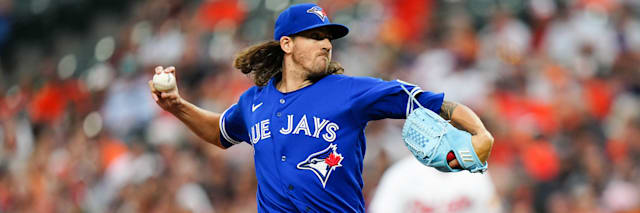
Gausman is the second-best number and the most interesting argument. His Under 5.5 needs 56.5 percent and he has landed there 60.0 percent of the time, and the opponent could hardly be better for it, since Tampa Bay strikes out in 18.9 percent of its plate appearances, the lowest rate in baseball. The counterpoint is his last three starts: seven, eight and eight strikeouts. That splitter, which he throws 38.6 percent of the time at 84.0 mph inside a three-pitch mix, has been the best version of itself all month. A lean, no more.
Where This Leaves Us
- The read: Imai Under 5.5 strikeouts at -156. Four innings a start, nine unders in thirteen, and a price that needs 60.9 percent against a 69.2 percent record.
- The lean: Gausman Under 5.5 at -130 against the lowest strikeout rate offense in the sport, tempered by three straight starts of seven or more.
- The cuts: Burns, Chandler and Lopez, all three flagged by the model and all three contradicted by their own start logs by 17 percentage points or more.
- The empty board: seventeen pitcher outs contracts, zero playable.
- The best first inning: Orioles at Red Sox NRFI at -130, the two quietest opening frames in baseball in the same box score.
Everything on this page is analysis of the model board and none of it is a tracked MLBProps.com pick. The tracked card lives on the picks page.
FAQ
Tatsuya Imai Under 5.5 strikeouts at -156 on FanDuel, Astros against the Marlins at Daikin Park. Imai has averaged exactly 4.00 innings per start across 13 starts in 2026, has finished under 5.5 strikeouts in 9 of those 13 outings, and carries a 6.06 ERA with 33 walks in 52.0 innings. The price needs the Under to land 60.9 percent of the time and his own rate is 69.2 percent. This is analysis only and is not a tracked pick.
Three of the seven. Chase Burns Under 6.5 was cut because he has gone over that number in 13 of 18 starts, a 72.2 percent over rate against a projection implying the opposite. Bubba Chandler Over 4.5 was cut because he averages 4.33 strikeouts per start and has cleared 4.5 in only 7 of 18 outings. Reynaldo Lopez Over 4.5 was cut because he has made 9 starts inside 22 total appearances, the relief-eligible profile that inflates per-start strikeout projections, and his 3.89 strikeouts per start sits below the line itself.
None. The board evaluated 17 pitcher outs contracts and every one graded as no bet. The best of them, Luis Castillo Under 17.5 outs at -102, cleared the market by less than a third of a percentage point, and the other 16 finished on the wrong side of the market blend entirely. There is no outs play today and we are not manufacturing one.
The cleanest first-inning number is Orioles at Red Sox NRFI, priced at -130 on FanDuel. Boston has scored a first-inning run in 27 of 120 games and Baltimore in 28 of 122, the two quietest opening frames in baseball, against a league-wide first-inning shutout rate of 49.5 percent. The -130 price needs 56.5 percent and those two rates in combination point above it. The Reds at Mariners NRFI at -140 and the Nationals at Rockies YRFI at -225 both ask for more than the underlying first-inning rates support.
Because a strikeout prop is priced on batters faced, and innings are what deliver batters. Imai owns the highest strikeout rate per nine innings on this board at 10.90, better than Burns at 10.34 and Gausman at 9.29, and he still projects under his line because he has averaged four innings a start. A pitcher who misses bats at an elite rate for twelve batters will lose to a pitcher who misses bats at an average rate for twenty-four. That is also why relief-eligible starters distort these models so badly, since their per-inning rates get applied to a workload they never actually receive.