Sunday June 14 is a quiet, pitching-heavy slate, and that shows up everywhere. The run totals are bunched low, the team total unders are doing the heavy lifting on the main card, and the strikeout board is where the cleaner reads live. The trap on a day like this is to chase the biggest name with the highest line. The smarter move is the opposite: find the pitcher whose strikeout number was set below what he actually does, then check that the price and the matchup do not quietly cancel that edge. Two arms fit that shape today, and one more looked close until the math said no.
Here is the discipline that runs through all three reads. A strikeout over needs three things to line up. The line has to sit below the pitcher's real per-start pace, the lineup across from him cannot be a contact wall, and the price has to pay you fairly for the bet. When the line is below pace and the price is plus money, you are getting paid to bet the median outcome, which is the best version of a strikeout over. When the line equals the pitcher's pace, like Sugano today, the edge evaporates no matter how good the name looks. Below is the full board: two tracked overs, one pass, and a first-inning read.
The June 14 Strikeout Board At A Glance
| Pitcher | Game | 2026 ERA | 2026 K | K/9 | K Line | Price | Call |
|---|---|---|---|---|---|---|---|
| Taj Bradley | STL @ MIN | 4.02 | 73 | 10.11 | Over 5.5 K | +124 | Play 0.5u |
| Stephen Kolek | HOU @ KC | 3.14 | 30 | 6.28 | Over 3.5 K | -132 | Play 0.5u |
| Tomoyuki Sugano | COL @ OAK | 4.08 | 39 | 5.14 | Over 3.5 K | +132 | Pass |
The table tells the whole story in three rows. Bradley misses bats at an elite rate and his line is set a full punchout below his pace, with plus money on top. Kolek is a contact-leaning starter, but his 3.5 line is so low that even his quiet starts clear it. Sugano is the cautionary case: a 5.14 strikeout-per-nine pitcher whose pace works out to exactly three punchouts a start, which is why a 3.5 over is a coin flip dressed up as plus money. The next sections walk through each one.
Strikeout Pace Versus The Posted Line
The single most useful snapshot of a strikeout board is how each pitcher's per-start pace stacks against his posted number. The chart below plots season strikeouts per start for all three arms against the line the book set. Where the bar clears the marker, the over has room; where the bar sits right on the marker, like Sugano, there is no edge to bet.
1. Taj Bradley, Over 5.5 Strikeouts (STL at MIN), +124
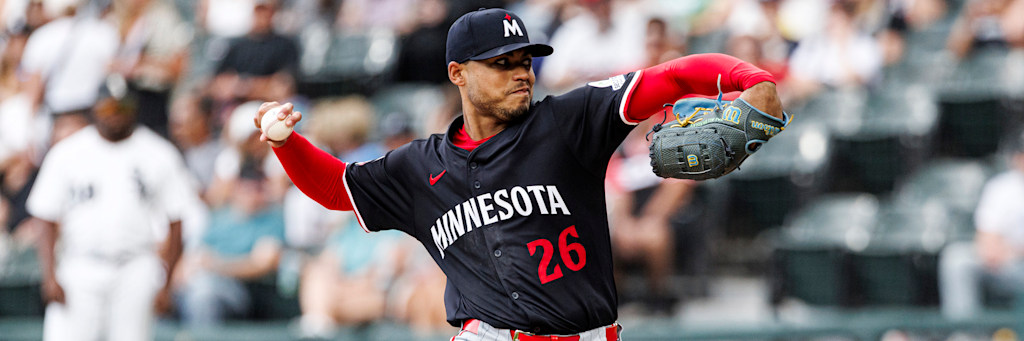
Bradley is the cleanest strikeout over on the slate, and the reason is in the K/9 column. He is missing bats at a 10.11 strikeouts-per-nine clip over 65 innings, with 73 punchouts in 12 starts, a per-start pace of just over six. The ERA at 4.02 and the WHIP at 1.38 tell you he gives up some traffic and some hard contact, but neither of those numbers hurts a strikeout over. If anything, a pitcher who works through baserunners faces more hitters, and more hitters means more chances to pile up swings and misses. His line is set at 5.5, a full punchout below his average pace, and the over is priced at plus money at +124.
That combination is exactly what we look for: a line below pace, plus odds on top. The matchup keeps it honest rather than tilting it either way. The St. Louis Cardinals run a 21.0 percent team strikeout rate, right around league average, so there is no contact wall here to suppress the count and no whiff-prone giveaway to inflate it. The path to the over is straightforward. Bradley needs to work into the sixth and miss bats the way he has all year, and at his pace that is the median outcome, not the ceiling. The under lives only if he gets chased early or the Cardinals shorten up and put the ball in play, which is the minority case for an arm whistling at better than a strikeout an inning. The plus price is the value, and that is why this is a tracked play, small as the stake is.
2. Stephen Kolek, Over 3.5 Strikeouts (HOU at KC), -132
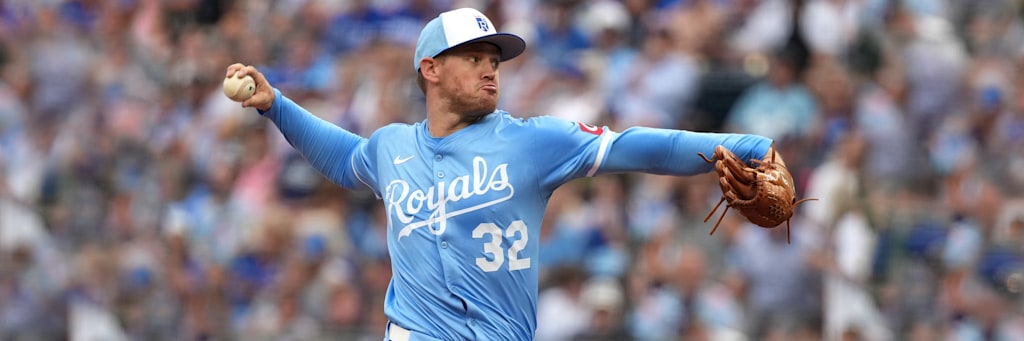
Kolek is the opposite kind of bet from Bradley, and it works for a different reason. He is not a strikeout machine. His 6.28 strikeouts per nine is a modest, contact-tolerant number, and his game is built on a 3.14 ERA and a 1.07 WHIP rather than on swing-and-miss. So why bet the over? Because the line is set absurdly low. At 3.5 punchouts, the book is asking him to do something he has cleared in nearly every start, since his per-start pace works out to better than four strikeouts an outing across seven starts. When a starter with even average whiff stuff is handed a 3.5 line, the over becomes a volume bet, and volume is the one thing a healthy, in-rhythm starter almost always provides.
The matchup pushes this one a little further in our favor. The Houston Astros sit at a 21.8 percent team strikeout rate, a touch above league average, which is friendlier to a strikeout over than a grind-it-out contact lineup would be. The number to clear is four punchouts. For a pitcher carrying a 3.14 ERA who is reliably working five-plus innings, four strikeouts is a routine, unremarkable line score, not a high-leverage outcome. The price at -132 is short, which is why this is a half-unit bet and not a bigger one, but the floor on this over is high enough that the juice is acceptable. The under really only cashes on a short hook or a freak contact game, and neither is the way to bet a starter with this profile against a lineup that strikes out at this clip.
3. Tomoyuki Sugano, Over 3.5 Strikeouts (COL at OAK), Pass
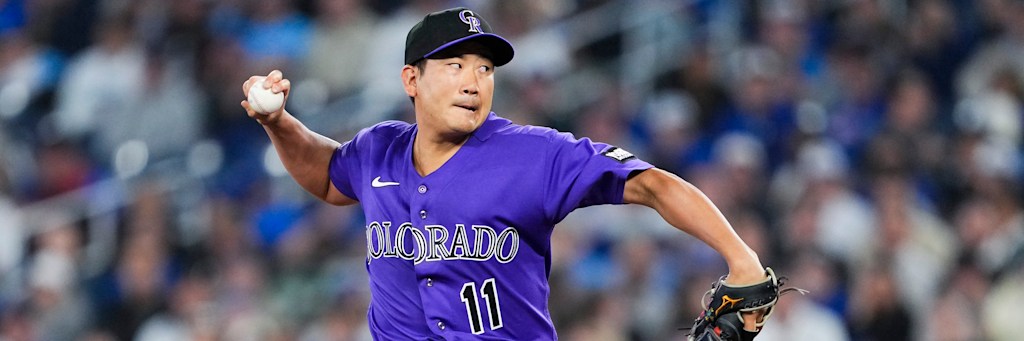
This is the one the model liked and we cut, and it is worth showing the math because it is the heart of how we read this market. Sugano showed up on the board at over 3.5 strikeouts with plus money at +132, and on the surface that looks like the same kind of low-line value as Kolek. It is not. Sugano is a command-and-contact pitcher with a 5.14 strikeouts-per-nine rate, the lowest of the three arms here, and 39 strikeouts in 13 starts. Do that division and his per-start pace is exactly 3.0 punchouts. The line is 3.5. The book set the number above his average, not below it.
That is the difference between a play and a pass. With Bradley and Kolek, the line sits under the pitcher's pace, so the over is the median outcome. With Sugano, the line sits over his pace, so the over needs him to beat his average, and the plus price is the book paying you fairly for a true coin flip rather than handing you an edge. We do not bet coin flips in a market our own backtesting already flags as thin. The Athletics matchup does not rescue it either; Sugano simply does not generate the swing-and-miss volume to make a 3.5 a comfortable number. When the projection asks a low-strikeout pitcher to clear his own ceiling, the honest call is to pass, and that is what we are doing here.
First-Inning Read: YRFI And NRFI Analysis
The two games anchoring our strikeout overs also shape the first-inning markets, so a clean look at the YRFI and NRFI angle is worth it, analysis only. The first inning is its own little game. It is the one frame where the top of the order is guaranteed to bat, and where a pitcher's command in his first 15 pitches matters more than his whole-game line. The starting point is always traffic control, and the two matchups here split in an interesting way.
In Kansas City, Kolek and Houston's Spencer Arrighetti make a genuinely clean double-starter first inning. Kolek carries a 1.07 WHIP and Arrighetti a 1.19 WHIP with a sharp 2.21 ERA, so both arms keep early traffic down. That is the bones of an NRFI lean: two starters who limit baserunners facing each other, where the no-run first becomes a real profile rather than a hope. In Minnesota, the picture is different. Bradley's 1.38 WHIP is the loosest mark in this group, and St. Louis counters with Michael McGreevy at a tidy 1.08 WHIP and a 2.99 ERA. That is a split first inning: clean on one side, a touch leaky on the other, which is exactly the kind of game where the YRFI side gets live if Bradley walks into early traffic.
The chart below stacks the four starters by WHIP, lowest to highest, to show how the first-inning profiles compare. The lower the bar, the cleaner the first-inning lean on that pitcher's own merits.
Here is the discipline that keeps a first-inning read honest, and it is the same discipline that governs the strikeout overs above. The pitcher profile is only half the equation. A real NRFI bet also needs the opposing starter to be clean, the top of the order to be quiet, and the price to be fair. The Royals and Astros game in Kansas City is the cleaner double-starter first inning on these two, with Kolek and Arrighetti both keeping early traffic down. The Cardinals and Twins game leans split: McGreevy is clean, Bradley runs a higher WHIP, so the first inning there hinges on whether Bradley navigates the top of the St. Louis order without giving up the early baserunner that turns an NRFI into a YRFI.
The trap to avoid, as always, is the price. Clean NRFI spots get bid up quickly, and a no-run first on two control starters can be priced so short that the implied probability outruns the real edge. That is the exact pattern that turns a good profile into a bad bet. The takeaway for June 14: the Kolek and Arrighetti first inning has the run-prevention bones of an NRFI lean, the Bradley game leans more toward a live YRFI if the early traffic shows up, and none of it is worth a wager until the number is fair. Profile first, price last, and never confuse a clean WHIP with a clean number.
Putting The Board Together
Two overs, one pass, and a single throughline holding all three together. Bradley's over is a plus-money number on an arm whistling at better than a strikeout an inning, with a line set a full punchout below his pace. Kolek's over is a volume bet on a low line that an in-rhythm starter clears almost by default, with a friendly Houston whiff rate behind it. And Sugano's over got cut precisely because the line was set above his pace, which turns plus money into a fair price on a coin flip rather than an edge. The name and the ERA set the floor, but the line relative to pace, the lineup, and the price decide the bet every single time.
If you take one habit from this breakdown, make it this. Before you touch any strikeout over, divide the pitcher's season strikeouts by his starts and put that number next to the posted line. If the pace clears the line, you have a real over and the price is the tiebreaker. If the pace sits at or below the line, you are betting a coin flip no matter how good the arm looks, and in a market this thin a coin flip is a pass. That one piece of arithmetic is the difference between Bradley and Kolek on the card and Sugano on the cutting-room floor. Respect the pace, respect the matchup, and keep the stake small, because even a correct read in this market earns its money slowly.
Frequently Asked Questions
What are the June 14, 2026 strikeout prop plays?
Two strikeout overs are on the tracked board for Sunday June 14. Taj Bradley over 5.5 strikeouts at +124 against the St. Louis Cardinals at Minnesota, and Stephen Kolek over 3.5 strikeouts at -132 against the Houston Astros at Kansas City. Both are minimum stakes at half a unit each. Tomoyuki Sugano was on the model board at over 3.5 strikeouts at +132 but we passed, because his season pace works out to exactly three punchouts per start, which is below the line.
Why is Taj Bradley a strikeout over at 5.5?
Bradley carries a 10.11 strikeouts-per-nine rate over 65 innings, with 73 strikeouts in 12 starts, a pace of just over six punchouts per outing. His line is set at 5.5, below his average, and the over is priced at plus money at +124. The Cardinals run a 21.0 percent team strikeout rate, league-average, which keeps the matchup neutral rather than a contact wall. A line below pace with plus odds is the cleanest version of a strikeout over.
Why pass on Tomoyuki Sugano's over 3.5 at plus money?
Because the line sits above his pace, not below it. Sugano has 39 strikeouts in 13 starts, which is exactly three punchouts per outing, against a 3.5 line. That makes the over a true coin flip, and the plus price at +132 is the book paying fairly for that coin flip rather than handing over an edge. In a market our own backtesting flags as thin, we do not bet coin flips, so Sugano stays off the card.
Are pitcher strikeout overs profitable long term?
Our own large-sample backtesting shows strikeout props are a thin, low-edge market at closing consensus prices, which is exactly why both plays today are minimum stakes at half a unit. We only take a strikeout over when the line sits below the pitcher's verified season pace and the price is fair or plus money, and we keep exposure small because the long-run edge here is narrow even when the read is right.