Almost every clean read on a strikeout prop comes down to the gap between how many bats a pitcher misses and how many innings he gets to do it in. Reid Detmers is the perfect example. He strikes out hitters at a rate above ten per nine innings, a number that screams over, and yet his per-start pace is just 6.67 strikeouts because his outings keep ending around the sixth inning. The book set his line at 7.5, above that pace, and that is the whole spirit of the value side of this card. The model ran the full June 27 grid and came back with a balanced ticket, two full-unit plays on opposite sides and two half-unit leans, each with a clear number behind it.
This is a thin-edge market and we never pretend otherwise. The backtest behind this model showed strikeout props priced tightly at the closing consensus, so stakes stay between a half unit and a single unit, the language stays honest, and we do not print a raw model edge percentage that a thin market does not earn. What follows is the reasoning pitcher by pitcher, with the per-start pace, the price, the break-even, and the recent-form note that put each number on the card. Two of the four are full units because the arm and the number disagree by the widest margin. The other two are leans, where the recent log carries a case the season number alone does not close.
The Card At A Glance
| Pitcher | Matchup | Prop | Odds | Units | Season K/Start | Line |
|---|---|---|---|---|---|---|
| Reid Detmers | LAA vs ATH | Under 7.5 K | -140 | 1.0 | 6.67 | 7.5 |
| Kyle Harrison | MIL vs CHC | Over 5.5 K | -148 | 1.0 | 6.30 | 5.5 |
| Foster Griffin | WSH at BAL | Under 6.5 K | -166 | 0.5 | 6.85 | 6.5 |
| Slade Cecconi | CLE vs SEA | Under 4.5 K | -132 | 0.5 | 3.88 | 4.5 |
Season Strikeouts Per Start Versus The Line
One snapshot matters more than any other on a strikeout prop, the gap between a pitcher's per-start average and the number the book posted. The chart plots each pitcher's 2026 strikeouts per start as a bar against the line as a marker. For an under, you want the bar sitting below the marker. For the lone over, Harrison, the bar sits above the marker. Notice that Griffin's bar pokes just over his line, which is exactly why his under is a half-unit lean carried by recent form rather than a season-rate play.
1. Reid Detmers Under 7.5 Strikeouts (LAA vs ATH), -140, 1 Unit
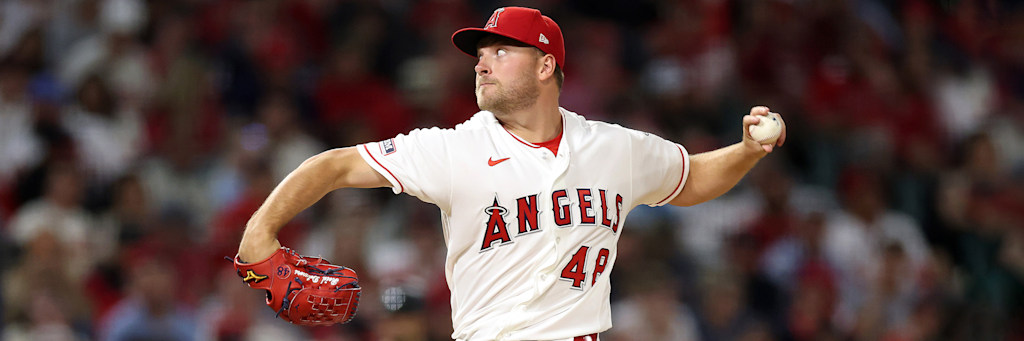
This is the counterintuitive value of the card, and it needs the honest framing up front. Reid Detmers misses bats. His 100 strikeouts across 15 starts come with a strikeout rate above 10 per nine innings, a swing-and-miss arm with a sharp slider and a four-seam he can elevate, sitting behind a 3.68 ERA and a 1.00 WHIP. Betting an under on a strikeout pitcher feels backwards. The number is what makes it work. The book hung his line at 7.5, and his per-start pace is 6.67, because for all the whiffs he averages under six innings of work. To clear 7.5 he needs eight punchouts, and eight punchouts means going deep, which he has not done with any consistency.
His recent log lines up with the under. Detmers struck out 4, 3, 9, 6 and 7 across his last five starts, landing under 7.5 in four of the five. Only the nine-strikeout night against Houston cleared it. The honest counterweight is his ceiling, and it is real: he punched out 14 in eight innings against Texas on May 24, proof that when he goes deep the number is in danger. That is the risk a backer of this under accepts. But at minus 140 the under needs to hit 58.3 percent of the time, and a pitcher averaging 6.67 strikeouts on roughly six-inning starts, under his line in four of his last five, clears that bar. The Athletics are not the kind of lineup that lets a pitcher rack up double-digit strikeouts without him first earning extra innings, and Detmers' workload says those extra innings are the exception.
2. Kyle Harrison Over 5.5 Strikeouts (MIL vs CHC), -148, 1 Unit
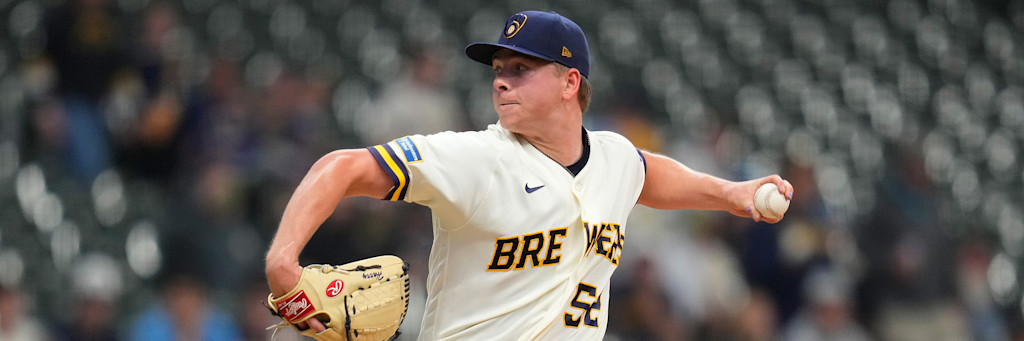
Our lone over on the card is the most matchup-driven play of the day. Kyle Harrison has been the Brewers' best story of 2026, an 8-1 record with a 2.50 ERA, a 1.06 WHIP and 87 strikeouts behind a 10.9 strikeouts per nine rate that is among the best in the league for a starter. The line is 5.5, and that is a low number for an arm missing bats at that clip. The over is not a stretch on rate alone, but the case is even stronger because of who he is facing. Harrison has owned the Cubs. He struck out 11 over seven shutout innings at Wrigley Field on May 20, and across his career against Chicago he has piled up 13 strikeouts in eight innings while allowing just two hits. This is a hitter pool that has not solved him.
Variance in his recent log is the honest counterweight. Harrison's last six starts went 7, 3, 4, 12, 2 and 11 strikeouts, a wide spread that reflects how his outings break, a 12-strikeout gem against the Giants on one end and a two-strikeout night against St. Louis on the other. When he gets chased early or pitches to soft contact, the over can miss, and that is why this is a single unit rather than the anchor. But the through-line is the rate and the matchup. A 10.9 strikeouts per nine arm facing a Cubs lineup he has dominated, at a line of only 5.5, is the kind of spot that earns a full unit. At minus 148 the over needs 59.7 percent, and the combination of rate and history clears it.
Landed On The Bet Side, Last Six Starts
Season averages set the case, but recent hit rate shows how often each pitcher has actually finished on the side we are backing. The chart below shows the percentage of each pitcher's last six starts that landed on the right side of today's number. Griffin leads the board, under his line in five of six. Harrison sits lowest, which is the honest tell that his over leans on rate and matchup rather than a clean recent log, and is part of why we hold it to a single unit.
The Price And Break-Even Table
Four legs, four prices, four different margins. Detmers and Cecconi carry the friendliest break-evens, while Griffin pays the steepest price because the market knows his recent form points down. The table shows each price, the break-even win rate it demands, and where the pitcher's per-start pace stands relative to the line.
| Pick | Odds | Implied Break-Even | Per Start vs Line |
|---|---|---|---|
| Detmers Under 7.5 K | -140 | 58.3% | 6.67 average, under the line on six-inning starts |
| Harrison Over 5.5 K | -148 | 59.7% | 6.30 average, over a low line with elite rate |
| Griffin Under 6.5 K | -166 | 62.4% | 6.85 average, just over the line but trending down |
| Cecconi Under 4.5 K | -132 | 56.9% | 3.88 average, under the line versus a whiff-heavy lineup |
3. Foster Griffin Under 6.5 Strikeouts (WSH at BAL), -166, 0.5 Unit
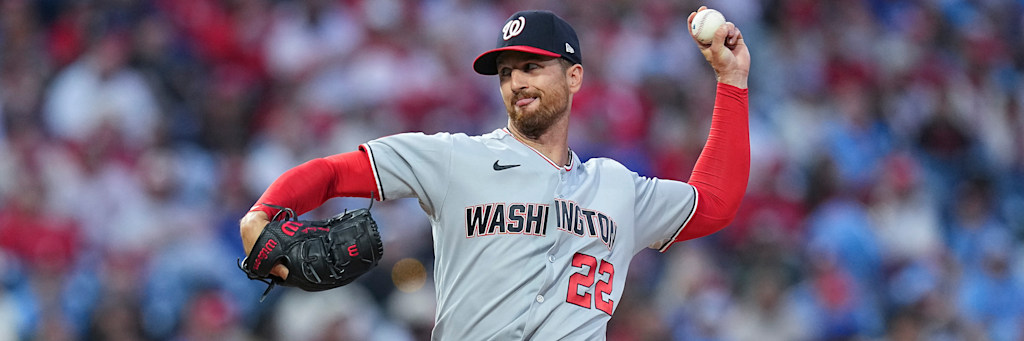
This is the contested leg, and the half-unit stake says so. Foster Griffin has been one of the best free-agent finds of the year for Washington, a 3.15 ERA across 13 starts behind an 8.8 strikeouts per nine rate, and a control profile that has him at just five walks across his last seven starts. The honest wrinkle is that his season pace is 6.85 strikeouts per outing, a hair over the 6.5 line, so the under is not supported by the season number alone. On paper that argues the other way.
What keeps the under alive is the recent log. Griffin's last six starts went 9, 6, 5, 4, 5 and 6 strikeouts, under 6.5 in five of the six, with the only miss being the career-high 9 he tied against the Phillies on June 22. That start is also the honest risk on this leg. A pitcher who just set a career high in strikeouts is not a pitcher you bet under with full confidence, and the steep minus 166 price means the under needs to hit 62.4 percent just to break even. The reason it stays on the card at all is that the nine was the exception in a string of efficient, contact-oriented outings, and Griffin's pitch-to-contact style with elite walk avoidance keeps most of his starts in the four-to-six strikeout range. When the season pace and the recent form disagree this sharply, the discipline is to play it small.
4. Slade Cecconi Under 4.5 Strikeouts (CLE vs SEA), -132, 0.5 Unit
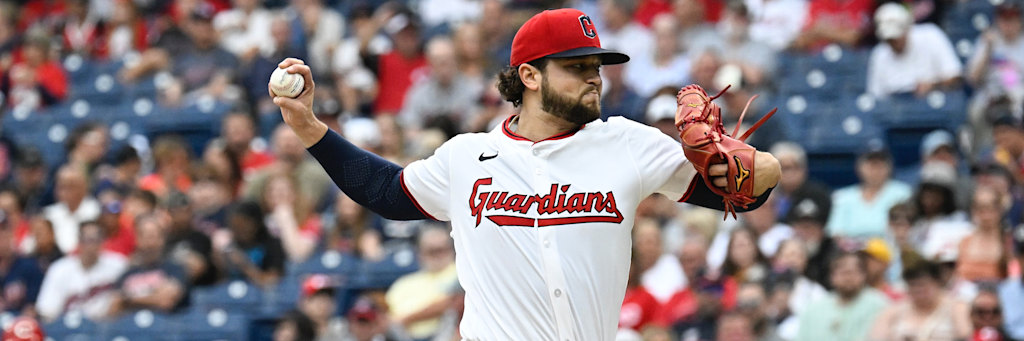
Our second half-unit lean rests on a clean per-start number with one loud counterweight. Slade Cecconi has a 4.48 ERA over 17 starts with 66 strikeouts, a 7.0 strikeouts per nine rate that translates to just 3.88 strikeouts per outing, comfortably under the 4.5 line. He has been pitching well lately, allowing two earned runs or fewer in four straight starts while working at least five innings, but that competence has not come with a spike in punchouts. His recent log went 1, 4, 7, 4, 3 and 5 strikeouts, under 4.5 in four of the last six.
That opponent is the honest risk, and it is the reason this is a half unit. Seattle carries one of the higher team strikeout rates in baseball, exactly the kind of free-swinging lineup that can push a modest strikeout arm over a low number. Cecconi's seven-strikeout night against the Yankees on June 9 shows the ceiling exists when the matchup cooperates, and the Mariners are a more inviting matchup for whiffs than most. The case for the under is that 3.88 per start is well below the line and his outings rarely run long enough to pile up five-plus. The case against it is a lineup built to strike out. That tension is exactly why the stake is a half unit and not more.
The First-Inning And Batter Markets: A Full Pass
Here is the part most pick services skip. The model ran the first-inning NRFI and YRFI markets across the June 27 slate and graded them as negative expected value, so there are zero first-inning plays today. The no-run prices on the favorites demanded a scoreless probability in the mid-seventies just to break even, above where the projections sat, while the yes-run prices on the higher-total games did not pay enough to cover the model's run estimate. When the book asks for more certainty than the projection supports on both sides of the same market, the only move is a pass.
That same treatment hit the batter prop board and produced the same answer. Hits, total bases and home run numbers across the slate priced efficiently enough that nothing cleared the tracking threshold, which is why this card is pitcher strikeout props only. We publish the passes because they are part of the product. A disciplined three-unit strikeout card beats a fistful of shaded first-inning coin flips every time.
How To Bet The Card
- Best value under: Reid Detmers under 7.5 strikeouts at minus 140, an elite bat-misser whose six-inning workload caps him below a line set over his 6.67 per start pace. Ceiling games are the risk.
- Best over: Kyle Harrison over 5.5 strikeouts at minus 148, a 10.9 strikeouts per nine arm who has dominated the Cubs, including 11 in seven shutout innings at Wrigley on May 20.
- Half-unit recent-form under: Foster Griffin under 6.5 strikeouts at minus 166, carried by a recent log of 9, 6, 5, 4, 5 and 6 against a season pace that sits a hair over the line.
- Half-unit contested under: Slade Cecconi under 4.5 strikeouts at minus 132, a 3.88 per start arm against a whiff-heavy Seattle lineup that is the honest risk.
- First-inning and batter props: no plays. Every NRFI and YRFI number graded negative, and the batter board priced efficiently.
Final Verdict
June 27 is a three-unit strikeout card with a balanced identity. Detmers is the value under, an arm that misses bats but pitches too few innings to reach a 7.5 line, carried at a full unit because his pace and recent form both sit under the number. Harrison is the over, a 10.9 strikeouts per nine starter facing a Cubs lineup he has dominated at a low 5.5 line, a full unit on rate and matchup. Griffin and Cecconi are the half-unit leans, one on a quiet recent log against a season pace that sits a hair high, the other on a low per-start number against a free-swinging Seattle lineup. Pitcher props are a thin edge and we will never sell them as anything else. The way you win is small stakes, honest prices, full units only where the gap is widest, and the patience to pass the first-inning board when it does not clear. That is the card.
Graded result: 2-2 on the card. Harrison over 5.5 (9 K, win, +1.00u) and Cecconi under 4.5 (4 K, win, +0.50u) cashed; Detmers under 7.5 (8 K, loss, -1.40u) and Griffin under 6.5 (9 K, loss, -0.83u) missed. Net -0.73u.
FAQ
Today's tracked card is two unders, one over and a lean: Reid Detmers under 7.5 at minus 140, Kyle Harrison over 5.5 at minus 148, Foster Griffin under 6.5 at minus 166 and Slade Cecconi under 4.5 at minus 132. Detmers and Harrison are the full-unit plays because the gap between the arm and the number is widest, while Griffin and Cecconi are half-unit leans where the recent log carries the case.
Detmers carries a strikeout rate above 10 per nine, but his per-start pace is 6.67 because he averages under six innings. The line is 7.5, nearly a full strikeout over his pace, and his last five starts went 4, 3, 9, 6 and 7, under the line in four of five. The honest risk is his ceiling, since he has hit 9 and 14 in single starts this year.
Harrison owns a 10.9 strikeouts per nine rate behind a 2.50 ERA, and he has dominated the Cubs, striking out 11 over seven shutout innings at Wrigley on May 20 and 13 across his career against them. The line of 5.5 is low for that rate and matchup. The risk is a short or efficient outing, which is why this stays a single unit.
Both are recent-form leans. Griffin under 6.5 is carried by a log of 9, 6, 5, 4, 5 and 6, under the line in five of six, even though his season pace sits a hair over the number at a steep minus 166. Cecconi under 4.5 rests on a 3.88 per start pace against a Mariners lineup that whiffs at a high clip, which is the risk. Contested cases get half a unit.