Patrick Corbin has not recorded an out in the fifth inning of his last two starts. He went three and two-thirds against the Yankees on June 14, then three and two-thirds again against the Cubs on June 20, and the book still hung his strikeout line at 3.5. That single fact is the whole spirit of this card. When a starter is being pulled before he can pile up at-bats, his ceiling on a strikeout number drops with him, and the market does not always move the line down to match. The model ran the full June 26 grid and found four of those gaps, all of them unders, plus one over where the arm is trending the other way. The result is a four-unit card with a clear bias and a clear reason behind every leg.
This is a thin-edge market and we never pretend otherwise. The 8,300-contract backtest behind this model showed strikeout props priced tightly at the closing consensus, so stakes stay between a half unit and a single unit, the language stays honest, and we do not print a raw model edge percentage that a thin market does not earn. What follows is the reasoning pitcher by pitcher, with the per-start pace, the price, the break-even, and the recent-form note that put each number on the card. Two of the five are plus-money unders, which is the kind of price that makes a grind worth grinding.
The Card At A Glance
| Pitcher | Matchup | Prop | Odds | Units | Season K/Start | Line |
|---|---|---|---|---|---|---|
| Patrick Corbin | TOR vs TEX | Under 3.5 K | +118 | 1.0 | 3.36 | 3.5 |
| Trevor Rogers | BAL vs WSH | Under 4.5 K | +108 | 1.0 | 3.86 | 4.5 |
| Paul Skenes | PIT vs CIN | Under 8.5 K | -147 | 1.0 | 6.69 | 8.5 |
| Joey Cantillo | CLE vs SEA | Under 5.5 K | -122 | 0.5 | 4.75 | 5.5 |
| Roki Sasaki | LAD at SD | Over 5.5 K | -120 | 0.5 | 5.38 | 5.5 |
Season Strikeouts Per Start Versus The Line
One snapshot matters more than any other on a strikeout prop, the gap between a pitcher's per-start average and the number the book posted. The chart plots each pitcher's 2026 strikeouts per start as a bar against the line as a yellow marker. For an under, you want the bar sitting clearly below the marker. For the lone over, Sasaki, the bar is just under the marker, which is exactly why his over is a lean and not a strong play.
1. Patrick Corbin Under 3.5 Strikeouts (TOR vs TEX), +118, 1 Unit
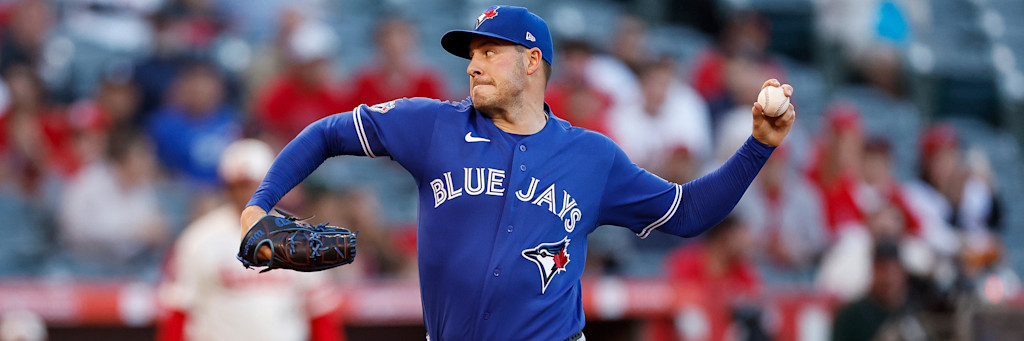
This is the cleanest play on the board, and the plus price makes it the best value too. Patrick Corbin signed a one-year depth deal with Toronto in April and has pitched exactly like a soft-contact veteran whose stuff has faded, a 6.54 strikeouts per nine rate that ranks near the bottom of the league for a starter. His arsenal tells the story: a sinker he throws 28.6 percent of the time at 91.4 miles per hour and a slider at 25.5 percent that has lost its bite, behind a modest 20.5 percent whiff rate and a 16.2 percent strikeout rate. He gets outs with a cutter and changeup off the barrel, not by missing bats. His 47 strikeouts in 14 starts work out to 3.36 per outing, already under the 3.5 line before the matchup even matters.
Corbin's recent log is where the under firms up. Corbin's last five starts produced 4, 1, 3, 3 and 4 strikeouts, three of them at or under the line, and the bigger problem for an over backer is the innings. He went three and two-thirds in each of his last two starts and has not finished six innings since May 23. A pitcher who keeps getting pulled in the fourth simply does not face enough hitters to rack up four punchouts unless the strikeouts come in a cluster, and Corbin's contact profile makes clusters rare. The honest counterweight is the opponent, since Texas is not an elite contact lineup and a couple of swing-and-miss innings could push him to four. But at plus 118 the under only needs to hit 45.9 percent of the time to profit, and a starter averaging 3.36 strikeouts on shrinking innings clears that bar comfortably. Plus money on a number below the season pace is the definition of value.
2. Trevor Rogers Under 4.5 Strikeouts (BAL vs WSH), +108, 1 Unit
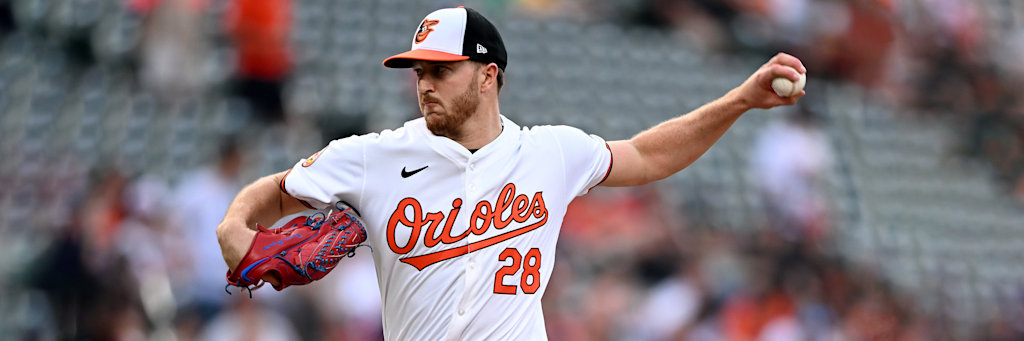
The second plus-money under leans on the same per-start math plus a matchup quirk that is hard to ignore. Trevor Rogers has had a rough 2026 in Baltimore, a 5.30 ERA across 14 starts with a 6.66 strikeouts per nine rate, and his 54 strikeouts divide out to 3.86 per outing, a full punchout under the 4.5 line. He is not a bat-misser this year, and the price reflects a market that has noticed. The plus 108 means the under profits at any hit rate above 48.1 percent, and a starter sitting nearly a strikeout below the line clears that with room.
Then there is Washington. The Nationals have hit Rogers hard historically, batting .357 against him as a team, and he has recorded just three strikeouts total across his outings versus them. That is a small sample and we treat it as one, but it lines up with the profile of a contact lineup that does not chase, the opposite of what an over needs. The honest counterweight is real and we flag it: Rogers just threw his best start of the year on June 20, six strikeouts over seven innings against the Dodgers, his only outing over the line in his last five. If that is the start of a turnaround, the under is in trouble. But one strong night against a deep lineup does not erase a season of 3.86 per start or a Washington matchup that has historically suppressed his whiffs. The plus price and the wide season gap keep this a full unit.
Hit Rate On The Bet Side, Last Ten Starts
Season averages set the case, but recent hit rate shows how often each pitcher has actually landed on the side we are backing. The chart below shows the percentage of each pitcher's last ten starts that finished on the right side of today's number. Rogers leads the board, landing under his line in nine of ten. Sasaki sits lowest, which is the honest tell that his over is a forward-looking lean rather than a number his recent log already supports.
3. Paul Skenes Under 8.5 Strikeouts (PIT vs CIN), -147, 1 Unit
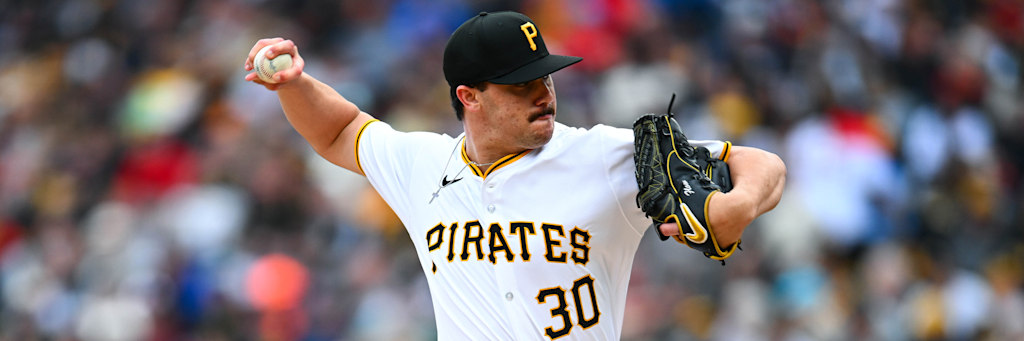
This is the counterintuitive one, and it needs the honest framing up front. Paul Skenes is one of the best pitchers alive, a 2.86 ERA with a 0.93 WHIP and a strikeout rate in the 94th percentile, built on a 97 mile per hour four-seam he throws 38.2 percent of the time, a changeup, a sweeper and a splitter that all miss bats. Betting an under on him feels wrong. The number is what makes it right. The book set his line at 8.5, and his season pace is 6.69 strikeouts per start, nearly two below it. He has reached nine or more strikeouts in only four of his 16 starts this year, which means the under has cashed in three of every four outings.
Workload explains why a generational arm sits under a high line. Skenes has thrown exactly six innings in four of his last five starts, and even an elite strikeout rate caps out when the start ends in the sixth. To clear 8.5 he needs nine punchouts in eighteen outs, a pace he hits in flashes but not on demand. The Reds help the case, hitting .197 with just four walks against him across their history, a group that has not solved him but also has not let him run up the count enough for double-digit nights. Now the counterweight, and it is the real risk on this leg: Skenes is hot. His last five starts went 10, 7, 7, 10 and 8, an average of 8.4 that sits right on the line, and two of those cleared it. At minus 147 the under needs 59.5 percent, and his season rate clears that while his recent rate does not. That tension is why this is a single unit and not the anchor.
The Price And Break-Even Table
Four of the five legs are unders, but they sit at very different prices and rest on different margins. The two plus-money unders on Corbin and Rogers are the value of the card, profitable at well under a coin flip. The Skenes under pays the steepest price because the market knows what it is laying against. The table shows each price, the break-even win rate it demands, and where the pitcher's per-start pace stands relative to the line.
| Pick | Odds | Implied Break-Even | Per Start vs Line |
|---|---|---|---|
| Corbin Under 3.5 K | +118 | 45.9% | 3.36 average, under the line on shrinking innings |
| Rogers Under 4.5 K | +108 | 48.1% | 3.86 average, nearly a full K under the line |
| Skenes Under 8.5 K | -147 | 59.5% | 6.69 average, nearly two K under a high line |
| Cantillo Under 5.5 K | -122 | 55.0% | 4.75 average, under the line but trending up |
| Sasaki Over 5.5 K | -120 | 54.5% | 5.38 average, just under the line, rising form |
4. Joey Cantillo Under 5.5 Strikeouts (CLE vs SEA), -122, 0.5 Unit
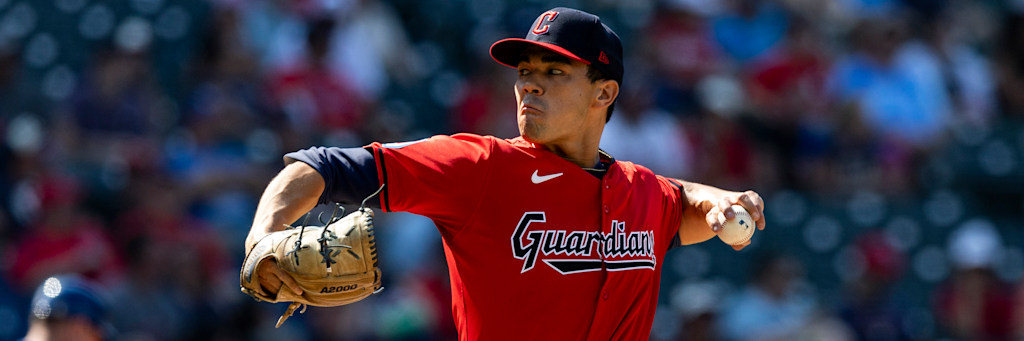
This is the contested leg, and the half-unit stake says so. Joey Cantillo has a real strikeout pulse, an 8.55 strikeouts per nine rate that is the best on the under side of this card, and his 76 strikeouts over 16 starts average 4.75 per outing, under the 5.5 line. The line is verified at 5.5 with the over priced at plus 102, which puts the under near minus 122. On the season number alone, the under is the right side.
The honest counterpoint is loud enough that we cut the stake in half. Cantillo's last three starts went 7, 4 and 9, and that 9 came on June 20 against Houston when he tied a career high with eight innings of work. That same start, for the record, beat our own under 4.5 on him six days ago, so we are not pretending the risk is theoretical. Seattle adds to it, a lineup that whiffs at a 23.5 percent clip, above the league average and exactly the kind of group that can push a strikeout arm over a low-ish line. The case for the under is that 8 innings is the exception for Cantillo, not the rule, and a normal five-inning start keeps him at or under five strikeouts. The case against it is two of his last three and a free-swinging opponent. When the season number and the recent form disagree this sharply, the discipline is to play it small, not to skip it and not to size it up.
5. Roki Sasaki Over 5.5 Strikeouts (LAD at SD), -120, 0.5 Unit
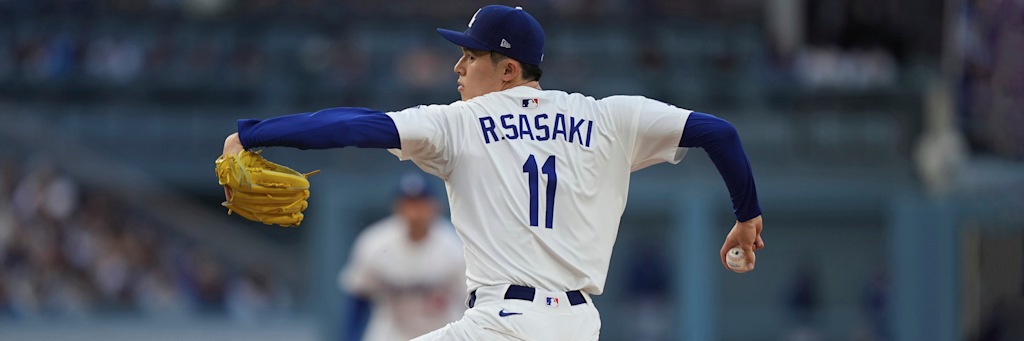
Sasaki, the one over on the card, is a lean, and the season number tells you why. Roki Sasaki averages 5.38 strikeouts per start, a hair under the 5.5 line, so this is not a bet on his record. It is a bet on his trend. The 24-year-old had a miserable first half of the season, but the second-half version is a different pitcher. His splitter usage is up to 35.1 percent at 90.2 miles per hour, and his whiff rate has jumped to 29.2 percent from 22.1 percent a year ago, a swing-and-miss profile that now ranks in the 91st percentile. Dave Roberts has gone on record that Sasaki is back, and the box scores back it: a career-high 10 strikeouts over six innings against the Angels on June 5, part of a stretch that has dropped his ERA to the low fours.
Length is the risk that follows every young arm. Sasaki went only four and a third on June 12 and five and two-thirds on June 19, and a short outing caps the over no matter how many bats he misses. He draws a Padres lineup with Walker Buehler going the other way in a game with a 7.5 total, the kind of low-scoring script that can mean a quicker hook if the Dodgers protect a lead. That is why this is a half unit and the last leg on the card, not a featured play. The splitter is real and the trend is up, but a season rate sitting just under the line earns a lean, nothing more.
The First-Inning And Batter Markets: A Full Pass
Here is the part most pick services skip. The model ran the first-inning NRFI and YRFI markets across the June 26 slate and graded them as negative expected value, so there are zero first-inning plays today. The no-run prices on the favorites demanded a scoreless probability in the mid-seventies just to break even, above where the projections sat, while the yes-run prices on the higher-total games did not pay enough to cover the model's run estimate. When the book asks for more certainty than the projection supports on both sides of the same market, the only move is a pass.
That same treatment hit the batter prop board and produced the same answer. Hits, total bases and home run numbers across the slate priced efficiently enough that nothing cleared the tracking threshold, which is why this card is pitcher strikeout props only. We publish the passes because they are part of the product. A disciplined four-unit strikeout card beats a fistful of shaded first-inning coin flips every time.
How To Bet The Card
- Best value: Patrick Corbin under 3.5 strikeouts at plus 118, a faded veteran averaging 3.36 per start who cannot finish the fifth inning.
- Cleanest matchup: Trevor Rogers under 4.5 strikeouts at plus 108, nearly a punchout under the line against a Washington lineup that hits .357 off him.
- High-line under: Paul Skenes under 8.5 strikeouts at minus 147, an elite arm whose six-inning workload caps him below a number set two strikeouts over his pace. Hot streak is the risk.
- Half-unit contested under: Joey Cantillo under 5.5 strikeouts at minus 122, a season rate that supports the under against recent form and a whiff-heavy Seattle lineup that fight it.
- Half-unit over lean: Roki Sasaki over 5.5 strikeouts at minus 120, a trend bet on a sharper splitter, not a season-rate bet.
- First-inning and batter props: no plays. Every NRFI and YRFI number graded negative, and the batter board priced efficiently.
Final Verdict
June 26 is a four-unit strikeout card with a clear identity. Four unders, all built on the gap between where a pitcher actually pitches and where the book set his line, and one over lean built on a young arm trending up. Corbin and Rogers are the value, plus money on numbers their season pace already beats. Skenes is the high-line under that an elite arm cannot reach on six innings of work, carried at a single unit because his recent form runs hot. Cantillo is the contested under, sized at a half unit because his last three starts argue with his season number. Sasaki is the lone lean the other way, a splitter bet worth a half unit and no more. Pitcher props are a thin edge and we will never sell them as anything else. The way you win is small stakes, honest prices, plus money where you can find it, and the patience to pass the first-inning board when it does not clear. That is the card.
FAQ
The tracked card is four unders and one over: Patrick Corbin under 3.5 at plus 118, Trevor Rogers under 4.5 at plus 108, Paul Skenes under 8.5 at minus 147 and Joey Cantillo under 5.5 at minus 122, plus a Roki Sasaki over 5.5 lean near minus 120. The Corbin and Rogers unders are the cleanest because their season pace sits a full strikeout under the line and the price is plus money.
Skenes is elite, but the line is 8.5 and his season pace is 6.69 strikeouts per start. He has reached nine or more in only four of 16 starts, and his recent six-inning workload caps his ceiling. The honest risk is a hot stretch, with his last five averaging 8.4, which is why this is a single unit.
Cantillo averages 4.75 strikeouts per start, under the 5.5 line, but his last three went 7, 4 and 9, he tied a career high with 9 on June 20, and Seattle whiffs at 23.5 percent. The season number supports the under while the recent form and opponent argue against it, so the stake stays a half unit.
Sasaki is a half-unit over lean near minus 120. His 5.38 strikeouts per start sit just under the line, so this is a trend bet. His splitter usage is up to 35 percent, his whiff rate has jumped to 29.2 percent, and his last four starts point up, including a 10-strikeout night on June 5. The risk is a short outing.