Four Of Seventeen Is The Wrong Number. It Is Also The Only One The Market Sees.
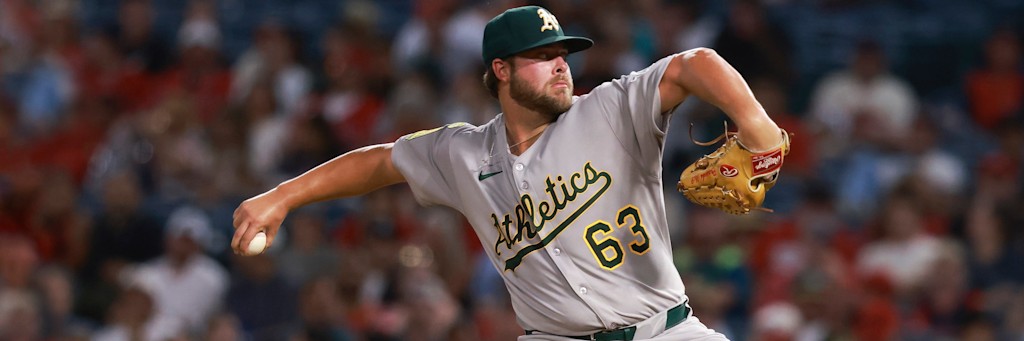
Mason Barnett has struck out four or more hitters in four of his seventeen appearances this season. Read that alone and the over on 3.5 looks like a bad joke at +112. Then look at what the other thirteen appearances actually were: one inning, two innings, two thirds of an inning, a reliever being asked to face four hitters and get three of them out. He has started three games in his life at this level. He struck out six in the first, seven in the second, and none in the third. That is the sample, and it is a much stranger one than the count suggests.
Headline
Barnett o3.5 K, +112
Break-even
47.2%
K rate
21.6% of batters faced
Second read
Sugano o2.5 K, -156
Cut
2 of 4 playable contracts
Outs board
10 contracts, 0 playable
The Count Everybody Quotes Is Measuring The Wrong Job
On June 27 Mason Barnett recorded two outs. That was the whole outing. He faced four hitters, retired two of them, and left. It goes into the season ledger as an appearance in which he failed to strike out four batters, which is true in the same way that a man who was handed a spoon failed to dig a tunnel.
Thirteen more of his outings look roughly like that. One inning on July 8. One inning on July 10. Two innings on July 5. Two innings on June 15. Across those fourteen relief appearances he faced between three and nine hitters at a time, and a four-strikeout outing was arithmetically available in almost none of them.
Then Oakland ran out of starters. On July 30 Barnett started against Boston and threw five innings on 73 pitches, striking out six. On August 6 he started in Cincinnati, went 4.1 on 82 pitches, and struck out seven. On August 11 he started in Tampa, went four innings on 67 pitches, and struck out nobody at all.
The Rate Underneath Is Real, And It Is High
Strip the appearance-length problem out and measure what he actually does to hitters. Barnett has struck out 36 of the 167 batters he has faced this season. That is 21.6 percent, and it is a legitimate major league swing-and-miss rate, well clear of what a replacement arm produces.
Apply it to the workload. His three starts averaged 4.44 innings, and across those thirteen and a third innings he faced roughly nineteen hitters per turn. Nineteen hitters at 21.6 percent projects 4.1 strikeouts, which sits just above a line of 3.5 and explains why the model landed at 66.4 percent while the de-vigged market sat at 44.6. The plus price is the market pricing the appearance log rather than the rate.
The rest of Barnett's profile is genuinely bad and that is worth stating in the same breath. He carries a 6.16 earned run average and a 1.45 WHIP across 38 innings, with 20 walks in those 167 batters faced, a 12.0 percent rate, and eleven home runs allowed. He is a pitcher who misses bats, gives away free bases and gets hit hard when contact happens. Those three things together produce short outings and high pitch counts, which is exactly the shape a strikeout over needs to survive.
The Case Against, Stated Plainly
His most recent start produced zero strikeouts. Not one. Four innings, five hits, three walks, sixty seven pitches, and no swinging third strike in the entire outing. A contract that needs four is being sold five days after its subject managed none, and no amount of rate arithmetic makes that disappear.
The opponent does not help either. Kansas City strikes out in 21.28 percent of its plate appearances, 994 times in 4671 trips, which ranks 24th of the 30 clubs. This is a contact lineup, not a swing-and-miss lineup, and the difference between facing the Royals and facing the league's most strikeout-prone offense is worth close to half a strikeout across nineteen hitters.
The last problem is the one the whole page is built around. Three starts is three starts. It supports an argument, it does not settle one, and a reader who wants sixty innings of starting evidence before touching this contract is being sensible rather than timid.
The Second Read: A Low Number For A Low Strikeout Pitcher
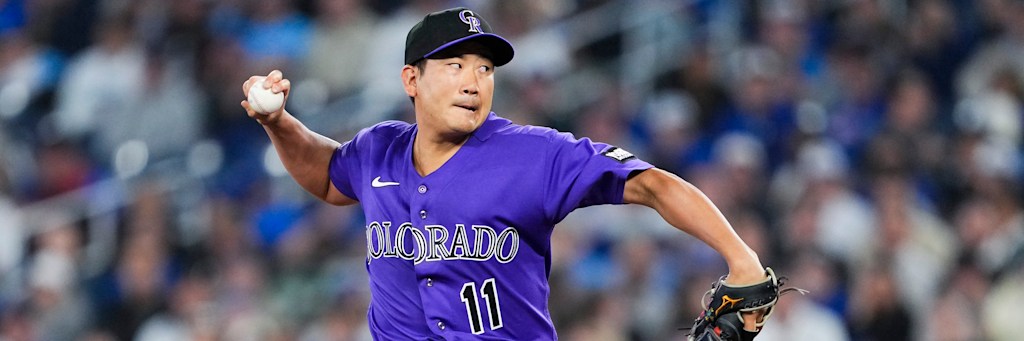
Tomoyuki Sugano over 2.5 strikeouts at -156 is the other contract that survived its game log, and it works for the opposite reason. Sugano does not miss bats. He has 66 strikeouts in 474 batters faced, 13.9 percent, one of the milder rates among qualified starters. What he does do is take the ball every fifth day and get through six innings, and a line of 2.5 is low enough that ordinary competence clears it.
Fourteen of twenty one is 66.7 percent against a break-even of 60.9, a margin of 5.8 percentage points, and the recent form points the same way: three, five, two, three and five across his last five starts, including six innings and five strikeouts on 93 pitches on August 11.
The counterpoint is the building and the opponent. This is Coors Field, where breaking balls do less, and the Dodgers strike out in 20.58 percent of their plate appearances, 26th of 30. Sugano has also finished on exactly two strikeouts five times this season, so the failure mode is not exotic.
Two Went Into The Bin
The model flagged four playable contracts. Two of them do not survive a look at the pitcher's own record, and they are printed here rather than quietly dropped.
Bailey Ober over 3.5 at +100 needs 50.0 percent and clears in 7 of his 18 starts, 38.9 percent. That is eleven percentage points underwater, and the recent log is worse than the season one: seven, two, three, zero and four across his last five, with the zero coming on August 6 in six full innings and 74 pitches. A pitcher who can throw six innings without a strikeout is not a strikeout over.
Martin Perez under 3.5 at -108 needs 51.9 percent and lands in 9 of his 19 starts, 47.4 percent. Perez is having an excellent season by run prevention, a 2.96 earned run average across 106.1 innings, but he has struck out 80 in 430 batters faced and the distribution runs high often enough to break the under. He struck out ten on one occasion and six on another. Under 3.5 needs him to be dull, and he has only been dull about half the time.
The Full Board, Ranked Honestly
| Contract | Price | Break-even | Game log rate | Model | Verdict |
|---|---|---|---|---|---|
| Mason Barnett over 3.5 K | +112 | 47.2% | 2 of 3 starts, 66.7% | 0.664 | Headline |
| Tomoyuki Sugano over 2.5 K | -156 | 60.9% | 14 of 21 starts, 66.7% | 0.732 | Second read |
| Bailey Ober over 3.5 K | +100 | 50.0% | 7 of 18 starts, 38.9% | 0.595 | Cut |
| Martin Perez under 3.5 K | -108 | 51.9% | 9 of 19 starts, 47.4% | 0.372 | Cut |
| Michael Wacha over 4.5 K | +108 | 48.1% | Not evaluated further | Edge +0.7pp | No bet, below threshold |
The Pitcher Outs Board Produced Nothing
Ten pitcher outs contracts were priced and all ten graded no bet. The closest to playable was Tomoyuki Sugano over 15.5 outs at +128, which came back at plus one tenth of a percentage point of edge, a rounding error rather than a position. Mason Barnett over 14.5 outs sat at minus 0.63, Martin Perez over 15.5 at minus 0.81, and everything below that ran further negative down to Shota Imanaga over 17.5 at minus 3.82.
The pattern is the usual one on this market. Heavy outs favorites carry prices in the -150 to -190 range that demand sixty to sixty five percent, and a starter's real rate of finishing six innings rarely gets there once bullpen management and pitch counts are honest inputs. There is no least-bad option worth writing up, so the section publishes as a pass.
The Transparency Section: No First-Inning Play Today
No first-inning market was posted anywhere on the eleven-game slate at the time the board ran. Twenty five events were archived from the line pull and eleven strikeout markets and eleven outs markets came back with prices. Zero first-inning contracts did. With no live market price to blend a projection against, the model has nothing to grade, and this page will not invent a lean out of park dimensions and a pitcher's opening-frame line after the fact.
Final Verdict
Mason Barnett over 3.5 strikeouts at +112 is the headline read on a small board, and it is a read with an obvious hole in it: his most recent start produced no strikeouts at all, and Kansas City is one of the harder lineups in baseball to strike out. What makes it worth writing anyway is that the price is built on a count that includes fourteen appearances in which the contract could not have won. Tomoyuki Sugano over 2.5 at -156 is the steadier of the two and the smaller edge. Everything here is analysis with no tracked units, no grades against the season record and no recommendation attached.
Frequently Asked Questions
What is the MLBProps.com headline read for August 17, 2026?
Mason Barnett over 3.5 strikeouts at +112 for the Athletics at the Kansas City Royals, first pitch 7:40 PM ET at Kauffman Stadium. The price needs 47.2 percent. Barnett has struck out 36 of the 167 hitters he has faced this season, 21.6 percent, and his three starts have produced 6, 7 and 0 strikeouts.
Why does the season-long count of 4 of 17 not decide this contract?
Fourteen of Barnett's seventeen appearances were relief outings of two innings or fewer, where four strikeouts is close to arithmetically impossible. He faced two, three or four hitters in most of them. The relevant sample is his three starts, where he has cleared 3.5 twice, plus a June 5 bulk outing of four innings in which he struck out seven.
What is the second read on the board?
Tomoyuki Sugano over 2.5 strikeouts at -156 for the Colorado Rockies against the Dodgers at Coors Field. Sugano has landed on three or more strikeouts in 14 of his 21 starts, 66.7 percent, against a break-even of 60.9 percent. He is a low-strikeout pitcher whose number is set low enough to compensate.
Which contracts were cut and why?
Bailey Ober over 3.5 at +100 clears in only 7 of his 18 starts, 38.9 percent against a 50.0 percent break-even, and he struck out zero on August 6. Martin Perez under 3.5 at -108 lands in 9 of his 19 starts, 47.4 percent against a 51.9 percent break-even. Both were flagged playable by the model and both fail their own game logs.
Was there a pitcher outs play or a first-inning play today?
No to both. All ten pitcher outs contracts on the board graded NO_BET, the best of them a Tomoyuki Sugano over 15.5 at plus one tenth of a percentage point of edge. No first-inning market was priced anywhere on the eleven-game slate, so there is nothing to compare a model output against. Both sections publish as passes.
Are these tracked picks?
No. Everything on this page is analysis only with no tracked units and no effect on the season record. The BetLegend card for August 17 is separate and consists of the Kansas City Royals moneyline at -175 and the Boston Red Sox moneyline at -132.