Bryce Miller Under 4.5 Strikeouts vs White Sox
The Mariners are running a piggyback Tuesday night at T-Mobile Park. Manager Dan Wilson has Miller penciled in for four or five innings before Luis Castillo follows out of the bullpen. With a 7.4 K/9 profile, a planned workload that caps at five frames, and a 2025 trend of going under 4.5 strikeouts in 14 of 18 starts, the MLBProps.com position is the same number sportsbooks are nervously pricing: under 4.5 strikeouts at -122 for 3 units.
Official Pick
Official play: Bryce Miller under 4.5 strikeouts at -122 for 3 units. Miller is the announced opener in the piggyback, slated for four to five innings before Castillo takes over. He cleared four strikeouts in only four of 18 starts last year, and his only 2026 appearance produced three Ks in 5.1 innings. The under is the cleanest read on the board.
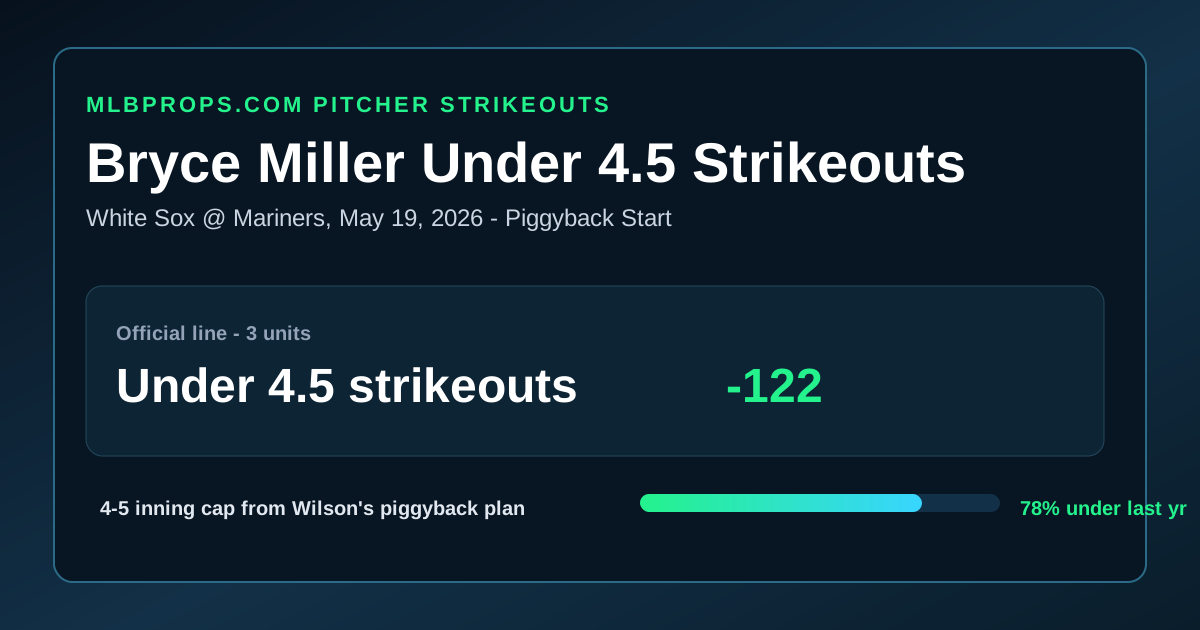
The Piggyback Is The Whole Bet
Seattle has already announced the structure. Per the Mariners' own messaging and reporting from MyNorthwest, Dan Wilson is running a piggyback Tuesday: Miller works four or five innings, then Luis Castillo follows for three or four. Castillo has been moved to the bullpen specifically to set this up. The plan is fixed before first pitch, not something that gets stretched if Miller is sharp.
That is what reframes this prop. A 4.5-strikeout line is normal for a healthy starting pitcher who is going for six or seven innings. It is not normal for a pitcher who is being capped at five. Even at the high end of the workload (five full innings) Miller would need to average nine strikeouts per nine to clear the number. He has never been that pitcher.
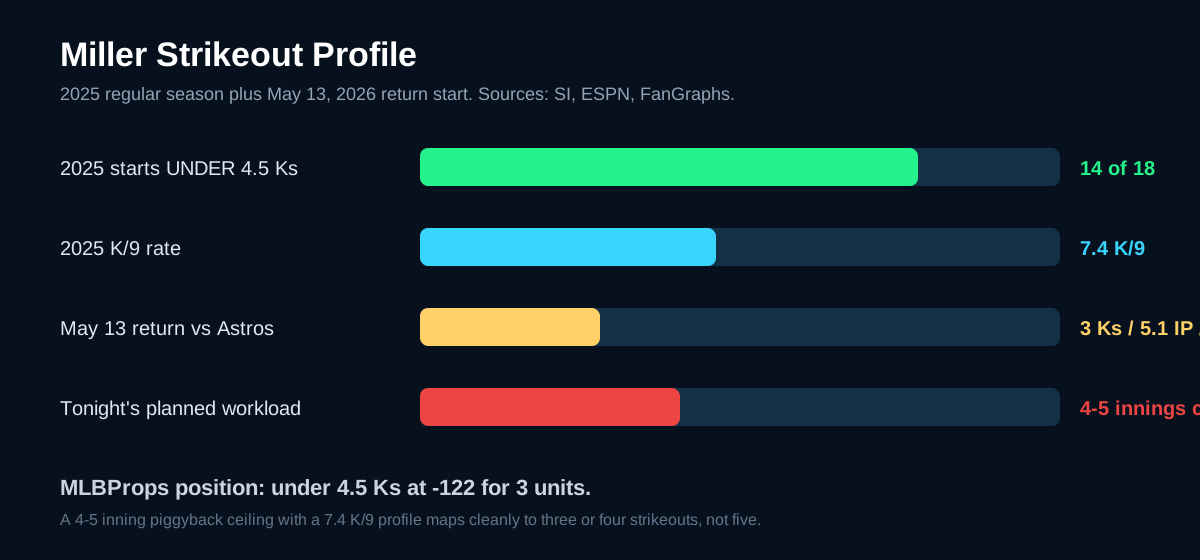
The Profile: 7.4 K/9 And A Soft Return
Miller's 2025 season was a slog. He finished 4-6 with a 5.68 ERA, 74 strikeouts, and 34 walks across 90.1 innings in 18 starts, per Baseball-Reference. Elbow inflammation cost him chunks of May and June. His strikeout rate held at 18.9 percent over the season - that translates to a 7.4 K/9 pace, the same number SI quoted in its Tuesday prop write-up.
That rate is the ceiling, not the floor. Multiply 7.4 K/9 by five innings and the math says 4.1 strikeouts on average. Multiply it by 4.5 innings (his more realistic stop point for a second start back) and the math says 3.7. The 4.5 line is not aligned with the workload he is being given.
The May 13 return start against Houston is the only 2026 data point and it lines up with everything else. Miller went 5.1 innings, allowed eight hits and two earned runs, threw 81 pitches, and struck out three batters. Seattle lost 4-3 in ten innings. Three Ks, five-plus innings, 81 pitches. That is the same shape as last year's typical outing.
The 14-Of-18 Trend Is Not Random
The SI prop preview flagged the same number we have been tracking: Miller went under 4.5 strikeouts in 14 of 18 starts last year. That is a 77.8 percent under rate at a number sportsbooks are now pricing at roughly -122. The implied probability at -122 is 54.95 percent. If you believe last year's run was a real reflection of skill and pitch mix rather than coincidence, that is a real edge.
It is not random. Miller is a four-seam-heavy pitcher who works to contact and lives in the zone. His swing-and-miss rate has never been elite, and he has historically traded strikeouts for limited walks. When his command is on, the line drives are weak. When it is off, the ball is in the field anyway. Neither outcome produces a high strikeout floor.
The White Sox Matchup Does Not Save The Over
Chicago does strike out at a healthy clip, but they are also a contact-leaning offense at the top of the lineup and they will not see Miller a third time through. The piggyback structure caps Miller's exposure at exactly the moment the strikeout opportunity tends to spike. He is not getting two cracks at the leadoff hitter. He is barely getting two cracks at the heart of the order. That is the part of the matchup that wins this bet.
The other piece: Castillo entering in relief means Wilson can hook Miller early if a single inning balloons. A 25-pitch second inning that produces one strikeout could be the inning that ends the start. The leash is short by design.
Number, Price, and Stake
The line was -130 at DraftKings in the early Tuesday SI preview. The MLBProps.com play is at the slightly better -122, which improves the implied price meaningfully and is the number we are tracking and grading. Three units reflects the combination of trend size, workload structure, and a price that is still inside our threshold for full conviction on a pitcher under.
If the number drops to 3.5, the play does not get more attractive - it gets less, because the cushion shrinks. If it climbs to 5.5, the price will swing to plus money and the same logic still works. The tracked number here is 4.5 at -122 for 3 units.