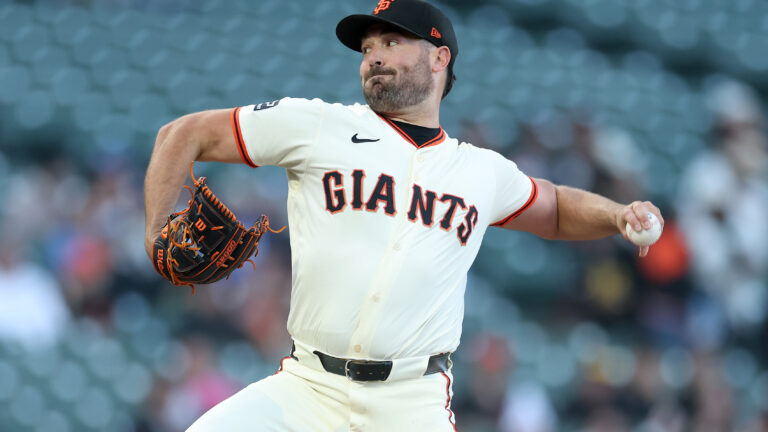
Robbie Ray used to be the easiest over on any card. The 2021 Cy Young winner spent years sitting near double-digit strikeouts and forcing books to hang lines at seven and a half just to keep the under live. That version of Ray is not the one taking the ball for the Giants on Wednesday. The lefty who walks out to face the Nationals has watched his swing-and-miss bleed away across thirteen starts, and the market has not fully caught up to how far it has slipped.
That gap is the whole reason this board exists. Two pitchers, two directions. Ray gets faded under 5.5 strikeouts because his recent bat-missing has cratered. Michael Lorenzen gets backed over a much shorter 3.5 at Coors Field because the bar is low enough that even a rough night clears it. Neither read is a hammer, and we will be honest about that the whole way down. These are leans, priced and sized accordingly.
Robbie Ray Under 5.5 Strikeouts vs Washington
Start with the season line and the picture is already soft. Ray carries a 4.12 ERA over 67.2 innings with 63 strikeouts, which pencils out to 8.38 strikeouts per nine. That number alone would normally support a 5.5 line as a coin flip, but the per-nine rate hides how lopsided his season has been. His early starts inflated the average, and his last month has been a steady slide.
Look at the recent log and the under case sharpens. Across his last six outings Ray has gone 7, 2, 1, 3, 6, and 4 strikeouts. That is four results at or under five in his last six, including a pair of starts where he barely cleared a single whiff. He is also failing to finish innings, lasting just four or four and a third frames in three of those six. A pitcher who cannot get deep cannot pile up strikeouts, and Ray's pitch counts have been ending his nights in the fifth.
Robbie Ray Strikeouts, Last Six Starts vs 5.5 Line
Green bars cleared the under. Ray sat at or below 5.5 in four of his last six starts.
Washington does not save the over either. The Nationals have been one of the lower strikeout offenses in the league this year, putting the ball in play and grinding at-bats rather than chasing. That style is poison for a fading strikeout arm. Ray needs whiffs to hit six, and the Nationals are built to take that path away by making contact early in counts.
This is the cleanest read on the board, and the analyzer agrees, flagging the under as the strongest play of the day with a model probability of roughly 26 percent that Ray reaches the over. That said, Ray is a live-arm lefty who can still spin a vintage night out of nowhere, which is exactly why the stake stays measured rather than maxed.
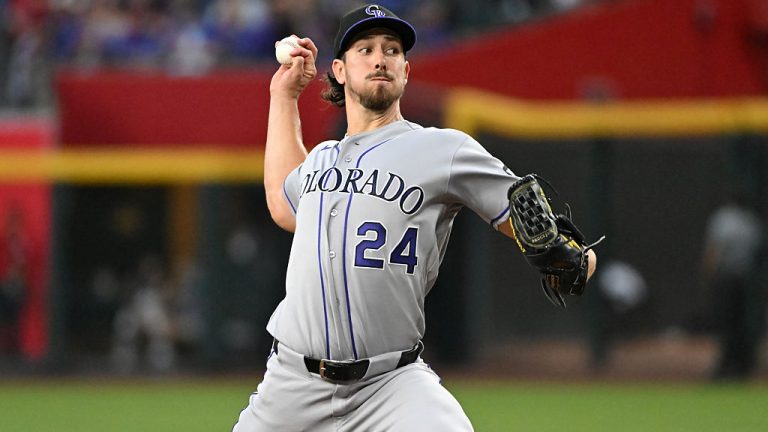
Michael Lorenzen Over 3.5 Strikeouts at Coors Field
Lorenzen's season has been ugly in every column that matters to a fantasy owner or a moneyline bettor. He is 2-8 with an 8.01 ERA and a .364 opponent average, numbers that scream a pitcher getting barreled at the worst possible address. None of that is the point here. The strikeout prop does not ask Lorenzen to be good. It asks him to record four strikeouts, and that is a different question entirely.
His recent log answers it. Lorenzen has posted 2, 5, 5, 5, 2, and 5 strikeouts in his last six starts, clearing four in four of them. His season strikeout rate of 7.12 per nine is nothing special, but a 3.5 line only needs about four innings of normal contact to cash. Even on the nights he gets hit, he tends to be left in long enough to accumulate the strikeouts, because a rebuilding Rockies staff does not have the bullpen depth to pull him at the first sign of trouble.
| Pitcher | K Line | 2026 K/9 | Last 6 Avg K | Lean |
|---|---|---|---|---|
| Robbie Ray | 5.5 | 8.38 | 3.8 | Under |
| Michael Lorenzen | 3.5 | 7.12 | 4.0 | Over |
Coors Field cuts both ways and deserves a plain explanation. Thin air helps balls carry, which is why the venue runs the highest scoring environment in the sport. It can suppress breaking-ball movement, which sometimes trims a strikeout pitcher's edge. Lorenzen does not lean on a wipeout slider, though. He works a deep mix and pitches to contact, so the altitude hurts his run prevention far more than his ability to bank a handful of strikeouts. The low line is the safety net. Four strikeouts is a floor he has touched in roughly two thirds of his recent work.
Strikeout Probability vs Line, Model Read
Model probabilities to land on the lean side. Both leans clear the market price, but neither is a runaway.
The First-Inning Reads That Travel With This Board
Strikeout props and first-inning markets often share a pitcher, so it is worth attaching the NRFI and YRFI angles that line up with these two games. These are analysis reads, sized even lighter than the strikeout leans, because first-inning markets are notoriously high-variance.
Nationals at Giants: NRFI lean
The Ray game leans no-run first inning. Ray's strikeouts may be down, but he has generally avoided the big first frame, and Foster Griffin has worked to a respectable expected ERA on the Washington side. With two offenses that grind early counts rather than ambush the first pitch, the opening inning has been quiet more often than not. The first-inning models hang this one near a coin flip with a slight NRFI tilt, which matches the contact-heavy, low-chaos profile of both lineups.
Cubs at Rockies: YRFI lean
The Lorenzen game leans the opposite way. Coors Field carries the highest first-inning run factor in baseball, and Lorenzen has been surrendering early damage all season with that 8.01 ERA. Shota Imanaga on the Cubs side has been solid but not untouchable, and the altitude does not care about pedigree. When the most run-friendly park in the league meets a starter getting barreled, the first inning carries genuine juice toward a run crossing.
The honest risk note. Strikeout props live close to break-even once the vig is baked in. Our 8,300-contract backtest showed the market prices most of the observable edge out of these lines, so we treat them as small leans and never as anchors. Ray can rediscover his swing-and-miss for a night, and Lorenzen can get yanked early if Coors turns into a track meet. Size these accordingly and respect the variance.
How These Leans Were Built
Every number on this page comes from verified box scores and live market prices, not from gut feel. Ray's and Lorenzen's season lines and game logs were pulled from official data, the strikeout prices reflect the archived market board for the slate, and the first-inning reads lean on park factors and recent pitcher form rather than narrative. The model that flags these plays is the props v3 build, which blends a Statcast-informed projection with the market-implied probability so that the line itself stays an anchor instead of an afterthought.
Boiled down, the takeaway is simple without being a slogan. Fade Ray's faded whiff rate against a contact-first Washington club, back Lorenzen over a line low enough that his floor clears it, and let the first-inning reads ride as lighter satellites. Nothing here is a lock, and the page would tell you if it thought otherwise.
Frequently Asked Questions
Ray is set at 5.5 strikeouts, with the under priced around -160 and the over near +130. The model leans under given his recent log of 7, 2, 1, 3, 6, and 4 strikeouts across his last six starts.
The ERA measures run prevention, not strikeouts. Lorenzen has cleared four strikeouts in four of his last six starts, and a 3.5 line only asks for roughly four innings of normal contact, a bar his recent form and long leash at Coors tend to reach.
The altitude hurts his run prevention much more than his strikeouts. Lorenzen pitches to a deep mix rather than a single breaking ball, so the thin air inflates the scoring around him without gutting his ability to bank a handful of strikeouts.
No prop is guaranteed. Strikeout markets sit near break-even after juice, so these are honest leans staked small, with the variance acknowledged up front.