Best MLB Props Today May 15, 2026: Strikeout Model Picks
The May 15 live board produced a clean strikeout-only card. The analyzer pulled 15 MLB games and 58 two-way FanDuel pitcher strikeout rows, then filtered them through the model v2 official-card rules. The best five: Clay Holmes under 4.5 Ks, Kyle Freeland over 3.5 Ks, Zack Littell over 3.5 Ks, Spencer Strider under 6.5 Ks, and Aaron Civale over 4.5 Ks.
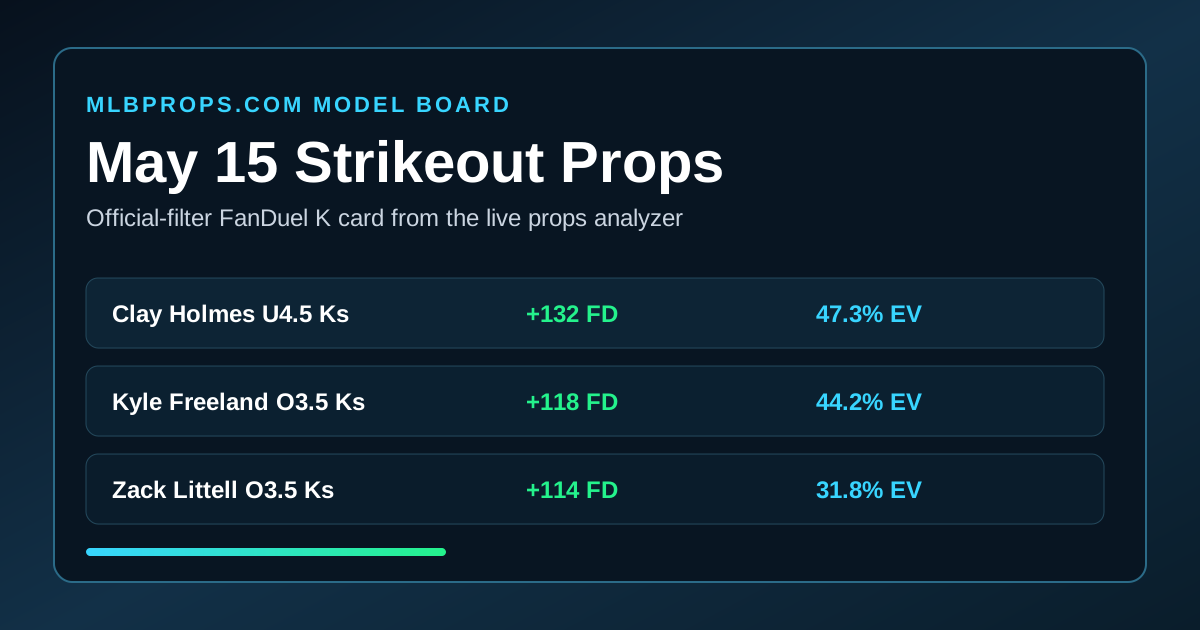
Fast Card
Verdict: Holmes under 4.5 strikeouts is the headline because the model makes the under 63.5% at a plus-money price. Freeland over 3.5 is nearly as strong, with a 4.52 strikeout mean and a 66.1% model probability. Littell and Civale are the cleaner over candidates, while Strider under 6.5 is the best favorite-priced under.
The live dashboard returned only two-way pitcher strikeout rows for official release use. The official filter rejected stale or partial snapshots, then kept rows with at least 5% edge, 12-start sample, and acceptable calibration gap.
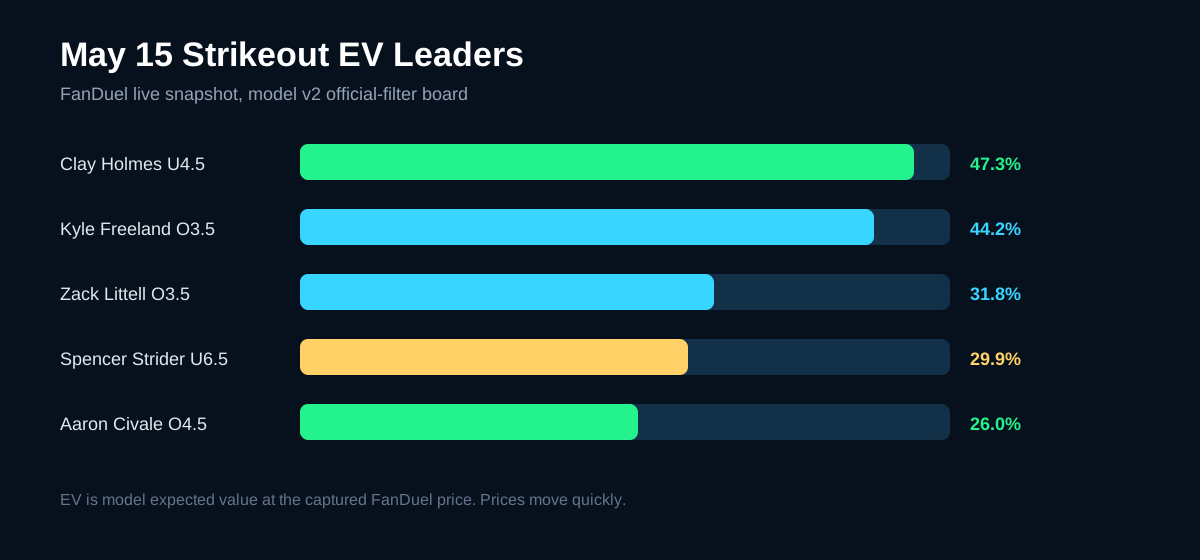
The Board, Ranked
The strongest theme is plus money on model favorites. Holmes under 4.5, Freeland over 3.5, Littell over 3.5, and Civale over 4.5 all show positive EV without needing a heavily juiced price. Strider under 6.5 is different: the price is -134, but the model probability is high enough to keep it on the main card.
| Rank | Play | Game | Model Prob | Fair Odds | EV | Status |
|---|---|---|---|---|---|---|
| 1 | Clay Holmes under 4.5 strikeouts | Yankees @ Mets | 63.5% | -174 | +47.28% | Primary |
| 2 | Kyle Freeland over 3.5 strikeouts | Diamondbacks @ Rockies | 66.1% | -195 | +44.17% | Primary |
| 3 | Zack Littell over 3.5 strikeouts | Orioles @ Nationals | 61.6% | -160 | +31.84% | Primary |
| 4 | Spencer Strider under 6.5 strikeouts | Red Sox @ Braves | 74.4% | -290 | +29.87% | Price dependent |
| 5 | Aaron Civale over 4.5 strikeouts | Giants @ Athletics | 54.8% | -121 | +26.02% | Plus-money add |
How The Analyzer Chose These
The May 15 run was intentionally conservative. The dashboard first converted the live FanDuel strikeout markets into a normalized two-way board, pairing every over with its matching under so the model could compare its true probability against a de-vigged market probability. Rows were then scored with the same pitcher strikeout model v2 process used for the recent MLBProps.com analyzer pages.
The model is not just sorting by the biggest plus sign. Each candidate needed a non-stale same-day snapshot, full game coverage, at least a 12-start pitcher sample, a minimum five-point edge, and a calibration gap below the official-card cutoff. That is why some attractive raw EV plays did not become headline picks. The article is trying to publish the cleanest board, not the longest board.
| Filter | May 15 Requirement | Why It Matters |
|---|---|---|
| Snapshot health | Fresh, same-day, 100% game coverage | Prevents stale prop prices from becoming fake model edges. |
| Market type | Pitcher strikeouts only | Strikeouts are the best-calibrated current release market in the verification file. |
| Sample size | 12+ starts in pitcher state | Blocks thin names from becoming official plays solely because the price looks attractive. |
| Edge | 5% or better versus no-vig market probability | Keeps the card focused on real disagreement with the market. |
| Calibration | Gap below 0.080 | Rejects lines where the model has historically been too far from observed results. |
Why Holmes Leads
Holmes is the cleanest price/projection mismatch on the board. The model mean is 3.95 strikeouts against a 4.5 line, and the under is priced at +132. That creates a large gap between the market's de-vigged probability and the model's 63.5% estimate. The bet is not asking for a collapse; it is asking Holmes to finish at four strikeouts or fewer.
That matters because a 4.5 strikeout under still has room for a useful start. The main risk is efficiency: if he is missing bats early and gets extra leash, the under can become uncomfortable fast. At plus money, the model says that risk is already overpaid by the market.
The reason this is stronger than a generic strikeout under is the price. A normal under 4.5 profile often comes attached to heavy juice, which leaves very little margin for model error. Here the book is paying plus money on the side the model already prefers. That gives the pick two paths to value: the projection sits below the number, and the market price is materially softer than the model's fair line.
The Over Cluster
Freeland over 3.5 strikeouts is the best over because the threshold is low and the price is still plus money. The model mean is 4.52, with 66.1% probability on the over. A 3.5 strikeout line does not require a dominant start. It requires enough length and enough contact-management stability to let a starter collect four punchouts before the game script closes the window.
Littell over 3.5 follows the same structure: manageable line, plus-money price, and a model mean above four strikeouts. The edge is not as large as Freeland's, but it is still a clear top-three row because the market is pricing the over closer to a coin flip while the model has it above 60%.
Civale over 4.5 is thinner but still playable because the price is +130. The model only makes the over 54.8%, so this is not the same confidence tier as Freeland. The edge is price-driven: a fair number near -121 versus a market number at +130. If that plus-money tag disappears, Civale should slide from a main-card add to a watchlist row.
Strider Under Is A Different Bet
Strider under 6.5 strikeouts is the most uncomfortable pick on the main card, which is exactly why the price section matters. Nobody needs to be told that Strider has strikeout ceiling. The model is not fading talent; it is fading a high bar. At 6.5, the under can survive a good start if the strikeouts are spread over efficient innings rather than stacked into a seven-plus K outing.
The model mean is 5.06 strikeouts, and the under probability is 74.4%. That creates a fair line around -290, so the -134 FanDuel price was still inside the model's playable range at the time of capture. This is not a bet to chase blindly at any price. It belongs on the card because the posted number was meaningfully cheaper than the model's fair number.
Price Discipline
The card is only as good as the number. For plus-money plays, the edge can survive some movement. For favorite-priced unders like Strider, Bibee, Mahle, Junk, and Hancock, the margin gets thinner quickly. The cleanest way to use the board is to compare the live number against the model's fair odds before betting.
| Play | Captured Price | Model Fair Odds | Practical Read |
|---|---|---|---|
| Clay Holmes under 4.5 Ks | +132 | -174 | Still attractive after normal movement; avoid only if it flips into heavy juice. |
| Kyle Freeland over 3.5 Ks | +118 | -195 | Strongest over; playable if the market remains near even money or better. |
| Zack Littell over 3.5 Ks | +114 | -160 | Good plus-money over; recheck if it moves through -115 or worse. |
| Spencer Strider under 6.5 Ks | -134 | -290 | Model likes it, but do not chase if the juice jumps sharply. |
| Aaron Civale over 4.5 Ks | +130 | -121 | Price-driven edge; needs plus money to stay interesting. |
Secondary Official Rows
The model produced 11 official-filter rows. I would keep the public card tighter than that, but the secondary rows are still worth tracking for closing-line movement and later grading. They also give useful context for how the model is treating the rest of the slate: several unders clear the filter, but many of them carry enough juice that the betting decision depends heavily on live price.
| Play | Price | Model Prob | EV | Read |
|---|---|---|---|---|
| Tanner Bibee under 6.5 strikeouts | -152 FanDuel | 74.9% | +24.24% | Good probability, heavy price. |
| Shane Baz under 4.5 strikeouts | +122 FanDuel | 55.0% | +22.10% | Plus-money under, but smaller model cushion. |
| Tyler Mahle under 5.5 strikeouts | -158 FanDuel | 71.5% | +16.80% | Price-sensitive secondary under. |
| Janson Junk over 3.5 strikeouts | -144 FanDuel | 64.7% | +9.62% | Playable only if price does not worsen. |
| Emerson Hancock under 5.5 strikeouts | -134 FanDuel | 62.5% | +9.09% | Lower-tier official row. |
| Merrill Kelly under 4.5 strikeouts | -122 FanDuel | 58.0% | +5.62% | Minimum-edge tracker. |
What Stayed Off The Main Card
Braxton Ashcraft under 5.5 strikeouts showed +29.26% EV in the raw report, but it missed the official-card sample filter with only 11 starts in the model state. Spencer Arrighetti under 5.5, Blake Snell under 6.5, and Connelly Early over 4.5 also stayed out of the main card for the same reason: the edge may be interesting, but the release rules are stricter than the raw EV table.
No batter props were added. The model's own verification file labels batter total bases as experimental only because the holdout backtest overpredicted that market. This page is intentionally narrower: strikeouts only, with a transparent source log.
That exclusion is important for quality control. A worse article would stuff the page with every green EV row and call it a bigger card. The better approach is to separate release-grade props from research-only props. Ashcraft, Arrighetti, Snell, and Early can be monitored, but they do not belong in the same tier as Holmes, Freeland, Littell, Strider, and Civale under the current rules.
Source Log
Odds came from the live FanDuel public prop board through the local MLB props dashboard. The model run used local 2025 and 2026 boxscore caches, a Poisson strikeout model, and the model v2 official-card filters.
- Live dashboard snapshot:
C:\Users\Nima\Desktop\MLB_Props\2026-05-15\mlb_props_normalized.json - Model report:
C:\Users\Nima\Desktop\MLB_Props\2026-05-15\real_mlb_ev_props_v2_report.txt - Official card:
C:\Users\Nima\Desktop\MLB_Props\2026-05-15\official_mlb_prop_card_v2.txt - Verification report:
C:\Users\Nima\Desktop\MLB_Props\2026-05-15\mlb_prop_model_v2_verification.txt